
Science of Food Waste Valorisation: Recovering Nutrients From Materials

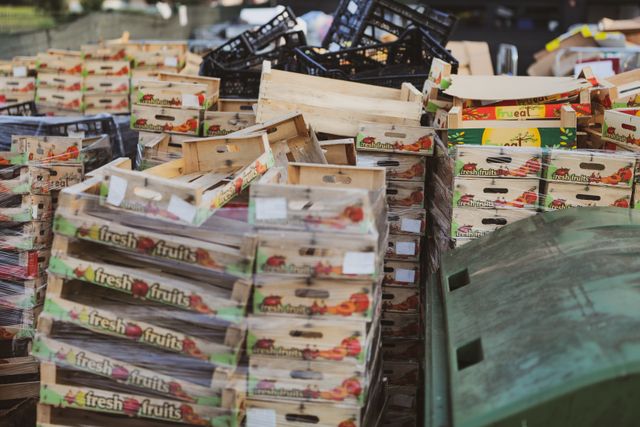
Food waste presents a significant environmental challenge, but it also represents a largely underused source of valuable resources. Fruit peels, vegetable trimmings, cereal bran, dairy residues, and spent grains contain compounds with nutritional and industrial potential. Many of these materials are discarded because conventional food systems prioritize commercially desirable portions.
Food waste valorisation offers a different perspective. It involves converting discarded materials and food-processing by-products into useful products through scientific, technological, and biological processes. These products may include dietary fibre, plant proteins, antioxidants, natural pigments, minerals, organic acids, and functional food ingredients.
The concept goes beyond waste reduction. It asks whether materials already produced within the food system can supply ingredients that would otherwise require additional agricultural resources. Recovering these compounds could support more efficient food production, reduce disposal pressures, and create new commercial opportunities.
However, not every discarded material is suitable for human consumption. Nutrient recovery depends on the source, composition, contamination risks, processing conditions, and intended application. Understanding these factors is essential for transforming food waste into safe, useful, and economically viable resources.
Understanding Food Waste Valorisation
Food waste valorisation is the process of recovering value from materials that would otherwise be discarded or underutilized. The value may come from their nutritional composition, chemical properties, biological activity, or potential to support other production systems.
Food-processing industries generate many such materials during manufacturing. Fruit juice production leaves behind peels and pomace, while grain milling separates bran from refined flour. Cheese production generates whey, and breweries produce spent grains after extracting fermentable sugars. These materials differ considerably in their nutrient profiles and recovery potential.
Household and restaurant food waste can also contain recoverable resources. However, mixed waste is generally more difficult to process because its composition is unpredictable. It may contain packaging fragments, cleaning chemicals, allergens, or materials exposed to unsafe handling conditions.
For this reason, source-separated industrial by-products often provide a more practical starting point. Their origin is easier to trace, and their composition can be measured more consistently. A review published in Sustainable Food Technology examines these opportunities and the challenges of converting food waste into valuable products through integrated recovery systems.
Nutrients Hidden Within Common Food By-Products
Fruit and Vegetable Peels
Fruit and vegetable peels frequently contain dietary fibre, pigments, minerals, and plant-derived bioactive compounds. Depending on the species, these materials may contain polyphenols, carotenoids, pectin, and other compounds relevant to food formulation.
Citrus peels are particularly important because they contain pectin, which can function as a gelling, thickening, or stabilizing ingredient. Apple pomace, produced during juice extraction, contains fibre and phenolic compounds. Carrot and other vegetable residues may provide pigments and fibre for suitable food applications.
These materials can be washed, dried, milled, or processed to recover useful fractions. Their resulting powders may be incorporated into selected bakery products, snacks, sauces, or other formulations. However, the quantity added must be controlled because excessive fibre or plant compounds can alter taste, texture, colour, and digestibility.
Peels are not automatically safe simply because the original fruit is edible. Their suitability depends on pesticide residues, microbial contamination, storage history, and any surface treatments used during production. Food-grade recovery therefore requires suitable raw materials and validated processing procedures.
Cereal Bran and Milling Residues
Cereal processing produces bran and other fractions that contain dietary fibre, minerals, and varying amounts of protein and lipids. Refining removes some of these components to produce flour with particular baking and sensory characteristics. Yet these separated fractions can retain considerable nutritional value.
Bran from wheat, rice, and other cereals may be used in fibre-rich food formulations. Appropriate processing can improve its handling properties and support incorporation into breads, breakfast products, or snacks. Certain milling residues may also be suitable for recovering oils or specific functional compounds.
The challenge lies in maintaining desirable product characteristics. Bran can change dough hydration, bread volume, texture, and flavour. Some cereal fractions also contain antinutritional compounds that may influence mineral absorption. Processing methods must therefore balance nutrient retention with functionality and digestibility.
Dairy Whey and Protein-Rich Residues
Whey is a liquid by-product generated during cheese and certain other dairy production processes. It contains lactose, minerals, and proteins that can be recovered using membrane filtration and other separation technologies.
Recovered whey proteins have established applications in food manufacturing. They can contribute to protein content, emulsification, foaming, and texture in suitable products. Lactose and other whey components may also support additional food or fermentation applications.
This example illustrates an important distinction between food waste and valuable industrial by-products. Whey has commercial uses in many processing systems, so it should not automatically be considered discarded material. Nevertheless, facilities that cannot use all their whey may benefit from improved recovery methods.
Spent Grains and Plant Protein Residues
Breweries generate spent grains after extracting soluble components from malted cereals. These residues contain fibre, protein, and other components that remain after brewing. Their high moisture content, however, makes rapid spoilage a major concern.
Drying, milling, and other suitable treatments can help stabilize spent grains for selected applications. Their fibre and protein may support food formulations, provided the material meets safety and quality requirements. Processing conditions must also account for differences between batches and the effects of the original brewing process.
Other plant-based processing residues can offer similar opportunities. Legume residues may contain fibre and protein, while oilseed by-products can retain protein and other useful compounds after oil extraction. Their suitability depends on the crop, processing method, and remaining chemical composition.
Scientific Technologies for Recovering Nutrients
Mechanical Separation and Membrane Filtration
Mechanical separation is often the first stage in nutrient recovery. Screening, pressing, centrifugation, and filtration can separate solids, liquids, and different particle sizes. These processes prepare complex materials for further treatment.
Membrane filtration provides a more selective approach. Depending on the membrane and operating conditions, it can separate proteins, dissolved compounds, and other components according to their size or properties. Dairy processing provides an established example of this technology.
These methods can reduce the need for harsh chemical treatments. However, membranes may become clogged, and operating costs depend on energy consumption, cleaning, maintenance, and the properties of the incoming material.
Enzyme-Assisted Extraction
Enzymes can help release valuable compounds from food materials by breaking down particular structural components. For example, pectinases and cellulases can act on plant cell-wall materials. Proteases can break proteins into smaller peptides, while other enzymes can help release compounds trapped within complex food structures.
Enzyme-assisted processing may improve extraction efficiency under suitable conditions. Temperature, acidity, enzyme concentration, and processing time influence the outcome. Incorrect conditions may reduce efficiency or damage compounds that manufacturers want to preserve.
Enzymatic treatment also requires careful cost assessment. Enzymes may be expensive, and their activity can vary across different raw materials. Industrial applications must demonstrate that the recovered ingredient provides sufficient value to justify the process.
Ultrasound, Microwave, and Pressurized Extraction
Emerging extraction methods use physical energy or controlled pressure to improve the release of valuable compounds. Ultrasound creates pressure changes that can disrupt structures and improve contact between solvents and materials. Microwave-assisted extraction uses electromagnetic energy to heat suitable mixtures rapidly.
Pressurized liquid extraction can improve the recovery of selected compounds by controlling temperature and pressure. Supercritical carbon dioxide extraction is another technique, particularly for certain oils and relatively nonpolar compounds.
These technologies may reduce processing time or solvent requirements in specific applications. However, their effectiveness depends on the material and the target compound. High temperatures or unsuitable conditions can degrade sensitive nutrients, while equipment costs may limit adoption.
A 2024 review of agricultural and food by-products describes several of these approaches for recovering bioactive compounds. It also highlights the importance of evaluating extraction efficiency, sustainability, and application requirements together.
Fermentation and Biological Conversion
Microorganisms can transform food-processing residues into useful compounds through fermentation. Depending on the organism and substrate, fermentation may produce organic acids, enzymes, microbial biomass, or other valuable substances.
Fermentation can also modify certain properties of plant materials. Microbial activity may reduce some antinutritional compounds, change flavour, or improve the availability of selected nutrients. However, these outcomes depend on the microorganism, process conditions, and original material.
Controlled fermentation requires suitable strains, hygienic production, and careful monitoring. Uncontrolled microbial growth may generate spoilage products or safety hazards. Manufacturers must distinguish validated food-grade fermentation from processes intended for waste treatment or industrial chemical production.
Turning Recovered Nutrients Into Food Ingredients
Recovering a compound is only one stage in valorisation. The next challenge is determining whether it can function safely and effectively in a food product. An ingredient may contain useful nutrients but still perform poorly during mixing, heating, storage, or consumption.
Fruit pomace powders illustrate this challenge. Their fibre and plant compounds may improve the nutritional profile of selected products. Yet high inclusion levels can affect dough structure, moisture retention, colour, and flavour. Formulators must determine an appropriate balance between nutritional value and product quality.
Recovered proteins require similar evaluation. Their solubility, taste, allergenicity, and behaviour during heating can influence their suitability. A protein ingredient may work well in one formulation but perform poorly in another.
The stability of recovered nutrients also matters. Oxygen, light, moisture, and temperature can reduce the quality of certain compounds during storage. Encapsulation, suitable packaging, and controlled storage may help protect sensitive ingredients.
A 2025 review in Discover Food examines how food waste-derived compounds, including polyphenols, dietary fibre, and proteins, can be incorporated into functional food systems. It also discusses formulation challenges that manufacturers must address before commercialization.
Food Safety and Quality Control
Food waste valorisation must begin with a clear distinction between recoverable by-products and unsafe waste. Materials that have spoiled, become contaminated, or experienced uncontrolled storage may be unsuitable for food production. Processing cannot be assumed to remove every hazard.
Raw materials should be assessed for microbial risks, chemical contaminants, allergens, and physical impurities. Supplier records and traceability systems help manufacturers understand where materials originated and how they were handled. Segregation at the source can reduce contamination risks and improve consistency.
The recovery process must also be validated. Washing, heating, drying, filtration, and fermentation serve different purposes. A treatment that removes moisture does not necessarily eliminate every microbial hazard. Similarly, extraction may concentrate unwanted contaminants alongside valuable compounds.
Quality testing should match the intended product and its risks. Depending on the material, this may include nutrient analysis, microbial testing, contaminant screening, moisture measurement, and shelf-life evaluation. Food manufacturers must also comply with applicable regulations governing ingredients, processing, labeling, and permitted uses.
Consumer transparency is equally important. Recovered ingredients should be described accurately, and allergen information must remain clear. Sustainability claims should not imply that a product is automatically healthier simply because it contains a recovered ingredient.
Environmental and Economic Benefits
Food waste valorisation can reduce the amount of organic material requiring disposal. It may also recover resources that would otherwise be lost after substantial agricultural, processing, and transportation inputs. These benefits can support more circular food systems.
The environmental outcome, however, depends on the entire process. Drying wet residues may require significant energy, while extraction can consume water, solvents, and cleaning materials. Transportation can also reduce the benefits when low-value materials travel long distances.
Life-cycle assessment can help compare different recovery pathways. Such analysis considers energy, water, emissions, transport, waste treatment, and the environmental effects of replacing conventional ingredients. A recovery method is most convincing when its overall benefits exceed its additional resource demands.
Economic feasibility presents another challenge. Food by-products may be inexpensive, but they often require rapid collection, stabilization, storage, and quality testing. Their composition may change across seasons or suppliers, affecting production consistency.
Integrated processing facilities may improve feasibility by recovering several useful products from the same material. For example, one stream could provide a food ingredient while remaining fractions support fermentation, energy recovery, or other industrial uses. However, each output needs a viable market and suitable safety controls.
The Role of Artificial Intelligence and Smart Processing
Artificial intelligence could improve the efficiency of food waste valorisation by helping manufacturers characterize materials and select appropriate processing conditions. Computer vision may classify incoming produce according to visible characteristics, while sensors can monitor moisture, temperature, and other process variables.
Machine-learning models could combine these measurements with laboratory results to predict the likely composition of incoming materials. This information may help facilities choose between drying, extraction, fermentation, or other processing routes.
AI could also support production planning. If the supply of a particular by-product changes, software might help manufacturers adjust schedules and reduce material spoilage. Process monitoring could identify deviations before they affect large production batches.
Nevertheless, predictions require reliable training data and independent validation. Visual appearance alone cannot confirm nutrient content or food safety. AI should support laboratory testing and established quality systems rather than replace them.
Future Directions for Nutrient Recovery
Future research will likely focus on improving recovery efficiency while reducing energy, water, and chemical inputs. More selective extraction methods may help recover specific compounds without unnecessarily processing the entire material. Improved stabilization could also make seasonal by-products easier to store and transport.
Another promising direction involves designing food products around locally available by-products. Regional fruit processors, dairies, grain mills, and breweries could supply suitable materials to nearby ingredient manufacturers. Such networks may reduce transport requirements and create additional income opportunities.
However, local sourcing alone does not guarantee success. Facilities need reliable volumes, consistent quality, technical expertise, and access to suitable markets. Regulations must also support safe and clearly defined uses for recovered ingredients.
The strongest future systems will combine several recovery pathways rather than forcing every residue into food production. Materials suitable for human consumption should be evaluated for food-grade applications first. Other fractions may be better suited to animal feed where permitted, industrial biotechnology, soil improvement, or energy recovery.
Conclusion
Food waste valorisation reveals that many discarded food materials contain resources worth recovering. Fruit peels, cereal bran, dairy whey, spent grains, and vegetable residues can provide fibre, proteins, minerals, antioxidants, and other useful compounds. Mechanical separation, membrane filtration, enzyme-assisted extraction, advanced processing, and fermentation can help recover these resources.
Yet successful valorisation requires more than finding nutrients in discarded materials. Manufacturers must protect food safety, maintain ingredient quality, demonstrate functional performance, and establish commercially viable processing systems. Environmental benefits must also be assessed across the full production pathway.
The long-term opportunity lies in treating food-processing residues as carefully managed resources rather than automatically classifying them as waste. With suitable science, regulation, and investment, nutrient recovery could reduce avoidable losses and support a more circular food economy.
Online Internship with Certificate
You may be interested
Environmental Trade-Offs of Alternative Proteins: Evaluating Systems Together
Anshika Jain - October 21, 2026Alternative proteins are becoming increasingly important in discussions about food security and environmental sustainability. Conventional livestock production requires land, feed, water, and energy, while also contributing to…
Personal Food Manufacturing: Automated Systems Produce Meals
Anshika Jain - October 21, 2026Food manufacturing has traditionally focused on producing consistent products for large consumer groups. Manufacturers develop recipes, standardize ingredients, and maintain quality across production batches. However, people have…
Hidden Chemistry of Urban Food Environments: Nutritional Quality
Anshika Jain - October 21, 2026Urban food environments are complex systems that connect farms, warehouses, transport networks, processing facilities, retailers, restaurants, and households. Every stage influences the quality of food before it…
Most from this category


Digital Clinical Decision Support for Malnutrition: Identifying Nutritional Risk Across Different Care Settings
Anshika Jain - October 21, 2026
Science of Oral Processing: How Chewing, Saliva and Eating Speed Influence Digestion
Anshika Jain - October 20, 2026Amino Acid Sensing and mTOR Signalling: Cells Respond to Protein Availability
Anshika Jain - October 20, 2026
Digital Clinical Decision Support for Malnutrition: Identifying Nutritional Risk Across Different Care Settings
Anshika Jain - October 21, 2026Science of Oral Processing: How Chewing, Saliva and Eating Speed Influence Digestion
Anshika Jain - October 20, 2026

Personal Food Manufacturing: Automated Systems Produce Meals
October 21, 2026
Hidden Chemistry of Urban Food Environments: Nutritional Quality
October 21, 2026
Nutritional Implications of Climate-Driven Crop Shifts
October 21, 2026
.png)
Leave a Comment
You must be logged in to post a comment.