
Environmental Trade-Offs of Alternative Proteins: Evaluating Systems Together

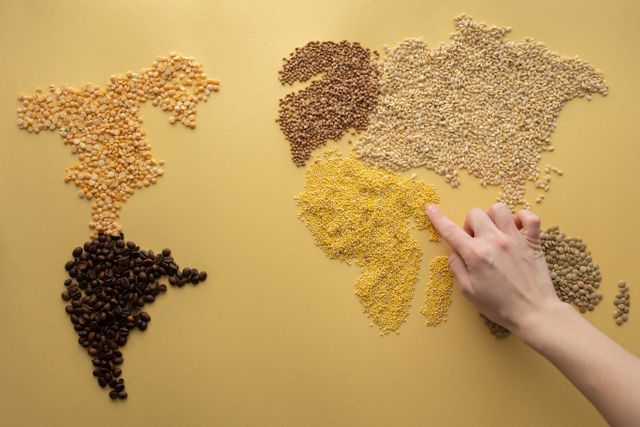
Alternative proteins are becoming increasingly important in discussions about food security and environmental sustainability. Conventional livestock production requires land, feed, water, and energy, while also contributing to greenhouse gas emissions. Alternative protein technologies offer additional ways to supply dietary protein while potentially reducing these pressures.
However, replacing conventional meat does not automatically create a sustainable food system. Different alternatives depend on different crops, processing methods, energy sources, and manufacturing infrastructures. Their nutritional compositions also vary, affecting how effectively they meet human dietary needs.
Plant-based proteins may require less land than many animal products, but intensive processing can increase energy consumption. Fermentation-derived proteins can produce substantial quantities of biomass, yet their environmental performance depends on feedstocks and electricity. Cultivated meat avoids conventional livestock rearing but requires carefully controlled production environments.
Evaluating these options requires a combined perspective. Environmental impacts must be assessed alongside nutritional quality, resource efficiency, affordability, and production conditions. The central question is not simply which protein source is best. It is which system can deliver appropriate nutrition with the lowest overall environmental burden.
Understanding Alternative Proteins
Alternative proteins are ingredients or foods intended to provide protein without relying entirely on conventional meat production. They include plant-based proteins, fungal biomass, microbial proteins, insect-derived ingredients, precision-fermented proteins, and cultivated meat. Each category uses different biological and technological processes.
Plant-based proteins come from crops such as soybeans, peas, lentils, chickpeas, and other legumes. They may be consumed in relatively simple forms or processed into meat alternatives. Fungal proteins, including mycoprotein, are produced by cultivating selected fungi under controlled conditions. Microbial proteins can also be generated using bacteria, yeasts, and other microorganisms.
Precision fermentation uses microorganisms engineered or selected to produce particular compounds, such as specific proteins. Cultivated meat follows a different approach by growing animal cells in controlled environments. Insect proteins involve raising insects and processing them into ingredients or food products.
These categories should not be treated as environmentally equivalent. A bowl of lentils, a highly formulated plant-based burger, a fermented protein ingredient, and cultivated meat have different production requirements. Their sustainability must therefore be evaluated at the product and system levels.
Why Life Cycle Assessment Matters
Life cycle assessment, commonly called LCA, estimates the environmental impacts associated with a product across defined stages of its life. These stages may include agricultural production, feedstock processing, manufacturing, packaging, transport, refrigeration, and disposal. The exact boundaries depend on the purpose of the study.
LCA helps identify impacts that might otherwise remain hidden. A protein ingredient could require little farmland but substantial electricity for fermentation or drying. Another product might use more water during processing but less land during agricultural production. A complete assessment makes these differences visible.
The comparison also depends on the functional unit. Measuring impacts per kilogram of product can produce a different ranking from measuring impacts per kilogram of protein. Comparisons based on a nutritionally equivalent meal may reveal further differences because products provide different amounts of protein, energy, fibre, and micronutrients.
The Food and Agriculture Organization has highlighted the methodological challenges of integrating nutrition into environmental life cycle assessment. Its discussion of integrating environment and nutrition in food LCA emphasizes the need to consider nutritional quality, appropriate functional units, and uncertainty.
A credible assessment should therefore examine multiple environmental indicators. Greenhouse gas emissions matter, but so do land occupation, water scarcity, energy demand, nutrient pollution, biodiversity pressures, and waste generation. No single indicator can represent every dimension of sustainability.
Greenhouse Gas Emissions and Climate Impact
Greenhouse gas emissions are among the most widely discussed environmental trade-offs in protein production. Livestock systems can generate emissions through animal digestion, manure management, feed production, fertilizer use, and land-use change. Ruminant animals, particularly cattle, produce methane during digestion, making their production systems especially relevant to climate assessments.
Many plant-based protein sources avoid direct livestock methane emissions. Legumes can also contribute to agricultural systems by biologically fixing nitrogen, although their overall environmental performance still depends on farming practices, soil conditions, and processing requirements.
However, plant-based alternatives differ considerably. Producing a minimally processed legume product usually requires fewer manufacturing stages than producing a complex meat analogue. Extrusion, flavour development, oil extraction, and specialized packaging can increase the energy requirements of highly formulated products.
Mycoprotein presents another interesting case. A 2025 study comparing a novel mycoprotein product with conventional meats found a better environmental profile than beef across the assessed categories, except water use. Its results also showed that replacing an egg-white binder with potato starch could substantially improve performance in the modeled product system. These findings demonstrate how individual ingredients can influence a product’s footprint.
Cultivated meat presents greater uncertainty. Its production involves growing animal cells in controlled environments, which can require substantial electricity and highly refined growth media. A 2025 life cycle assessment found that modeled near-term production could have higher environmental impacts than beef when highly refined growth media were used. The results highlight the importance of process design and input selection rather than proving that every future cultivated meat system will perform poorly.
Ultimately, climate performance depends on both the protein technology and the energy system supporting it. Electricity from low-carbon sources can improve the results of energy-intensive production, while fossil-fuel-intensive power can weaken potential advantages.
Land Use, Water Demand, and Agricultural Resources
Land use is another major consideration. Conventional livestock systems require land for grazing and for growing animal feed. Alternative proteins can reduce some of these demands, particularly when they replace resource-intensive animal products with crops grown directly for human consumption.
Legumes offer a practical example because they supply protein alongside fibre, minerals, and other nutrients. Their cultivation can fit into crop rotations and, under suitable conditions, support soil fertility through nitrogen fixation. However, benefits depend on crop selection, local agricultural practices, and the way land is managed.
Alternative proteins do not eliminate agricultural land requirements. Soy, peas, grains, and other feedstocks still need farmland. Expanding production into natural ecosystems can create biodiversity and carbon-storage losses. Sustainable sourcing therefore matters as much as the ingredient’s broad category.
Water impacts are similarly context-dependent. Irrigation requirements vary according to climate, crop type, soil, and production methods. A crop grown in a water-stressed region may create greater local pressure than the same crop grown under rainfall-supported conditions. Water used for cleaning, cooling, and processing can also influence the footprint of manufactured protein foods.
Mycoprotein and microbial protein production may use relatively little agricultural land directly, but their feedstocks still require resources. Fermentation facilities also need water, nutrients, and energy. Drying microbial biomass can become particularly important when the final product requires a stable powder.
A useful environmental comparison must distinguish between total water use and water scarcity. The location and timing of water consumption can matter as much as the volume itself. Resource-efficient production should prioritize suitable crops, responsible sourcing, renewable energy, and careful water management.
Energy Demand and Manufacturing Complexity
Alternative proteins vary in how much processing they require. Dried beans and lentils can be stored and transported with limited processing, although consumers must still cook them appropriately. Plant-based meat analogues require additional steps to create specific textures, flavours, and structures.
Extrusion is widely used to create fibrous textures from plant proteins. The process involves heat, moisture, pressure, and mechanical energy. These treatments help produce products resembling conventional meat, but their environmental value depends on the ingredients used, equipment efficiency, and energy supply.
Mycoprotein production involves cultivating fungal biomass under controlled conditions. Fermentation can be efficient at producing protein-rich material, but aeration, temperature control, sterilization, and downstream processing consume energy. Production scale and facility design can therefore influence the overall result.
Precision fermentation also depends on suitable feedstocks, fermentation equipment, purification, and product formulation. Producing a particular protein may require additional separation stages to achieve the necessary purity. These steps can affect water use, energy demand, and manufacturing costs.
Cultivated meat requires sterile or carefully controlled environments, growth media, cell cultivation equipment, and harvesting processes. Its performance will depend on the efficiency of cell growth, the composition of growth media, and the scale of production. Reliable commercial data remain important for understanding its future environmental profile.
Manufacturing complexity is not inherently undesirable. Processing may improve food safety, shelf life, digestibility, or consumer acceptance. The relevant question is whether the nutritional and functional benefits justify the additional resource requirements.
Nutritional Quality: More Than Protein Quantity
Protein content alone does not determine whether a food is nutritionally equivalent to another. Protein quality depends partly on the amino acid profile and how efficiently the body can digest and use the protein. Some plant proteins contain lower proportions of particular essential amino acids, although varied diets and complementary protein sources can help meet requirements.
Alternative proteins also differ in their micronutrient content. Meat can provide vitamin B12, iron, zinc, and other nutrients, although amounts vary by product. Legumes provide protein, fibre, folate, and minerals, but they do not naturally supply vitamin B12 in nutritionally reliable amounts. Fortification or other dietary sources may be necessary when plant-based diets exclude animal products.
Meat alternatives are not automatically healthier than the foods they replace. Some contain substantial sodium, saturated fat, or added ingredients, while others have favourable nutritional profiles. Formulation choices, serving sizes, and the overall dietary pattern influence their nutritional value.
A 2024 systematic review of meat alternatives found that many products had lower environmental impacts than beef and pork, but their nutritional composition differed from meat. The review reported differences involving saturated fat, sodium, fibre, iron, calcium, zinc, and vitamin B12. This reinforces the need to evaluate environmental and nutritional performance together.
A nutritionally meaningful comparison should consider the amount and quality of protein alongside relevant micronutrients, fibre, sodium, saturated fat, and energy content. It should also assess whether the product is intended to replace meat directly or contribute to a broader dietary pattern.
Comparing Major Alternative Protein Systems
Plant-Based Proteins
Legumes, tofu, tempeh, and other minimally processed plant proteins often offer practical sustainability advantages. Their production systems are established, and many products can provide protein with relatively limited processing. Their nutritional value extends beyond protein when they supply fibre and important micronutrients.
Highly processed plant-based meat analogues offer different advantages. They can reproduce familiar textures and flavours, potentially making dietary transitions easier. However, ingredient sourcing, manufacturing energy, sodium levels, and product formulation can alter their overall performance.
Mycoprotein and Other Microbial Proteins
Mycoprotein uses fungal biomass as a source of protein and other nutrients. It can provide a meat-like texture and may offer favourable environmental performance compared with conventional meat. Nevertheless, fermentation inputs, energy consumption, water demand, and formulation ingredients need careful evaluation.
Other microbial proteins may be produced from different feedstocks or organisms. Their potential depends on the microorganism’s growth efficiency, the resources required to cultivate it, and the processing needed to make the final ingredient suitable for food.
Insect-Based Proteins
Insects can convert feed into protein-rich biomass, and some species can be raised using relatively limited land. Their environmental performance depends on the insect species, feed composition, temperature control, processing, and the treatment of residues.
A key limitation is the need to verify which feed materials are safe and legally permitted. Insect products also raise allergen concerns for some consumers, particularly because of potential cross-reactivity with crustaceans or dust mites. Acceptance varies across cultures, and the intended food application influences commercial feasibility.
Cultivated Meat and Precision Fermentation
Cultivated meat may eventually offer animal-derived products without conventional livestock rearing. Precision fermentation can produce specific proteins without obtaining them directly from animals. Both technologies could broaden the available protein supply, but their environmental outcomes depend on process efficiency and infrastructure.
At present, energy demand, media ingredients, purification, and production scale remain important uncertainties. These technologies should be assessed using transparent, updated life cycle data rather than assumptions about their future performance.
Why Production Location and Scale Matter
The same protein product can have different environmental footprints when manufactured in different locations. Electricity sources, water availability, climate control requirements, transportation distances, and ingredient supply chains all influence the result.
A fermentation facility using low-carbon electricity may perform differently from one relying on a carbon-intensive grid. Similarly, crop-based proteins sourced from responsible agricultural systems may have a different impact from products linked to deforestation or intensive water use.
Scale can improve efficiency by distributing fixed equipment and infrastructure costs across larger production volumes. However, large facilities may also require extensive transport networks and centralized processing. Scaling up does not guarantee sustainability unless resource use and supply-chain impacts are managed.
Researchers should also distinguish between laboratory demonstrations, pilot facilities, and commercial production. Laboratory results may not reflect the energy use, cleaning requirements, material losses, or operational challenges of industrial manufacturing. Commercial-scale data are essential for making robust comparisons.
Building a More Complete Sustainability Framework
A stronger assessment of alternative proteins combines environmental, nutritional, and production evidence. Life cycle assessment can estimate climate, land, water, and other environmental impacts. Nutritional analysis can determine whether a product supplies relevant nutrients in appropriate quantities and forms.
Researchers should compare products using clearly defined functional units. A kilogram of protein may be useful for evaluating protein supply, while a complete meal may better represent real dietary substitution. Both approaches can provide valuable information when their limitations are clearly explained.
Production data should include feedstock sourcing, processing energy, ingredient losses, packaging, storage, and distribution. Sensitivity analysis can show how results change when electricity sources, growth media, crop yields, or manufacturing assumptions differ.
Sustainability also includes affordability, accessibility, and consumer acceptance. A low-impact protein product cannot transform diets if it remains prohibitively expensive or is unavailable to most consumers. Products must be safe, appealing, nutritionally appropriate, and compatible with local food cultures.
Conclusion
Alternative proteins offer opportunities to reduce environmental pressures and diversify food production. Plant-based proteins, mycoprotein, insect ingredients, fermentation-derived proteins, and cultivated meat each present distinct advantages and limitations. Their environmental performance depends on the resources they require, the technologies used, and the production systems supporting them.
A complete assessment must consider greenhouse gas emissions, land use, water demand, energy consumption, and manufacturing complexity alongside protein quality and micronutrient composition. It must also distinguish established production systems from technologies that still require substantial development.
No single alternative protein is automatically the best choice in every setting. Minimally processed legumes may offer a practical option in many diets, while other technologies could serve specialized purposes as their production systems improve. The strongest strategy is to evaluate each product transparently and choose options that deliver appropriate nutrition with lower overall environmental impacts.
Ultimately, sustainable protein production is not only about replacing one ingredient with another. It requires designing food systems that use resources efficiently, protect ecosystems, meet nutritional needs, and remain accessible to the people they serve.
Online Internship with Certificate
You may be interested
Science of Food Waste Valorisation: Recovering Nutrients From Materials
Anshika Jain - October 21, 2026Food waste presents a significant environmental challenge, but it also represents a largely underused source of valuable resources. Fruit peels, vegetable trimmings, cereal bran, dairy residues, and…

Personal Food Manufacturing: Automated Systems Produce Meals
Anshika Jain - October 21, 2026Food manufacturing has traditionally focused on producing consistent products for large consumer groups. Manufacturers develop recipes, standardize ingredients, and maintain quality across production batches. However, people have…
Hidden Chemistry of Urban Food Environments: Nutritional Quality
Anshika Jain - October 21, 2026Urban food environments are complex systems that connect farms, warehouses, transport networks, processing facilities, retailers, restaurants, and households. Every stage influences the quality of food before it…
Most from this category


Digital Clinical Decision Support for Malnutrition: Identifying Nutritional Risk Across Different Care Settings
Anshika Jain - October 21, 2026
Science of Oral Processing: How Chewing, Saliva and Eating Speed Influence Digestion
Anshika Jain - October 20, 2026Amino Acid Sensing and mTOR Signalling: Cells Respond to Protein Availability
Anshika Jain - October 20, 2026
Digital Clinical Decision Support for Malnutrition: Identifying Nutritional Risk Across Different Care Settings
Anshika Jain - October 21, 2026Science of Oral Processing: How Chewing, Saliva and Eating Speed Influence Digestion
Anshika Jain - October 20, 2026

Personal Food Manufacturing: Automated Systems Produce Meals
October 21, 2026
Hidden Chemistry of Urban Food Environments: Nutritional Quality
October 21, 2026
Nutritional Implications of Climate-Driven Crop Shifts
October 21, 2026
.png)
Leave a Comment
You must be logged in to post a comment.