
Personal Health Data Sovereignty: Self-Care AI Work


Artificial intelligence is transforming how people understand and manage their personal health. Modern self-care applications can analyse sleep patterns, physical activity, dietary habits, stress indicators and other health-related information to generate personalised recommendations. Wearable devices and connected healthcare platforms are making it possible to monitor everyday health continuously, while AI-powered systems are beginning to provide guidance that was previously available mainly through professional consultations. However, this progress raises an important question: how much personal information should individuals have to share to receive meaningful health support?
Personal health information is among the most sensitive categories of personal data. It can reveal details about physical conditions, mental well-being, medication use, reproductive health, daily routines and lifestyle choices. When people connect multiple applications and devices, their information may be collected, processed, stored and shared across different technology environments. Although these systems promise convenience and personalisation, users may have limited understanding of where their information goes, who can access it and how long it remains available.
This challenge introduces the concept of personal health data sovereignty. It refers to an individual’s ability to maintain meaningful control over personal health information, including how it is collected, processed, stored, accessed and shared. In the context of self-care AI, data sovereignty raises the possibility of developing intelligent health systems that provide useful recommendations without requiring users to surrender extensive personal information to centralised platforms.
The future of self-care technology may therefore depend on a different model of personalisation. Instead of collecting as much information as possible, AI systems could learn from limited, locally processed or selectively shared data. Such an approach could help individuals benefit from intelligent health assistance while maintaining greater privacy, autonomy and control over their digital health identities.
Understanding Personal Health Data Sovereignty
Personal health data sovereignty goes beyond basic data privacy. Privacy generally concerns protecting information from unauthorised access or inappropriate use, while sovereignty focuses on who has meaningful authority over that information and the decisions surrounding it.
For example, a person may allow a fitness application to access activity information but may not want that information shared with advertising networks, insurance providers or unrelated commercial platforms. Another individual may be comfortable using an AI-powered nutrition assistant but may prefer to keep dietary records and health measurements stored on a personal device rather than on an external server.
Data sovereignty recognises that permission to use a service should not automatically mean unrestricted access to a person’s health information. Individuals should be able to understand what information is required, why it is needed and whether the same service could operate with less data.
This principle becomes especially important as self-care AI expands beyond simple fitness tracking. Future applications may analyse multiple categories of information to provide recommendations about sleep, stress, nutrition, exercise and preventive health. Without appropriate controls, the growing complexity of these systems could make personal health data increasingly difficult for individuals to manage.
A sovereign approach attempts to reverse this relationship by placing the individual, rather than the platform, at the centre of health data governance.
Why Self-Care AI Collects Sensitive Information
The Demand for Personalised Recommendations
AI-powered self-care systems rely on information to understand individual patterns and generate relevant suggestions. A general wellness application may provide standard recommendations, but a personalised system attempts to account for differences in behaviour, preferences and circumstances.
For instance, a sleep assistant may analyse bedtime patterns, waking times and activity levels to identify changes in sleep routines. A nutrition application may use dietary records and food preferences to suggest meal adjustments. A fitness assistant may examine exercise frequency, heart rate estimates and recovery patterns to recommend changes in training intensity.
The more information a system receives, the more opportunities it may have to identify patterns. However, this does not mean that collecting every available personal detail is necessary. Some recommendations can be generated using a small set of relevant measurements, while others may require additional information depending on their purpose.
The challenge is to identify the minimum information needed to provide a useful service rather than treating comprehensive data collection as the default requirement for personalisation.
Continuous Monitoring and Data Accumulation
Wearable devices have introduced continuous health-related data collection into everyday life. Smartwatches, fitness bands and connected devices can record movement, estimated sleep duration, heart rate and other measurements. Mobile applications may combine these records with manually entered information, creating detailed profiles of personal routines.
Although continuous monitoring can help users understand long-term patterns, it also increases the amount of information that must be protected. Data collected over months or years may reveal behavioural trends that are not obvious from individual measurements.
For example, activity records may indirectly reveal working hours, commuting patterns and periods of reduced mobility. Sleep records may expose changes in daily routines, while medication and symptom logs may reveal sensitive health circumstances.
A self-care AI platform should therefore consider not only whether individual data points are sensitive but also what can be inferred when different datasets are combined.
The Complexity of Connected Health Ecosystems
Modern health applications rarely operate in complete isolation. Users may connect their smartwatches, smartphones, nutrition applications, medical portals and cloud-based accounts. Information can move between services through integrations, application programming interfaces and third-party platforms.
This interconnected environment creates convenience but can make data governance difficult to understand. A user may know that a fitness application collects activity information without knowing which external services receive that information or how the information is used after transfer.
Personal health data sovereignty requires greater transparency across these connections. Individuals should be able to understand the data relationships behind their digital health tools and control which integrations are permitted.
The Risks of Surrendering Personal Health Information
Loss of Control Over Sensitive Data
When health information is stored on external platforms, users may have limited control over the infrastructure in which it is processed. They depend on the service provider’s security practices, retention policies and access controls.
Even when a platform provides privacy settings, individuals may find it difficult to understand the practical consequences of different permissions. A request to connect a health account may appear simple, while the underlying data access could be broader than expected.
The concern is not limited to malicious access. Information may also be retained longer than users anticipate or processed for purposes that are different from the original reason for collection.
Secondary Use and Commercial Profiling
Health information can have commercial value beyond the immediate service for which it was collected. Depending on the platform, applicable laws and user permissions, information may be used for analytics, product development, research or other secondary purposes.
The combination of health-related records with shopping behaviour, location information and digital activity may also create detailed personal profiles. These profiles could potentially reveal preferences and vulnerabilities that individuals never intended to disclose.
This makes purpose limitation particularly important. Information provided to receive sleep recommendations should not automatically become available for unrelated advertising or commercial profiling.
Data Breaches and Long-Term Exposure
Centralised health databases can become attractive targets for cybercriminals because they contain valuable personal information. A security breach may expose sensitive records that cannot easily be replaced.
Unlike a compromised password, many health details are permanent or difficult to change. An individual’s medical history, biological measurements or previous health conditions cannot simply be reset.
Data sovereignty cannot eliminate cybersecurity risks, but it can reduce unnecessary exposure by limiting how much information is transferred, stored and made accessible. The less sensitive data a platform collects, the smaller the amount of information that may be exposed if its systems are compromised.
Can Self-Care AI Work Without Centralising Personal Data?
The idea that AI requires all personal information to be transferred to a central server is increasingly being challenged by privacy-preserving computing approaches. Several technologies make it possible to process information closer to where it originates or share only selected information needed for a particular task.
These approaches do not remove every privacy risk, but they offer alternative architectures for building intelligent self-care systems.
On-Device AI Processing
On-device AI allows certain computations to take place directly on a smartphone, smartwatch or other personal device. Instead of sending every health measurement to a remote server, the application processes relevant information locally.
For example, a sleep application could analyse bedtime consistency and activity information stored on a smartphone. It could then generate a recommendation without transferring the complete underlying dataset to an external platform.
This approach can reduce data transmission and allow users to retain greater control over their information. It may also support faster responses when recommendations do not depend on external services.
However, on-device AI has practical limitations. Smaller devices may have limited processing power, battery capacity and storage. Complex models may still require cloud infrastructure, and locally processed information is not automatically secure if the device itself is compromised.
Nevertheless, on-device processing provides an important foundation for privacy-conscious self-care applications.
Federated Learning
Federated learning is a machine learning approach in which multiple devices or organisations can contribute to model training without routinely transferring their complete local datasets to a central training location.
In a simplified example, several users could allow a health prediction model to learn from patterns processed on their individual devices. The devices would generate model updates that could be combined to improve a shared model.
This approach can reduce the need to centralise raw health records. However, it should not be described as a complete privacy guarantee. Model updates may sometimes reveal information about the underlying data, depending on the implementation and threat model.
Techniques such as secure aggregation and differential privacy can provide additional protections. Their effectiveness depends on appropriate design, configuration and evaluation.
For self-care AI, federated learning could make it possible to improve general recommendation models while reducing the need to collect every user’s detailed health history in one central database.
Differential Privacy
Differential privacy is a mathematical framework designed to limit how much the output of a data analysis reveals about any individual record. It introduces carefully controlled randomness into queries or model outputs so that the presence or absence of one person’s information has a limited influence on the result.
In healthcare research, differential privacy can support the analysis of population-level patterns while reducing the risk of exposing individual contributions.
For example, a research organisation may want to understand general sleep trends across a large population without learning the detailed sleep history of any particular participant. A properly designed differentially private analysis can help support this objective.
However, differential privacy does not automatically protect all information stored within a health application. It protects specific data-processing operations under defined assumptions. Its privacy guarantees also involve trade-offs with analytical accuracy, particularly when datasets are small or highly detailed.
Secure Enclaves and Confidential Computing
Confidential computing uses specialised hardware and software mechanisms to protect information while it is being processed. Secure execution environments, sometimes called trusted execution environments, can help isolate sensitive computations from other parts of a system.
In a self-care AI environment, this technology could support cloud-based processing without exposing information to every component of the hosting infrastructure.
Such systems may be useful when an application requires computational resources beyond those available on a personal device. However, confidential computing is not a substitute for strong access controls, encryption, secure application design or transparent data policies.
The technology must also be evaluated for implementation weaknesses, hardware vulnerabilities and the trust placed in infrastructure providers.
Selective Data Sharing: Giving AI Only What It Needs
One of the most important principles of personal health data sovereignty is data minimisation. Rather than providing complete health records, individuals could share only the specific information required for a particular recommendation.
For example, a physical activity assistant may need an approximate activity level and a user’s stated exercise preference. It may not need access to detailed medical records, location history or unrelated application data.
Similarly, a nutrition assistant may be able to provide general meal-planning support using dietary preferences and relevant restrictions without requiring a complete personal health profile.
Selective disclosure can also be supported by privacy-enhancing technologies such as cryptographic proofs. In certain situations, a system may be able to verify that a condition is satisfied without receiving the complete underlying information.
For instance, a digital service might need to verify that a user meets a particular eligibility requirement without receiving every detail contained in the user’s records. Such methods are technically complex and are not suitable for every healthcare task, but they demonstrate how information access can become more precise.
The broader principle is that AI should receive information according to the specific purpose of a task rather than collecting data simply because it is available.
Personal Health Data Wallets and User-Controlled Data Environments
An emerging concept in digital identity and data management is the personal data wallet. In a health context, such a system could allow individuals to manage verified health information through a controlled digital environment.
A health data wallet could potentially store or reference selected information, including medical documents, medication details, laboratory reports and personal wellness records. Individuals could then decide which applications or professionals receive access to specific information.
This approach could reduce dependence on separate platforms that maintain disconnected copies of the same records. It could also make it easier to withdraw permissions or provide access for a limited period.
However, a data wallet does not automatically create data sovereignty. Its effectiveness depends on who operates the system, where information is stored, how access is authenticated and whether users can move their data to another service.
A truly user-controlled environment should support understandable permission settings, transparent access histories and practical options for exporting information. It should also avoid making individuals responsible for complicated security decisions without providing appropriate support.
The Difference Between Data Ownership and Meaningful Control
Discussions about health data sovereignty often use the term ownership, but the legal status of personal data is not always equivalent to owning a physical object. Different jurisdictions apply different legal frameworks to personal information, and individuals may have rights to access, correct, delete or restrict certain forms of processing without holding absolute ownership.
For this reason, meaningful control is often a more practical way to evaluate data sovereignty.
A person may have little control even when a platform claims that users own their information. If the service makes it difficult to export records, withdraw permissions or understand data-sharing practices, the individual’s practical authority remains limited.
Conversely, a carefully designed service can provide meaningful user control through transparent permissions, data portability, limited retention and clear processing purposes.
The most important question is not simply who claims to own the information. It is whether individuals can make informed decisions about how their health data is used and whether those decisions are respected.
Challenges in Building Privacy-Preserving Self-Care AI
Balancing Personalisation and Privacy
AI recommendations often become more useful when they account for relevant individual differences. However, reducing data collection can sometimes limit the information available to a model.
A system that processes only basic activity measurements may be unable to account for certain health conditions or treatment-related factors. On the other hand, collecting extensive medical information for a simple wellness recommendation may be unnecessary.
Developers must therefore determine which information genuinely improves the recommendation and whether that improvement justifies the additional privacy risk. This requires careful testing rather than assuming that more data always produces better results.
Accuracy and Reliability
Privacy-preserving techniques can introduce technical limitations. On-device models may have fewer computational resources, while federated learning may face challenges caused by differences in device capabilities and user data distributions.
Differential privacy can also reduce the precision of certain statistical analyses. In sensitive healthcare applications, these limitations must be evaluated carefully because inaccurate recommendations can have consequences beyond ordinary software errors.
Privacy should not be treated as an optional feature that is added after model development. It must be considered alongside accuracy, safety and clinical validation from the beginning.
User Understanding and Technical Complexity
A sophisticated privacy system is not necessarily a user-friendly one. People may find it difficult to understand encryption, model updates, data permissions and technical privacy guarantees.
If users cannot understand what a platform is doing, they cannot make fully informed decisions about their information. Privacy interfaces should therefore explain data use in clear language and avoid relying entirely on lengthy legal documents.
Meaningful sovereignty requires both technical protection and understandable controls.
The Role of Healthcare Regulation and Responsible AI Governance
Personal health data sovereignty also depends on legal and organisational safeguards. Privacy-preserving technology can reduce exposure, but it cannot replace clear accountability.
In India, the Digital Personal Data Protection Act, 2023, provides a framework for processing digital personal data, subject to its provisions and applicable rules. Its relevance to health-related applications includes matters such as consent, permitted processing, data security and the responsibilities of organisations handling personal information. Healthcare platforms must assess their obligations under the applicable legal framework rather than assuming that technical privacy features alone ensure compliance.
Internationally, frameworks such as the European Union’s General Data Protection Regulation establish additional requirements for handling personal data, including special protections for certain categories of sensitive information.
Responsible AI governance also requires transparency about how recommendations are generated, the limitations of automated systems and the circumstances in which professional healthcare advice is necessary. An application should not present general wellness suggestions as medical diagnosis or treatment.
The strongest approach combines privacy-conscious architecture, legal compliance, security testing, clear accountability and meaningful user choice.
What the Future of Sovereign Self-Care AI Could Look Like
The next generation of self-care AI may move towards a decentralised model in which individuals maintain control over their personal health information while selectively using intelligent services.
In this environment, a smartphone could process routine wellness information locally, a wearable device could share limited measurements when needed, and a healthcare professional could receive authorised records for a consultation. Federated learning could help improve general models without requiring all participants to upload complete personal datasets.
AI assistants could also provide explanations about why particular information is being requested. If a service needs access to sleep information to generate a recommendation. It could explain the purpose and offer a choice about whether to share that information.
Another important development could involve interoperable health data environments. Instead of forcing users to rebuild their health profiles every time they change applications. Secure data portability could allow relevant information to move between compatible services under user-controlled permissions.
However, decentralisation should not become a reason to transfer every security responsibility to individuals. Technology providers must continue to protect systems, minimise unnecessary collection and make privacy controls accessible.
The future of self-care AI should combine intelligent assistance with individual autonomy. Personalisation should not require people to sacrifice control over the information that describes their most private experiences.
Conclusion
Personal health data sovereignty presents an important challenge for the future of AI-powered self-care. As digital platforms become more capable of analysing health information, individuals need greater control over what they share. How it is processed and who can access it. Continuous monitoring and centralised data collection may improve certain services. But they can also introduce privacy risks, commercial profiling and long-term exposure of sensitive information.
Technologies such as on-device AI, federated learning, differential privacy. Confidential computing and selective data sharing demonstrate. That intelligent health systems do not always need unrestricted access to complete personal records. These approaches can help reduce unnecessary data movement while preserving opportunities for useful personalisation. However, they must be implemented carefully, evaluated for accuracy and supported by transparent governance.
Ultimately, the success of self-care AI should not be measured by how much personal information it can collect. It should be measured by how effectively it supports informed health decisions while respecting individual choice. A trustworthy health assistant should help people understand their health without requiring them to surrender control of their personal information. The most meaningful future for self-care AI is one in which intelligence and privacy develop together. Allowing technology to become more helpful without making personal health data less personal.
You may be interested

Food Substitution Equivalence: Can AI Find Plant-Based Alternatives
Anshika Jain - November 2, 2026The growing interest in plant-based eating has transformed how people think about nutrition, food production and everyday meal planning. Consumers are increasingly replacing animal-derived ingredients with plant-based…

Wellness Placebo Effect: AI Separate Genuine Habit Improvements
Anshika Jain - November 2, 2026Digital wellness applications have changed how people approach everyday health management. From fitness trackers and meditation platforms to nutrition planners and sleep-monitoring applications, these technologies encourage users…
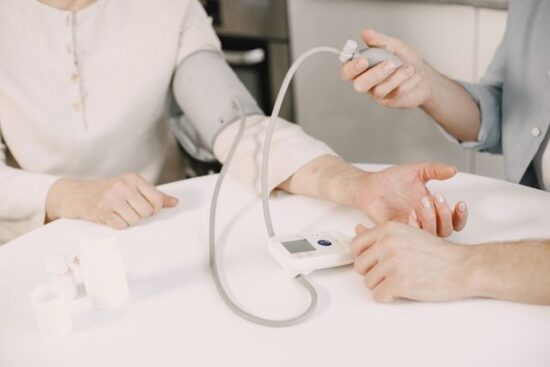
Preventive Care Access Prediction: Convenience Prevent People From Seeking Care
Anshika Jain - November 2, 2026Preventive healthcare plays an essential role in identifying potential health problems before they become more complicated or difficult to manage. Routine health assessments, vaccinations, dental examinations, screening…
Most from this category


Accessibility-Aware Health AI: Self-Care Systems Adapt to Different Sensory Needs
Anshika Jain - November 2, 2026
Mineral Bioaccessibility Forecasting: Which Minerals Become Available During Digestion
Anshika Jain - October 30, 2026

Accessibility-Aware Health AI: Self-Care Systems Adapt to Different Sensory Needs
Anshika Jain - November 2, 2026Mineral Bioaccessibility Forecasting: Which Minerals Become Available During Digestion
Anshika Jain - October 30, 2026

Wellness Placebo Effect: AI Separate Genuine Habit Improvements
November 2, 2026

Human-in-the-Loop Wellness AI: Self-Care Decisions
November 2, 2026
.png)
Leave a Comment
You must be logged in to post a comment.