
AI Detect Muscle Group Imbalance Through Everyday Movement Instead of Only Gym Tests

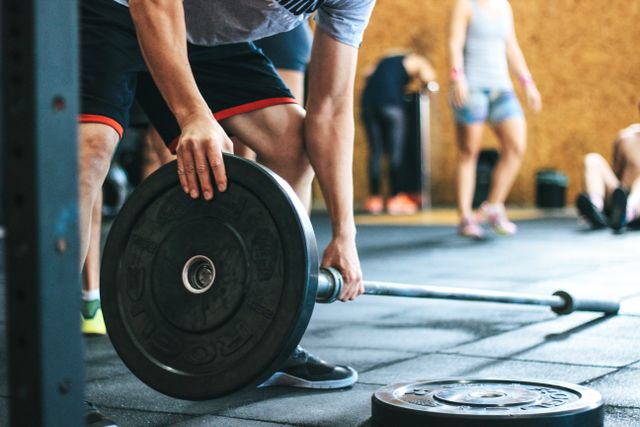
Muscle imbalances are often discussed in the context of gym training. Fitness assessments may compare the strength of different muscle groups, examine left-right differences or evaluate how effectively a person performs specific exercises. However, people do not use their muscles only during workouts. Walking, climbing stairs, carrying shopping bags, standing from a chair, reaching for objects and maintaining posture all involve coordinated muscular activity. These everyday movements may reveal patterns that are not always visible during a short gym assessment.
Artificial intelligence could make it possible to study these movement patterns continuously and identify possible differences in how the body performs daily activities. By analysing walking rhythm, body position, movement speed, balance and the contribution of different limbs, an AI-based system could identify recurring asymmetries or compensatory movement strategies. Instead of relying exclusively on controlled strength tests, it could build a broader picture of how someone moves throughout the day.
However, there is an important distinction between detecting a movement imbalance and proving that a particular muscle group is weak or overactive. Everyday movement involves multiple muscles, joints and the nervous system working together. AI could identify patterns that deserve further investigation, but it cannot reliably determine the exact strength or condition of an individual muscle from ordinary movement alone. The potential lies in combining everyday movement analysis with more specific assessments to create a more complete understanding of physical function.
What Is a Muscle Group Imbalance?
A muscle group imbalance generally refers to a difference in strength, capacity, coordination or function between muscles or muscle groups that contribute to related movements. These differences can occur between the left and right sides of the body or between muscle groups that perform opposing or complementary actions. For example, differences may exist between the muscles involved in pushing and pulling, or between the muscles responsible for stabilising and moving a joint.
Not every difference is harmful. Human bodies naturally have dominant sides, and everyday activities often involve unequal use of the limbs. A person may regularly carry a bag with one hand, use one leg more frequently when climbing stairs or prefer one side when turning. Such habits do not automatically indicate a physical problem. A difference becomes more relevant when it is associated with reduced function, persistent compensation, discomfort or difficulty performing particular activities.
Traditional gym assessments often focus on measurable performance, such as how much weight a person can lift, how many repetitions they can complete or how they perform a unilateral exercise. These tests are useful, but they represent specific tasks performed under controlled conditions. Everyday movement analysis could add another dimension by examining whether the body consistently uses different movement strategies during ordinary activities.
Why Everyday Movement May Reveal Information That Gym Tests Miss
A gym assessment usually captures performance at a particular moment. The person may be asked to perform a squat, lunge, shoulder press or balance test while a trainer observes their technique. Although this can reveal important information, it does not necessarily show how the person moves during the rest of the day. Their movement patterns may change when they are tired, distracted, carrying objects or performing tasks in a less controlled environment.
Everyday activities provide repeated opportunities to observe how the body manages movement. Walking involves alternating movements of the legs, coordinated arm motion, balance and weight transfer. Climbing stairs requires repeated lower-body force production and control. Standing up from a chair involves coordinated activity around the hips, knees and ankles. Reaching for objects requires shoulder, arm and trunk coordination. Patterns across these activities could provide useful information about movement consistency and functional performance.
For example, a person may appear symmetrical during a supervised gym exercise but regularly place more weight on one leg when standing from a chair. Another person may walk with a consistently shorter step on one side. These observations do not establish which muscle is responsible, but they may identify a pattern that deserves further assessment. AI could help detect such patterns across repeated observations rather than relying on a single visual impression.
How an AI System Could Analyse Daily Movement
An AI-based movement analysis system could begin by collecting data from wearable devices, smartphone sensors or camera-based motion tracking. A smartwatch or wearable sensor containing an accelerometer and gyroscope can record movement acceleration and rotational information. Additional sensors placed near the ankles, thighs or waist could provide more detailed information about walking and body movement. Camera-based systems could estimate body positions and joint movement from video recordings.
The system would first identify the activity being performed. Machine-learning models could classify whether the user is walking, climbing stairs, sitting down, standing up, reaching or carrying an object. Once the activity is recognised, the system could extract relevant movement characteristics, such as duration, speed, step timing, movement range and differences between the left and right sides.
The next stage would involve comparing repeated observations. A single unusual movement may result from distraction, an uneven surface or temporary fatigue. A recurring pattern across different days and activities may provide stronger evidence that the person has a consistent movement difference. The system could then generate a report describing the observed pattern, the activities in which it appears and the level of confidence in its measurements. It should avoid presenting the result as a diagnosis of a specific muscle imbalance.
Walking Analysis: Understanding Left-Right Movement Differences
Walking is one of the most useful everyday activities for studying repeated movement patterns because it involves continuous coordination between the lower limbs. Each step requires the body to transfer weight, maintain balance and move forward through a coordinated sequence. Differences in step length, timing, walking speed and foot placement may reveal changes in how the two sides contribute to movement.
An AI system could analyse walking through wearable sensors or computer vision. It might compare the duration of steps, the time each foot spends in contact with the ground, the rhythm of movement and differences in estimated joint angles. If a person repeatedly takes shorter steps with one leg or spends noticeably different amounts of time supporting their weight on each side, the system could flag this as an asymmetrical movement pattern.
However, walking asymmetry does not directly identify a weak muscle. It may be associated with joint discomfort, previous injury, neurological conditions, differences in mobility, footwear, walking speed or environmental factors. The same visible movement difference can have several possible explanations. AI should therefore describe what it observes and recommend further assessment when appropriate, rather than automatically assigning the result to a particular muscle group.
Analysing Stair Climbing and Standing From a Chair
Stair climbing provides another useful opportunity to study functional movement. Each step requires the body to lift its weight, coordinate hip and knee movement and maintain balance. A person may use one leg differently from the other, change their trunk position or rely more heavily on a handrail. These differences could become more noticeable across repeated stair-climbing activities.
AI could analyse the time taken to climb a set of stairs, the consistency of movement between steps and the way each leg contributes to the task. If wearable sensors are positioned appropriately, they may also provide information about movement acceleration and timing. Camera-based systems could estimate joint positions and trunk movement, although their accuracy would depend on camera placement, lighting, clothing and visibility.
Standing up from a chair could provide additional information about lower-body function. The task requires coordinated movement around the hips, knees and ankles, together with balance and trunk control. A system might identify repeated differences in movement timing, weight transfer or body position. These findings could help a trainer or physiotherapist decide whether a more specific assessment is needed. They should not be treated as proof that one muscle is weaker than another.
The Role of Computer Vision in Muscle Imbalance Detection
Computer vision could allow an AI system to study everyday movement without requiring users to wear multiple sensors. A smartphone or camera could record activities such as walking, reaching, squatting naturally or standing from a chair. Pose-estimation algorithms could identify key points on the body, including the shoulders, hips, knees and ankles, and estimate how these points move over time.
By analysing these estimated positions, AI could identify recurring differences in posture, joint movement and movement timing. For example, it might detect that the trunk consistently shifts towards one side during a particular activity or that one leg follows a different movement path during walking. Repeated observations could help distinguish a consistent pattern from an isolated movement variation.
Nevertheless, computer vision has important limitations. A camera cannot directly measure the force produced by an individual muscle. It may also struggle when body parts are hidden, the camera angle is unsuitable or movements occur outside the recording area. A 2025 systematic review of computer-vision-based gait analysis found that the accuracy of movement estimates varies according to the algorithm, camera conditions and the body measurements being assessed. Some parameters showed promising agreement with established methods, while others, particularly certain ankle measurements, remained less reliable.
Wearable Sensors and Muscle Activity Measurements
Wearable sensors could provide a more continuous picture of movement than occasional video recordings. Accelerometers measure changes in acceleration, while gyroscopes measure rotational movement. Inertial measurement units combine these signals to estimate movement characteristics such as orientation, timing and activity patterns. These devices could help an AI model study walking, balance and daily physical activity in real-world environments.
Surface electromyography, commonly known as sEMG, offers another type of information. It records electrical activity associated with muscle activation through sensors placed on the skin. When used under appropriate conditions, sEMG can help researchers examine the timing and relative patterns of muscle activation during movement. AI models may analyse these signals to identify differences in activation patterns across tasks.
However, sEMG is not a direct measurement of muscle strength. Its readings can be affected by electrode placement, skin conditions, movement artefacts, tissue characteristics and the specific muscles being monitored. A difference in electrical activity does not automatically mean that a muscle is weak or that another muscle is overactive. A 2025 scoping review of AI-assisted myographic assessment examined 111 studies and identified promising applications in motor-function assessment, while also highlighting limitations in participant representation and measurement approaches.
Building a Personal Movement Baseline
A major advantage of continuous movement analysis could be the ability to compare a person with their own previous movement patterns. Standard assessments often compare users with reference values from larger populations. These comparisons can be useful, but they may not reflect differences in body proportions, activity habits, age, training experience or natural movement preferences.
An AI system could establish a baseline by observing a person’s normal walking pattern, stair-climbing behaviour, sitting and standing movements and other routine activities over time. It could then compare new observations with that baseline. If the person’s walking rhythm changes noticeably over several weeks, the system might identify the change and show which movement characteristics have shifted.
This approach could be more informative than treating every difference from a population average as a problem. A person who naturally has a slightly different walking pattern from another individual may still have stable and functional movement. What matters is whether the pattern changes, becomes more pronounced or is associated with a reduction in everyday function. Personal baselines could help AI distinguish stable individual variation from changes that deserve attention, although professional interpretation may still be necessary.
A Practical Example: Detecting a Possible Lower-Body Movement Imbalance
Imagine a person who spends most of the day working at a desk and does not regularly perform gym-based strength tests. During everyday activities, the person walks, climbs stairs, stands from a chair and carries objects. An AI-enabled wearable system records movement patterns over several weeks, with the user’s permission.
The model notices that the person repeatedly spends slightly different amounts of time supporting weight on each leg during walking. It also detects that the person tends to shift their trunk towards one side when standing from a chair. These patterns appear across multiple observations rather than during a single unusual movement. The system could report that a recurring lower-body movement asymmetry has been observed and identify the activities in which it occurs.
The report should not claim that a particular muscle, such as the quadriceps or gluteal muscles, is weak. Instead, it could recommend a structured functional assessment by a qualified trainer or physiotherapist. That professional might examine strength, joint mobility, balance, movement control and relevant medical history to understand the possible reasons for the observed pattern. This example illustrates how everyday AI monitoring could help identify questions for further assessment rather than attempting to answer every clinical question independently.
Combining Everyday Movement With Gym and Functional Tests
Everyday movement analysis would be most valuable when combined with more specific assessments. Daily activities can reveal how the body behaves in natural environments, but they do not provide the same controlled information as a strength test or clinical examination. Gym assessments can measure performance under defined conditions, while functional tests can examine how a person performs selected movements.
An integrated AI platform could bring these sources together. It might compare walking asymmetry with single-leg balance performance, step-up control or other appropriate functional assessments. If the user also completes a supervised strength test, the system could examine whether the movement pattern is accompanied by a measurable difference in performance. This combination could help create a more complete profile of physical function.
For example, a recurring difference in walking rhythm may become more meaningful when considered alongside reduced performance in a suitable unilateral strength assessment. Even then, the system should not assume that one finding explains the other. Multiple factors can contribute to movement differences, and the relationship between muscle strength and everyday movement is not always straightforward.
Potential Benefits for Fitness, Rehabilitation and Healthy Ageing
In fitness settings, everyday movement analysis could help trainers understand how clients move outside the gym. A person may perform exercises correctly during a supervised session but develop different movement habits during ordinary activities. Continuous monitoring could provide additional context for designing suitable training assessments and tracking changes over time.
In rehabilitation, movement monitoring may help professionals observe how a person performs daily tasks between appointments. Changes in walking, balance or upper-limb activity could provide useful information about functional progress. Wearable monitoring research has already explored home-based movement assessment, including the use of inertial sensors and smartphones to observe activities outside specialised laboratories. A 2025 systematic review of continuous home movement monitoring included 72 studies involving 7,949 participants, demonstrating the growing research interest in real-world movement measurement. However, the evidence base varied in study design and clinical application.
For older adults, repeated movement observations could potentially help identify changes in mobility or balance that might otherwise go unnoticed. The purpose would not be to label normal ageing as a muscle disorder, but to provide additional information when a person’s functional abilities change. Any concerning or persistent change should be evaluated by an appropriate healthcare professional.
Limitations: Can Everyday Movement Really Identify Specific Muscle Imbalances?
The biggest limitation is that everyday movements involve several muscles working together. Walking, for example, requires coordinated activity from the hips, knees, ankles, trunk and nervous system. If a person walks asymmetrically, the cause could involve strength, joint movement, pain, balance, coordination or a combination of factors. A movement recording alone cannot reliably separate all these possibilities.
Another limitation is that daily activities are not standardised. People walk at different speeds, use different footwear, carry different objects and move across different surfaces. A person may also change their behaviour when they know they are being recorded. These factors can affect the measurements and make comparisons difficult. AI models need sufficiently diverse training data and real-world validation before their outputs can be trusted across different populations.
Privacy is also important because continuous movement monitoring may reveal information about a person’s routines, mobility and daily habits. Users should be able to understand what is being recorded, control access to their data and choose when monitoring is active. Systems should avoid making health-related conclusions without adequate evidence, and they should not encourage users to begin corrective exercise programmes based only on an automated movement score.
The Future of AI-Based Everyday Muscle Function Monitoring
Future systems could combine smartwatches, smartphone cameras, specialised wearable sensors and supervised functional assessments into a single movement-monitoring platform. Instead of generating a one-time report, AI could track changes in movement patterns over weeks or months. It might identify when a previously stable movement pattern begins to change, highlight which daily activities are affected and suggest when a more detailed assessment could be useful.
More advanced systems could also combine movement data with carefully collected muscle-activity measurements and strength-test results. This would help distinguish between visible movement differences and measurable differences in muscle function. Researchers would still need to validate the models across different ages, body types, activity levels and health conditions. Explainable AI would be particularly important because users and professionals should understand why a particular movement pattern has been flagged.
The most useful future application may be a personal movement profile that connects everyday function with structured fitness assessments. Such a profile could help trainers, physiotherapists and individuals understand how physical capabilities change over time without relying on a single gym test or population benchmark.
Conclusion
AI could expand muscle-function assessment beyond the gym by analysing how people walk, climb stairs, stand, reach and perform other everyday activities. Wearable sensors and computer vision could identify recurring movement asymmetries. Changes in coordination and possible compensatory patterns that may not appear during a short exercise test. When combined with personal baselines and supervised strength assessments, this information could provide a more complete picture of functional movement.
However, detecting an asymmetrical movement pattern is not the same as identifying a specific weak muscle. Everyday activities involve complex coordination, and the same movement difference can have several possible explanations. The most responsible approach is to use AI as an early monitoring and decision-support tool, with qualified professionals interpreting findings when necessary. Rather than replacing gym tests or clinical assessments, everyday movement analysis could complement them and help create a more continuous understanding of how the body functions in real life.
Online Internship with Certificate
You may be interested
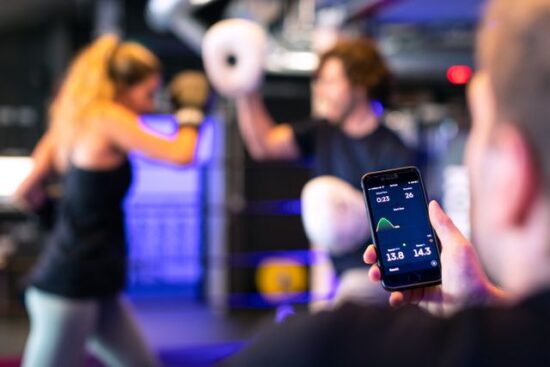
Exercise Quality Score: Workout Was Effective Rather Than Just Counting Repetitions
Anshika Jain - November 25, 2026For many people, workout progress is measured through numbers. A fitness application records how many repetitions they complete, how much weight they lift, how many sets they…
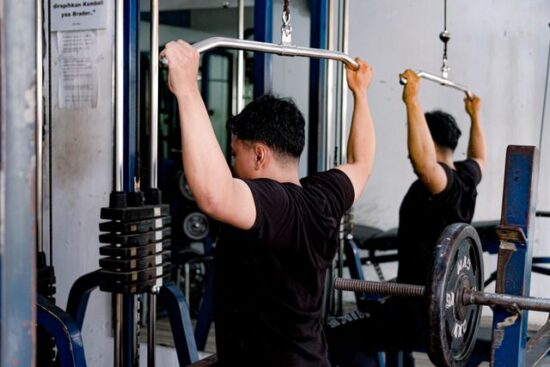
AI Predict When Increasing Gym Weight Will Reduce Exercise Quality Instead of Improving Strength
Anshika Jain - November 25, 2026Increasing the weight lifted during a gym workout is commonly viewed as a sign of progress. When someone can complete a planned number of repetitions with a…
Micro-Injury Risk Intelligence: Repeated Low-Level Physical Stress
Anshika Jain - November 25, 2026Physical injuries do not always begin with a sudden accident, an incorrect movement or an unusually heavy workload. In some situations, discomfort and tissue problems develop gradually…
Most from this category
AI-Powered Movement Substitution for Crowded Gyms: Rebuild Entire Workout
Anshika Jain - November 25, 2026
AI Develop a Recovery Scheduling Engine That Finds Different Forms of Self-Care
Anshika Jain - November 25, 2026
Nutritional Redundancy Detector: When Your Diet Repeatedly Depends on the Same Nutrients
Anshika Jain - November 24, 2026
Can AI Identify Hidden Nutritional Trade-Offs When You Replace One Food With Another
Anshika Jain - November 24, 2026
AI-Powered Movement Substitution for Crowded Gyms: Rebuild Entire Workout
Anshika Jain - November 25, 2026AI Develop a Recovery Scheduling Engine That Finds Different Forms of Self-Care
Anshika Jain - November 25, 2026Nutritional Redundancy Detector: When Your Diet Repeatedly Depends on the Same Nutrients
Anshika Jain - November 24, 2026

.png)
Leave a Comment
You must be logged in to post a comment.