
Personal Health Measurement Reliability AI: Device Is Producing Misleading Readings

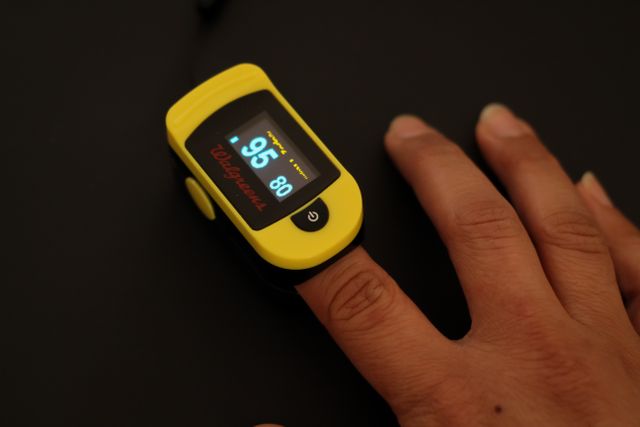
Wearable devices and home health monitoring technologies have changed how people observe their daily health. Smartwatches, fitness bands, digital thermometers, blood pressure monitors, weighing scales and home monitoring devices allow individuals to record different measurements without visiting a healthcare facility every time. People can monitor their heart rate during exercise, observe sleep patterns, measure blood pressure at home and track changes in body weight. These technologies have made personal health information more accessible and encouraged individuals to become more involved in managing their well-being.
However, collecting a measurement does not automatically make it accurate. A smartwatch may display an unusually high heart rate because the sensor has lost proper contact with the skin. A home blood pressure monitor may produce an unexpected result because the person is sitting incorrectly or using an unsuitable cuff. A digital weighing scale may show different numbers because it is placed on an uneven surface. Even a device that usually provides reliable information can occasionally generate misleading readings.
This creates an important challenge for digital healthcare. People may trust the numbers displayed on their devices without understanding the conditions under which those measurements were collected. They may become unnecessarily concerned about an inaccurate reading or assume that an apparently improved measurement represents a genuine health improvement.
Artificial intelligence could help address this problem through personal health measurement reliability intelligence. Instead of simply recording the numbers produced by a device, an AI system could examine measurement quality, sensor behaviour, historical patterns and surrounding conditions. It could identify unusual readings, detect possible technical problems and indicate when a measurement should be repeated or professionally verified.
Understanding Personal Health Measurement Reliability
Personal health measurement reliability refers to how consistently and accurately a device records information about an individual’s body or health-related activities. A reliable measurement should reflect the parameter being monitored within the device’s intended accuracy and operating conditions.
Accuracy and reliability are related, but they are not identical. Accuracy describes how close a measurement is to the actual value, while reliability concerns the consistency of measurements under comparable conditions. A device might repeatedly display similar readings while still being inaccurate. Conversely, a generally accurate device may occasionally produce an unusual result because of movement, incorrect positioning or temporary sensor interference.
For example, a smartwatch may record a resting heart rate several times during similar conditions. If its measurements remain reasonably consistent, the data may be useful for observing personal trends. However, consistency alone cannot prove that every reading is medically accurate. The device’s technology, fit, validation and operating conditions still matter.
AI-based reliability analysis could examine these differences. It could evaluate whether a measurement appears consistent with the device’s normal behaviour, whether the sensor signal is strong enough and whether the result differs significantly from comparable historical observations.
This would allow the system to distinguish between a potentially meaningful health change and a reading that may require further verification.
Why Wearable and Home Health Devices Sometimes Produce Misleading Readings
Wearable and home monitoring devices rely on sensors, electronic components and measurement procedures. Each of these elements can introduce errors. The causes vary according to the type of device and the health parameter being measured.
Smartwatches commonly use optical sensors to estimate heart rate. These sensors detect changes in light absorption associated with blood flow beneath the skin. Movement, loose straps, poor skin contact, sweat and other conditions can affect the quality of the signal. During certain activities, the device may struggle to distinguish the pulse signal from movement-related interference.
Home blood pressure monitors also depend on correct measurement conditions. An incorrectly positioned cuff, unsupported arm, crossed legs, talking during measurement or measuring immediately after physical activity can influence the result. The device may be functioning properly while the measurement procedure introduces an error.
Digital weighing scales can be affected by uneven flooring, movement, low battery levels or inconsistent positioning. Thermometers may produce different readings depending on the measurement location, technique and surrounding conditions. Sleep-monitoring devices may estimate sleep stages using movement and physiological signals, but these estimates are not equivalent to a clinical sleep study.
These examples show that misleading readings do not always mean a device is defective. Sometimes the sensor is functioning normally, but the conditions are unsuitable for accurate measurement. An intelligent reliability system would need to understand both technical and human-related sources of error.
How AI Could Recognise Unusual Measurement Patterns
One of the most useful applications of AI would be identifying measurements that differ unexpectedly from an individual’s normal pattern. Machine learning models can examine historical data and learn the range of variation commonly observed under comparable conditions.
Suppose a person usually records a relatively consistent resting heart rate using the same smartwatch. One morning, the device displays a substantially different value. Instead of immediately interpreting this as a genuine physiological change, the AI system could examine the surrounding information. It might check whether the watch was properly worn, whether the person was moving, whether the sensor signal was incomplete and whether the reading was recorded under conditions similar to previous measurements.
If the result appears inconsistent with the available sensor information, the system could mark it for verification. It might suggest following the device manufacturer’s measurement instructions and repeating the measurement when appropriate.
However, an unusual reading should not automatically be dismissed as an error. A genuine health change can also produce an unexpected measurement. AI must therefore avoid assuming that a result is false simply because it differs from the user’s historical baseline.
The system should communicate uncertainty clearly. It could describe a reading as unusual or potentially affected by measurement conditions while encouraging professional medical assessment when symptoms or concerning values are present.
Sensor Signal Quality Analysis
Before interpreting a health measurement, an AI system could examine the quality of the underlying sensor signal. This is especially important for wearable devices that continuously collect information through optical, electrical or motion-based sensors.
For example, optical heart-rate sensors collect light-based signals that can be affected by movement and skin contact. AI algorithms could examine signal strength, irregular patterns, sudden interruptions and noise. If the signal contains too much interference, the system could identify that the measurement may be unreliable.
Signal processing techniques could separate useful information from background noise. Machine learning models could also recognise patterns associated with poor sensor contact or movement-related interference. This may help the device avoid presenting an uncertain measurement with the same confidence as a high-quality reading.
The same principle could apply to other technologies. A digital thermometer may provide information about measurement completion or sensor status, while a blood pressure monitor may report an error when it detects certain irregularities during measurement. AI could combine such device information with the user’s measurement history to identify recurring problems.
Nevertheless, not every device exposes detailed raw sensor data. Some consumer products provide only final measurements, limiting the amount of reliability analysis an external AI system can perform. More advanced coordination between device manufacturers and health software developers may be needed to make detailed signal-quality information available.
Establishing a Personal Measurement Baseline
A universal measurement pattern cannot represent every individual. People’s usual health measurements can vary according to age, activity, health circumstances, medication, fitness, environment and other factors. An AI system that relies only on general population averages may incorrectly identify normal personal variation as an error.
A personal measurement baseline could help address this limitation. The system would collect repeated observations and gradually establish the individual’s typical measurement patterns under comparable conditions. It could consider the device used, time of day, measurement location and other relevant details.
For example, a person may record blood pressure at home every morning using the same validated monitor and following consistent measurement instructions. Over time, the AI system could identify the usual range of recorded values and highlight unusual results for review. It should not treat the personal baseline as a substitute for clinically recommended blood pressure thresholds or professional interpretation.
Similarly, an individual who uses a smartwatch to observe resting heart-rate trends could receive more meaningful comparisons when readings are collected consistently. A sudden difference could trigger a quality check rather than an automatic conclusion about health.
Personal baselines should also be updated carefully. People’s health circumstances and routines change, and a long-term shift in measurements may represent a genuine development rather than a new technical error. The system should therefore distinguish gradual changes from isolated anomalies and avoid continuously redefining an unhealthy pattern as normal.
Detecting Device-Specific Problems
Different devices have different technical limitations. A smartwatch, blood pressure monitor and weighing scale cannot be evaluated using exactly the same reliability rules. AI systems would need device-specific knowledge about sensor behaviour, measurement methods and known sources of error.
For a smartwatch, the system might examine skin contact, movement, signal interruptions and battery-related performance information where available. For a blood pressure monitor, it could consider cuff compatibility, error messages, measurement consistency and whether the user followed the recommended procedure.
Device age and maintenance could also matter. Batteries may weaken, sensors may become damaged and equipment may require calibration or replacement according to manufacturer instructions. An intelligent system could maintain a record of device model, purchase date, maintenance history and known limitations.
If a device repeatedly produces inconsistent results under similar conditions, the assistant could recommend checking the manufacturer’s instructions or contacting the manufacturer for support. Where appropriate, it could suggest comparing the device with a validated alternative or seeking professional verification.
AI should not claim that a device is defective without sufficient evidence. Its role would be to identify possible reliability concerns and guide the user towards suitable checks.
Recognising Human Errors During Measurement
Measurement reliability depends not only on technology but also on how people use it. Incorrect positioning, inconsistent timing and failure to follow instructions can create misleading results even when the device is functioning correctly.
For example, blood pressure readings may be affected when a person measures immediately after exercise, consumes caffeine shortly beforehand or talks during the measurement. A person may also use a cuff that is not suitable for their arm size. These factors can reduce the usefulness of the recorded result.
AI could support users by providing step-by-step measurement guidance. Before recording a reading, an assistant might remind the user to follow the device’s instructions, adopt the recommended posture and allow sufficient rest when required. If the device supports relevant information, the system could also check whether the measurement was completed successfully.
For weighing scales, it could encourage consistent measurement conditions, such as using the same scale on a hard, level surface. For temperature measurements, it could explain the importance of following the manufacturer’s recommended technique and measurement location.
Computer vision and connected sensors might eventually help verify certain aspects of measurement technique, but these features would require careful privacy controls and reliable validation. A camera should not be treated as a universal solution for checking medical measurement accuracy.
Comparing Readings Across Multiple Devices
Another possible application of AI is comparing related information collected by different devices. When multiple devices monitor similar health parameters, their readings may provide additional context. However, different devices may use different measurement methods, and their results should not automatically be expected to match exactly.
For example, a person may use a smartwatch to estimate heart rate and a separate device to measure it under resting conditions. An AI system could compare the timing, measurement conditions and available quality indicators before identifying a difference. If the results disagree substantially, it could suggest repeating the measurement according to the relevant device instructions or discussing the discrepancy with a healthcare professional.
Similarly, a person may use a home thermometer and another suitable temperature-measuring device. Differences could arise because of measurement location, technique, device characteristics or timing. The assistant could explain that measurements from different methods may not be directly interchangeable.
Cross-device comparison should be used carefully. A consumer smartwatch should not automatically be treated as a clinical reference device, and a second device is not necessarily more accurate simply because it produces a different number. The reliability of each device must be considered independently.
A Practical Example of AI-Based Measurement Reliability
Consider an individual who uses a smartwatch, digital weighing scale and home blood pressure monitor to observe different aspects of personal health. The person records measurements regularly and relies on a mobile application to organise the information.
One morning, the smartwatch displays an unusually high heart-rate reading. The AI assistant checks the available signal-quality information and identifies that the watch may have been loosely fitted. It labels the reading as potentially affected by sensor contact and recommends following the manufacturer’s instructions before repeating the measurement.
On another day, the blood pressure monitor records a result that differs substantially from the person’s previous readings. The assistant reviews the measurement record and notices that the user recorded the result immediately after climbing stairs. It explains that activity before measurement may affect the reading and encourages the person to repeat it under the recommended conditions, without suggesting that the original result is necessarily incorrect.
The weighing scale also begins displaying inconsistent values. After reviewing the recorded conditions, the assistant identifies that the scale may have been moved between different surfaces. It recommends placing it on a stable, level surface and following the manufacturer’s measurement guidance.
In each situation, AI does not decide whether the person is healthy or unwell. It helps identify conditions that may influence measurement reliability and encourages more careful interpretation.
The Importance of Confidence Scores and Transparent Explanations
An AI system should not simply label every measurement as accurate or inaccurate. In many situations, the available information will be insufficient to make a definitive judgement. A confidence-based approach could communicate how much evidence supports the reliability of a particular reading.
For instance, a system might identify a heart-rate measurement as having strong signal quality, limited signal quality or insufficient information. These descriptions would help users understand why a reading has been flagged. The system could explain that the device recorded movement interference or that the measurement conditions differed from previous observations.
Confidence indicators must be carefully designed. A high confidence score should not be confused with proof that a measurement is medically correct. It may only indicate that the available technical signals appear consistent with the device’s expected operation.
Transparency is equally important. Users should be able to understand why a reading was flagged and what information influenced the assessment. If an algorithm identifies a possible sensor issue, it should explain the relevant evidence rather than displaying an unexplained warning.
Such explanations could improve trust and help people learn how to use their health devices more effectively.
Challenges, Accuracy and Privacy Considerations
AI-based measurement reliability analysis would face several technical and practical limitations. One major challenge is the lack of access to raw sensor information. Many consumer devices provide processed measurements rather than detailed signals, making it difficult for external software to identify the exact cause of an unusual result.
Another challenge is the difference between measurement error and genuine physiological change. A sudden change may indicate a technical problem, but it could also represent an important health development. Algorithms must avoid automatically dismissing unusual readings, especially when users report symptoms or other concerning changes.
Models also need to be tested across different devices, populations and measurement conditions. An algorithm developed using one smartwatch model may not perform equally well with another manufacturer’s product. Skin characteristics, movement patterns, device fit and other factors can influence sensor performance. Systems should be independently evaluated rather than relying only on manufacturer claims.
Privacy is another essential consideration. Wearables and home monitoring devices may collect sensitive information about heart rate, sleep, activity, blood pressure and daily routines. AI platforms must protect this information through secure storage, encryption, access controls and transparent consent practices. Users should understand what information is collected and whether it is shared with other services.
Most importantly, reliability analysis must never delay medical care. If a reading is concerning or accompanied by symptoms, users should follow appropriate medical advice rather than assuming that the device has made an error. Severe or sudden symptoms require prompt medical attention.
The Role of Healthcare Professionals in Measurement Verification
Healthcare professionals can help determine whether a measurement reflects a meaningful health change or a technical problem. Doctors, nurses and pharmacists may guide patients on the appropriate use of home monitoring equipment and explain which measurements require professional review.
For example, a person monitoring blood pressure at home may benefit from having their monitor and technique checked during a healthcare appointment. A healthcare professional can assess whether the device is suitable and explain how to record measurements consistently.
AI could make these discussions more useful by preparing organised measurement histories. Instead of bringing scattered numbers, individuals could share a timeline showing when readings were recorded, which device was used and whether the system identified possible quality concerns.
Healthcare professionals could then interpret the information alongside symptoms, medical history and clinical assessments. This combination of organised digital information and professional judgement could improve the usefulness of home monitoring.
AI should therefore be viewed as a support layer between personal devices and healthcare services, not as an independent authority on medical accuracy.
The Future of Intelligent Personal Health Measurement
Future health-monitoring systems could combine device-specific sensor analysis, personal baselines, environmental information and measurement instructions to improve reliability assessment. Smartwatches, home monitoring equipment and digital health platforms may increasingly exchange information about signal quality and device performance.
More advanced algorithms could identify recurring measurement problems before they create confusion. For example, a system might notice that a particular device regularly produces incomplete readings during exercise or that a home monitor generates inconsistent results when used under certain conditions. It could then provide targeted guidance based on the device’s documented limitations.
Manufacturers may also develop better ways to communicate measurement-quality information directly to health applications. This could help distinguish a measurement that has been successfully recorded from one that contains substantial technical interference.
Future systems may also provide more accessible explanations in regional languages, allowing people to understand measurement limitations without needing advanced technical knowledge. This could be especially valuable for individuals who use home health devices but have limited access to detailed guidance.
The long-term goal should be to create a digital health environment in which people do not simply collect more measurements. They should be able to understand how those measurements were obtained, how reliable they appear and when professional verification is necessary.
Conclusion
Personal health measurement reliability AI could improve the way individuals interpret information from wearables and home monitoring devices. By examining sensor quality, historical patterns, device-specific behaviour and measurement conditions, algorithms could identify readings that may be misleading or require verification.
Its value would extend beyond detecting technical errors. It could also help users understand the importance of correct measurement techniques, consistent recording conditions and device maintenance. By explaining why a result appears unusual, AI could reduce unnecessary confusion and encourage more responsible use of personal health technology.
However, an unusual reading is not automatically an inaccurate one. Genuine health changes can also appear suddenly, and no algorithm should dismiss concerning results without appropriate assessment. Device validation, professional guidance, transparent explanations and strong privacy protections will remain essential.
As wearable and home monitoring technologies continue to develop, AI could become an important reliability layer that helps people move from simply collecting health numbers to understanding the quality and limitations of the information behind them.
Online Internship with Certificate
You may be interested

Health Improvement Is Temporary Rather Than a Genuine Long-Term Change
Anshika Jain - November 26, 2026A noticeable improvement in health can be encouraging. Someone may experience better energy after changing their breakfast, sleep more comfortably after following a new evening routine, or…
AI-Based Medication and Meal Coordination Intelligence: Avoid Conflicting Daily Health Routines
Anshika Jain - November 26, 2026Managing everyday health involves more than remembering to take medication or choosing nutritious food. People often follow several routines simultaneously, including prescribed medicines, breakfast and dinner schedules,…

Self-Care Response Simulator: Recovery Activity Is Appropriate for Particular Type of Fatigue
Anshika Jain - November 26, 2026Self-care is often discussed as a collection of activities that help people feel better, maintain their health and manage everyday pressure. However, not every recovery activity is…
Most from this category

Movement Safety Windows: Daily Routine Reveal When High-Intensity Exercise Is Poor Choice
Anshika Jain - November 26, 2026
Personal Symptom Interaction Graph: Connections Between Unrelated Health Changes
Anshika Jain - November 26, 2026
Exercise Quality Score: Workout Was Effective Rather Than Just Counting Repetitions
Anshika Jain - November 25, 2026
AI Predict When Increasing Gym Weight Will Reduce Exercise Quality Instead of Improving Strength
Anshika Jain - November 25, 2026
Movement Safety Windows: Daily Routine Reveal When High-Intensity Exercise Is Poor Choice
Anshika Jain - November 26, 2026Personal Symptom Interaction Graph: Connections Between Unrelated Health Changes
Anshika Jain - November 26, 2026Exercise Quality Score: Workout Was Effective Rather Than Just Counting Repetitions
Anshika Jain - November 25, 2026



.png)
Leave a Comment
You must be logged in to post a comment.