
Biological Redundancy Analysis: Which Body Systems Compensate When Another System Begins to Fail

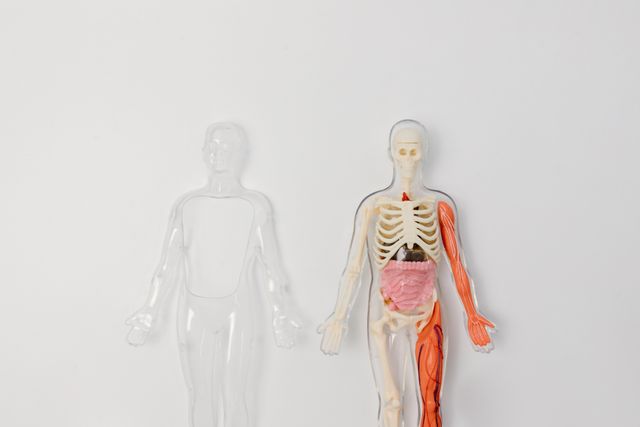
The human body is not a collection of independent organs performing isolated tasks. It is an interconnected biological system in which different organs, tissues and regulatory pathways continuously coordinate their activities. When one system becomes less effective, other systems may adjust their functions to preserve essential physiological conditions. The heart, kidneys, lungs, liver, nervous system and endocrine system all participate in this complex process of maintaining internal stability.
This ability to maintain essential functions despite disruption is closely related to the concept of biological redundancy. In engineering, redundancy refers to the presence of additional components or alternative mechanisms that help a system continue operating when one component fails. Biology uses a more flexible version of this principle. Different organs do not necessarily perform identical tasks, but their activities can overlap, support one another or compensate for changes elsewhere in the body.
For example, when kidney function declines, the cardiovascular and endocrine systems may adjust blood pressure, blood flow and fluid regulation to help preserve circulation and filtration. When oxygen availability decreases, the respiratory and cardiovascular systems work together to improve oxygen delivery. These responses can maintain apparently stable physiological measurements even when an underlying system is becoming less effective.
Biological Redundancy Analysis is an emerging research concept that aims to understand these compensatory relationships. Artificial intelligence could help researchers identify which systems become more active when another system experiences stress, how long the compensation remains effective and when the supporting mechanisms begin to lose their capacity. Instead of examining organ function independently, AI could analyse the body as a network of interacting systems.
Why the Body Uses Compensatory Mechanisms
The body continuously adjusts its internal processes to maintain conditions required for survival. This regulation is commonly described through the concept of homeostasis. Blood pressure, temperature, glucose concentration, oxygen availability, electrolyte balance and acid–base status are regulated through interacting physiological mechanisms.
However, maintaining stability does not always mean keeping every measurement at exactly the same level. The body can change its operating conditions in response to exercise, infection, dehydration, emotional stress, medication exposure or organ dysfunction. This broader adaptive process is known as allostasis, which describes how physiological systems maintain stability through adjustment.
A 2025 review published in Communications Biology examines allostasis as a framework for understanding how different biological systems coordinate their responses to persistent stress. It also discusses how repeated or prolonged adaptation can accumulate physiological costs, contributing to allostatic load and potentially increasing disease vulnerability.
Compensation is therefore not always a sign of good health. In the short term, it can protect the body from serious disruption. Over longer periods, however, the supporting system may experience additional workload, and the compensatory response may become less effective. A mechanism that initially preserves function can eventually contribute to further physiological strain.
This creates an important challenge for healthcare. Conventional measurements may show that the body is maintaining stability without revealing how much additional effort is required to achieve it. Understanding the relationship between the failing system and its compensating partners could provide a more complete picture of physiological resilience.
How Different Body Systems Compensate for One Another
One of the clearest examples of biological compensation occurs between the respiratory and cardiovascular systems. The lungs transfer oxygen into the blood, while the heart and blood vessels transport it to tissues. If oxygen availability decreases, the body can respond through changes in breathing rate, heart rate, blood flow distribution and oxygen extraction. These mechanisms work together to support tissue oxygen delivery.
When respiratory function becomes impaired, the cardiovascular system may increase its activity to help maintain oxygen delivery. However, this compensation has limits. If oxygen exchange remains inadequate, increasing heart rate and circulation cannot fully correct the problem. The heart may also experience additional workload, particularly in people with existing cardiovascular conditions.
The relationship between the kidneys and cardiovascular system provides another example. The kidneys regulate sodium, water and electrolyte balance while participating in long-term blood pressure regulation. When kidney function is reduced, changes in the renin–angiotensin–aldosterone system and sympathetic nervous activity may influence vascular resistance, fluid retention and blood pressure. These adjustments can help maintain circulation, but excessive activation may contribute to hypertension, fluid overload and additional cardiovascular stress.
The endocrine system also participates in compensation. Hormones help regulate glucose availability, metabolism, blood pressure, stress responses and fluid balance. When the body experiences prolonged stress or reduced organ function, hormonal pathways may adjust to maintain essential physiological processes. The hypothalamus, pituitary gland, adrenal glands and other endocrine organs coordinate several of these responses.
The liver and kidneys also share responsibilities in processing and eliminating substances from the body. The liver transforms many compounds into forms that can be eliminated through bile or urine, while the kidneys remove numerous waste products and metabolites from circulation. If one organ becomes less effective, the overall handling of certain substances may change. The other organ cannot simply replace every lost function, but the relationship between their activities becomes increasingly important.
These examples demonstrate that biological redundancy is not equivalent to having two identical organs performing the same task. It is better understood as a network of complementary functions, regulatory pathways and adaptive responses that collectively support the body’s stability.
How AI Could Map Biological Compensation Networks
Artificial intelligence could help analyse biological redundancy by integrating information from multiple organs and physiological systems. Conventional clinical assessments often focus on individual measurements, such as kidney filtration, blood pressure, oxygen saturation or liver enzyme levels. These measurements are valuable, but they may not reveal how one system is responding to changes in another.
AI models can examine several measurements simultaneously and identify relationships that develop over time. For example, a model could analyse kidney-related laboratory results alongside blood pressure, fluid balance, heart rate, medication exposure and electrolyte measurements. It might identify a pattern in which changes in kidney function are accompanied by increasing cardiovascular or hormonal activity.
The first step would involve collecting data from electronic health records, laboratory systems, medical imaging, bedside monitors and, where appropriate, wearable devices. These sources provide different types of information about the body’s condition. Laboratory results describe biochemical changes, physiological monitors capture continuous signals, imaging provides structural information and clinical records document diagnoses and treatment history.
Machine learning models could then identify relationships between the measurements. Time-series algorithms are particularly useful because biological compensation is dynamic. A single measurement may show that a physiological parameter is within its expected range, while a sequence of measurements may reveal that maintaining that value requires progressively stronger compensatory responses.
AI could also compare individuals with their own historical baselines. This is important because physiological measurements vary between people. A change that appears modest when compared with a population reference range may represent a meaningful departure from an individual’s usual pattern.
The objective would be to identify not only whether an organ is deteriorating, but also which other systems are responding, whether those responses are sufficient and whether the overall network is becoming less stable.
Graph Neural Networks and the Mapping of Organ Relationships
Biological systems can be represented as networks in which organs and regulatory pathways act as connected components. In this representation, each organ or system becomes a node, while the relationships between them are represented as connections. These connections may describe blood-flow relationships, hormonal regulation, metabolic interactions, neural signalling or shared physiological responsibilities.
Graph neural networks could be useful for analysing such complex relationships. Unlike conventional models that treat every variable as an independent input, graph-based models can incorporate information about how variables are connected. They can learn patterns from both the characteristics of individual components and the relationships between them.
For example, a model could represent the kidneys, heart, lungs, liver and endocrine system as connected nodes. Each node could contain measurements relevant to that system, while the connections represent known or statistically inferred physiological relationships. If kidney-related measurements begin changing, the model could examine whether cardiovascular, hormonal or fluid-regulation patterns change at the same time.
A particularly relevant example comes from a 2025 study published in BioData Mining. Researchers developed an inter-organ correlation-based multi-task deep-learning model called IOC-MT to predict functional deterioration across six organ systems in intensive care patients. The model incorporated a graph attention network to capture relationships between organ systems and used information from one system to adjust predictions for another. It was evaluated using three public intensive care databases.
This study demonstrates that inter-organ relationships can be incorporated into AI models for multi-organ risk prediction. However, predicting functional deterioration is not the same as directly measuring biological redundancy. A model may recognise that changes in one organ are associated with changes in another without establishing whether the second organ is actively compensating for the first.
To identify genuine compensation, researchers would need to combine network predictions with physiological knowledge, temporal analysis and experimental or clinical evidence showing how the systems influence one another.
Distinguishing Successful Compensation From Hidden Physiological Strain
One of the most important challenges in Biological Redundancy Analysis is determining whether a compensatory response is beneficial, insufficient or harmful. An increase in the activity of one system does not automatically mean that the body is successfully protecting itself.
Consider a person whose kidney function is declining. Changes in hormonal regulation may increase sodium retention and influence blood pressure. Initially, these mechanisms may help preserve circulation and filtration. However, if the response becomes excessive, fluid accumulation and hypertension may place additional stress on the heart and blood vessels.
A conventional assessment might identify the kidney problem or the cardiovascular consequences separately. An AI-based network model could potentially examine how the changes are related and whether the supporting mechanisms are becoming increasingly strained.
The same principle applies to respiratory and cardiovascular compensation. An increased heart rate may help maintain oxygen delivery when breathing becomes less effective. But if respiratory impairment continues, the cardiovascular system may be required to work harder without fully restoring oxygen availability.
AI could investigate these patterns by analysing the relationship between physiological demand, compensatory response and recovery. The strength of a response, the time required for recovery and the stability of connected measurements could help researchers distinguish effective adaptation from a system approaching its limits.
This distinction is particularly important because the body may maintain apparently normal measurements for some time through compensation. A stable reading does not necessarily mean that the underlying biological network is operating without strain.
Multi-Omics Data and the Molecular Basis of Compensation
Physiological compensation does not occur only through changes in heart rate, blood pressure or organ performance. It also involves molecular mechanisms that operate inside cells and across tissues. Hormones, inflammatory mediators, metabolites, gene-expression changes and immune signals all contribute to the body’s adaptive responses.
Multi-omics technologies could help researchers examine these mechanisms. Transcriptomics measures gene-expression patterns, proteomics studies proteins, metabolomics examines small molecules and epigenomics investigates changes in gene regulation. When these datasets are analysed together, they may reveal how different organs adjust their molecular activity during physiological stress.
For example, researchers could examine whether changes in kidney function are accompanied by altered expression of genes involved in fluid regulation, inflammatory signalling or metabolic adaptation. They could then investigate whether related molecular changes occur in cardiovascular or endocrine tissues.
AI could integrate these molecular measurements with clinical data to identify patterns that connect organ-level changes with underlying biological pathways. This may help researchers move beyond observing that two systems change together and investigate which regulatory mechanisms may contribute to the relationship.
A 2025 review in Communications Biology highlights how multi-omics technologies and induced pluripotent stem-cell-derived organoid models can support the investigation of allostasis and complex disease processes. Such approaches may help researchers examine the molecular effects of prolonged stress and interactions between biological systems.
Nevertheless, multi-omics data are complex and expensive to collect. Molecular patterns can vary according to age, disease stage, medication exposure and tissue type. AI-generated associations must therefore be tested before they can be interpreted as evidence of a specific compensatory mechanism.
Potential Applications in Critical Care and Chronic Disease
Critical care is one of the most relevant settings for studying biological redundancy because patients may experience rapid changes across several organ systems. During severe infection, for example, inflammatory responses can affect circulation, respiratory function, kidney performance and metabolism. These changes are interconnected, and deterioration in one system may influence the stability of others.
An AI model that analyses inter-organ relationships could potentially identify combinations of changes that indicate increasing physiological vulnerability. It might recognise that a patient is maintaining blood pressure through compensatory cardiovascular activity while kidney-related measurements and fluid balance are also changing. Such information could help clinicians assess the broader pattern rather than relying on an isolated measurement.
Research into data-driven multi-organ modelling has already explored how interactions between physiological systems can be identified during disease development. A 2017 study in PLOS Computational Biology developed a data-driven approach to infer dynamic multi-organ regulatory networks using gene-expression information. Its purpose was to investigate how interactions within and between organs contribute to physiological dysregulation.
Chronic diseases offer another important application. Diabetes, hypertension and chronic kidney disease can affect multiple organ systems over extended periods. AI could help researchers examine how the body adapts to these conditions and whether particular compensatory pathways become persistently activated.
This approach may also contribute to medication safety. Some medicines influence several physiological systems at once, and their effects may be more significant in people whose compensatory capacity is already limited. An integrated model could help identify combinations of clinical changes that deserve closer assessment, although treatment decisions would remain with healthcare professionals.
Why Biological Redundancy Analysis Is Not Yet a Clinical Diagnostic System
Although AI-based multi-organ modelling is advancing, several scientific limitations remain. The first is the difficulty of distinguishing compensation from correlation. If two organ systems change together, it does not necessarily mean that one is compensating for the other. Both changes may be responses to a third factor, such as inflammation, infection, medication exposure or reduced blood supply.
A second challenge is the lack of a universal definition of biological redundancy. Some systems have well-characterised compensatory mechanisms, while others involve complex interactions that are not yet fully understood. Researchers must identify which measurements genuinely reflect compensation and how those measurements should be interpreted in different clinical conditions.
Data quality also matters. Electronic health records may contain missing values, inconsistent measurement intervals and differences in clinical practice. Wearable devices can introduce errors, while molecular datasets may be difficult to compare across laboratories. An AI model trained on one patient population may not perform equally well in another.
Interpretability is another important requirement. Healthcare professionals need to understand why an algorithm identifies a particular relationship between organs. A model that produces a high-risk score without explaining which physiological changes contributed to it may be difficult to use safely.
Finally, clinical validation is essential. Researchers must demonstrate that identifying compensatory patterns improves risk assessment or patient outcomes. A model that predicts organ deterioration accurately does not automatically prove that its interpretation of biological compensation is correct.
The Future of AI-Based Biological Redundancy Analysis
The future of Biological Redundancy Analysis may involve combining network physiology, longitudinal clinical data, multi-omics measurements and graph-based machine learning. Instead of treating each organ as an isolated unit, researchers could develop models that represent the body as a changing network of interacting systems.
Such models may help identify which systems become more active when another system experiences stress, how long the response remains effective and whether the compensatory network is becoming increasingly burdened. They could also help explain why some individuals maintain physiological stability despite significant disease, while others deteriorate more quickly under similar conditions.
The most valuable development would be the ability to distinguish between healthy adaptation and compensation that is approaching its limits. This would require reliable measurements of organ function, physiological demand, adaptive response and recovery, supported by strong biological evidence.
Biological redundancy does not mean that the body can replace every failing organ or maintain normal function indefinitely. Compensatory mechanisms have limits, and prolonged adaptation can create additional strain. AI may help researchers understand these limits by revealing relationships that are difficult to identify through isolated clinical measurements.
Ultimately, Biological Redundancy Analysis could support a more integrated understanding of human physiology. By identifying how body systems support, influence and sometimes burden one another, AI may help move healthcare towards a broader assessment of physiological resilience rather than focusing exclusively on individual organ abnormalities. Its success will depend on whether computational predictions can be translated into validated biological insights and meaningful improvements in clinical care.
Online Internship with Certificate
You may be interested
Personal Biological Variability Fingerprinting: Distinguish Health Changes From Physiological Fluctuations
Anshika Jain - November 12, 2026The human body is constantly changing. Heart rate rises during physical activity, body temperature shifts throughout the day, hormone levels respond to sleep and stress, and blood…
Tissue-Level Communication Failures: AI Identify Hidden Disruptions in the Signals
Anshika Jain - November 12, 2026The human body functions as an interconnected biological network in which individual tissues continuously exchange information. The skin, muscles, brain, liver, heart, kidneys, immune system and other…

Subclinical Health Transition Detection: AI Recognise Disease Development
Anshika Jain - November 12, 2026Disease does not always begin when a person first experiences noticeable symptoms. In many conditions, biological changes develop gradually before an individual feels unwell or receives a…
Most from this category

Human Physiology Under Resource Competition: Body’s Prioritisation of Energy
Anshika Jain - November 12, 2026
Cellular Stress Communication Networks: Stressed Cells Influence Neighbouring Healthy Cells
Anshika Jain - November 12, 2026
Gut Virome Intelligence: Infect Bacteria Influence the Human Gut Ecosystem
Anshika Jain - November 6, 2026
Human–Environment Health Interaction Maps: AI Connect Indoor Lighting
Anshika Jain - November 6, 2026
Human Physiology Under Resource Competition: Body’s Prioritisation of Energy
Anshika Jain - November 12, 2026Cellular Stress Communication Networks: Stressed Cells Influence Neighbouring Healthy Cells
Anshika Jain - November 12, 2026Gut Virome Intelligence: Infect Bacteria Influence the Human Gut Ecosystem
Anshika Jain - November 6, 2026



.png)
Leave a Comment
You must be logged in to post a comment.