
Personal Biological Variability Fingerprinting: Distinguish Health Changes From Physiological Fluctuations

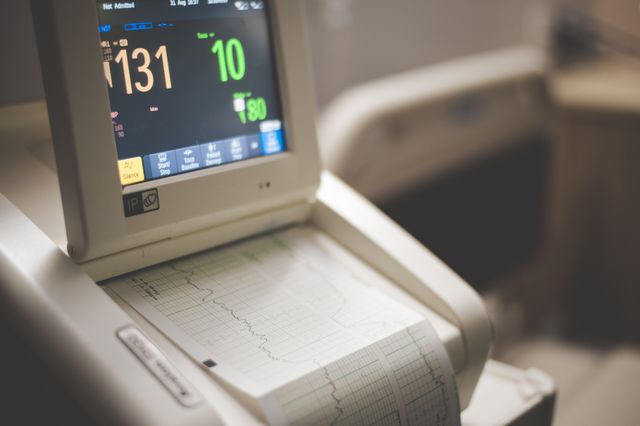
The human body is constantly changing. Heart rate rises during physical activity, body temperature shifts throughout the day, hormone levels respond to sleep and stress, and blood glucose fluctuates according to meals and metabolic demands. Even when a person is healthy, their physiological measurements rarely remain perfectly stable. These variations are part of normal biological functioning and help the body adapt to its surroundings.
However, not every change is harmless. A persistent alteration in resting heart rate, a gradual decline in sleep quality, an unusual recovery pattern after exercise or a recurring change in metabolic measurements may indicate that something is affecting the body’s normal functioning. The challenge is determining whether an observed difference represents an ordinary fluctuation or an early sign of a meaningful health change.
Traditional healthcare often relies on population-based reference ranges to interpret physiological measurements. Although these ranges are important, they may not fully capture the biological characteristics of an individual. A measurement that is normal for one person may represent a significant departure from another person’s usual condition. This creates an opportunity for personalised health monitoring.
Personal Biological Variability Fingerprinting explores the possibility of creating an individual reference profile from repeated physiological measurements. Artificial intelligence could analyse these measurements over time, learn how a person’s body normally behaves and identify changes that differ from their established patterns. By examining individual variability rather than relying exclusively on general population averages, AI may help researchers develop more sensitive approaches to understanding health transitions.
Understanding Personal Biological Variability
Biological variability refers to the natural changes that occur in physiological processes within and between individuals. These changes can be influenced by genetics, age, physical activity, nutrition, sleep, environmental conditions, medication, stress and existing health conditions. Some variations occur over seconds or minutes, while others develop across days, months or years.
For example, heart rate changes in response to movement, emotional stress, temperature and physical fitness. Blood glucose levels rise after eating and gradually return towards baseline as the body processes nutrients. Cortisol follows a daily rhythm, while body temperature can vary according to circadian timing, activity and hormonal changes. These patterns are not necessarily signs of illness. They represent the body’s ability to regulate and adapt its internal environment.
Biological variability can be understood at two levels. Between-person variability describes differences among individuals, such as differences in resting heart rate or metabolic responses. Within-person variability describes how a particular individual’s measurements change over time. Both are important, but within-person variability is particularly valuable when the objective is to recognise changes from someone’s usual physiological condition.
A personal biological fingerprint would therefore represent more than a single measurement. It would describe an individual’s typical ranges, daily rhythms, responses to specific activities and patterns of recovery. Such a profile could provide a more detailed reference for interpreting future measurements.
Why Population-Based Health Reference Ranges Are Not Always Enough
Medical reference ranges are generally developed by studying measurements from groups of people and establishing statistical intervals that describe a reference population. These ranges help clinicians interpret laboratory results and identify values that may require further investigation. However, population-level measurements cannot describe every individual’s normal physiological behaviour.
Consider two people with different resting heart rates. Both may have measurements within an accepted reference range, but their usual values may differ considerably. If one person’s resting heart rate consistently increases from their established baseline, the change could deserve attention even if the new measurement remains within the population range.
The same issue can occur with sleep duration, glucose patterns, physical activity, respiratory measurements and recovery after exercise. A single measurement may appear unremarkable when compared with a general reference range but become more meaningful when examined against an individual’s historical pattern.
Recent research into personalised and longitudinal health monitoring highlights the importance of combining population reference ranges with individual trajectories. A person may have a stable pattern that still indicates elevated population-level risk, while another may experience a meaningful change despite remaining within conventional limits. Personal baselines and population comparisons therefore provide complementary information rather than competing approaches.
How AI Could Build a Personal Biological Variability Fingerprint
Artificial intelligence could help transform repeated health measurements into an individualised model of physiological behaviour. Instead of evaluating every measurement independently, an AI system could examine how different signals behave together and how they change under different conditions.
The process would begin with collecting longitudinal information from suitable sources. These may include wearable devices, medical records, laboratory tests, activity trackers, sleep monitors and, where available, specialised biosensors. Each measurement would contribute information about a particular aspect of the person’s physiology.
Machine learning algorithms could then identify recurring patterns. A model might learn an individual’s typical resting heart rate, sleep timing, activity levels, temperature patterns and recovery responses. It could also identify predictable variations associated with meals, exercise, work schedules or environmental conditions.
Over time, these measurements could form a dynamic reference profile. The system would not assume that the person’s physiology remains unchanged. Instead, it would continuously update its understanding as new observations become available, while distinguishing gradual changes in normal behaviour from unusual deviations.
An important feature would be the ability to measure uncertainty. If a wearable device provides incomplete data or records an unreliable measurement, the system should not automatically interpret the difference as a biological change. It should consider the quality of the measurement, the amount of available historical information and the consistency of the observed pattern.
The Importance of Within-Person Baseline Learning
A personal baseline is a reference description of an individual’s usual physiological state. It may include average values, expected ranges, daily rhythms and the amount of variation normally observed under different conditions.
AI could develop these baselines through repeated observations rather than relying on a short initial measurement. For example, a model analysing heart rate could distinguish between a person’s usual resting pattern, their response to exercise and their recovery after activity. This contextual understanding would make it less likely that an ordinary increase during physical exertion would be treated as an unexpected health event.
Baseline learning also needs to account for changes over time. A person’s usual activity level may change after starting a new exercise routine. Sleep patterns may shift because of work schedules, while medication or recovery from illness may alter physiological measurements. A useful model should recognise that some changes represent a new stable condition rather than a continuing deterioration.
Researchers may use statistical approaches such as mixed-effects models, time-series analysis and personalised anomaly detection to describe within-person patterns. More advanced machine learning models could identify complex relationships across several measurements. The appropriate method would depend on the available data and the health question being investigated.
Distinguishing Normal Fluctuations From Meaningful Health Changes
One of the most important capabilities of a biological variability fingerprint would be its ability to distinguish expected changes from unusual patterns. This requires more than identifying whether a measurement has increased or decreased. The system must understand the context, duration, frequency and relationship of the change to other physiological signals.
Temporary Physiological Responses
Temporary fluctuations are common during everyday activities. Heart rate may increase after climbing stairs, body temperature may change after exercise and glucose levels may rise after a meal. These responses are expected in many healthy individuals.
An AI model could learn the relationship between these events and the resulting physiological changes. If a measurement follows an established response pattern and returns towards its usual range within an expected period, the system may classify it as a normal adaptation rather than an unusual deviation.
Persistent Changes From Personal Baselines
A different situation occurs when a measurement remains outside its usual pattern across several observations. A sustained change in resting heart rate, a recurring reduction in activity or an unusual shift in sleep patterns may deserve further examination, particularly when several independent measurements change together.
AI could examine whether the deviation is isolated or persistent. It could also evaluate whether the change appears across different physiological systems. For example, a change in resting heart rate accompanied by reduced activity and altered sleep may provide a different pattern from an isolated heart-rate measurement.
Altered Recovery Patterns
Recovery is another important dimension of physiological behaviour. After exercise, physical stress or illness, different biological systems gradually move towards their previous state. The time required for recovery can vary between individuals and may be influenced by fitness, age, sleep and other factors.
AI could analyse repeated recovery patterns to identify whether an individual’s response to similar activities is changing. A slower return towards their usual physiological state may provide useful information for research into fitness, fatigue and health monitoring. However, it would not independently establish the presence of a disease.
Multimodal Data and the Development of a Biological Fingerprint
A person’s biological condition cannot be fully represented by a single measurement. Heart rate, glucose, temperature, sleep and activity each provide different information. Combining these measurements may help create a more comprehensive picture of physiological variability.
Wearable devices can provide repeated measurements of movement, heart rate, sleep and other sensor-derived signals. Medical records can contribute information about diagnoses, medication and clinical history. Laboratory tests may provide molecular information, while specialised biosensors could potentially add continuous measurements of selected biochemical markers.
Multimodal AI could examine how these data sources interact. For instance, it could investigate whether changes in sleep are consistently associated with changes in resting heart rate or whether a person’s glucose response differs following changes in physical activity. Such relationships could help researchers understand individual patterns that are difficult to identify through isolated measurements.
The timing of each measurement is particularly important. Some biological signals change within seconds, while others may take days or months to show meaningful differences. Combining measurements collected at very different times without accounting for these biological timescales could produce misleading interpretations. Recent work on integrating multi-omics and digital biomarkers emphasises the importance of temporal alignment when constructing personalised health profiles.
AI Techniques That Could Support Personal Variability Fingerprinting
Several computational methods could contribute to this approach. Time-series machine learning is particularly relevant because physiological measurements are collected repeatedly and often contain patterns that develop over time. These models can examine trends, recurring cycles and changes in the relationship between measurements.
Unsupervised learning could help identify an individual’s recurring physiological states without requiring every observation to be labelled as healthy or unhealthy. For example, a model might identify different patterns associated with rest, exercise, recovery and sleep. New measurements could then be compared with the appropriate state rather than with a single universal baseline.
Anomaly detection could identify observations or sequences that differ substantially from established patterns. However, a detected anomaly should not automatically be treated as a health problem. It may result from an unusual activity, environmental exposure, device error or temporary physiological response.
Deep learning models, including recurrent neural networks and transformer-based architectures, may be useful when analysing complex sequences and relationships across multiple data sources. Nevertheless, sophisticated models are not always necessary. Statistical approaches and simpler machine learning methods may provide more interpretable and reliable results when the available dataset is limited.
Potential Applications in Preventive and Personalised Healthcare
Early Recognition of Health Transitions
Personal biological variability fingerprinting could contribute to research into early health changes. A model might identify a persistent departure from an individual’s usual physiological pattern before a conventional measurement crosses a general reference threshold. Such a finding could encourage further assessment when supported by clinical evidence.
Chronic Disease Monitoring
People living with chronic conditions may experience changes in physiological measurements over time. Personalised models could help researchers examine whether these changes correspond to disease progression, treatment response or temporary fluctuations. For example, longitudinal monitoring could provide additional context when evaluating cardiovascular measurements or metabolic patterns.
Fitness, Exercise and Recovery
Athletes and physically active individuals often experience substantial differences in physiological responses. AI could learn personal patterns associated with exercise intensity, recovery time, sleep and activity. This may support more individualised monitoring of training adaptation and fatigue, provided that sensor limitations and clinical context are considered.
Medication and Treatment Response
Physiological measurements may change after a treatment begins or a medication dose is adjusted. AI could compare the person’s measurements before and after the intervention to investigate whether the observed pattern is consistent with an expected response. Such systems may eventually support research into personalised treatment monitoring, but medication decisions must remain under appropriate clinical supervision.
Limitations of AI-Based Biological Fingerprinting
Despite its potential, personal biological variability fingerprinting faces significant scientific and technical challenges. One major issue is measurement reliability. Consumer wearables do not measure every physiological variable directly. Some outputs are estimates produced through proprietary algorithms and may be affected by device placement, movement, skin characteristics, environmental conditions and activity type.
A recent review of smartwatch technology highlights that the validity of device-derived measurements varies according to the metric, device, population and intended application. A measurement may be useful for following an individual’s trend without being sufficiently accurate for diagnosis or precise physiological assessment.
Another challenge is missing data. People may remove devices, forget to charge them or stop wearing them during particular activities. These gaps can affect the accuracy of personal baselines. Models must distinguish between an actual physiological change and a change in data availability.
There is also a risk of excessive sensitivity. If an AI system continuously monitors hundreds of variables, it may identify numerous unusual patterns that have no clinical importance. This could create unnecessary concern, additional testing and healthcare costs. A useful system must therefore distinguish statistically unusual measurements from changes that are meaningful to health.
Research into digital phenotyping also shows that analytical methods, preprocessing practices and validation procedures vary considerably across studies. Greater methodological consistency is needed before individual-level predictions can be considered reliable.
Privacy, Personal Data and Clinical Validation
A personal biological fingerprint could contain highly sensitive information about an individual’s daily routines, physical activity, sleep, physiological responses and medical history. Collecting such information requires strong privacy protections, secure storage and transparent explanations of how data will be used.
AI systems must also avoid creating a false impression of medical certainty. A deviation from a personal baseline does not necessarily indicate disease, and a stable pattern does not guarantee good health. Some health conditions may develop without producing obvious changes in the available measurements.
Clinical validation is therefore essential. Researchers must establish whether the system measures what it claims to measure, whether its findings are reproducible and whether identifying a particular deviation leads to a useful healthcare decision. The US Food and Drug Administration’s 2026 guidance on digitally derived measures emphasises the importance of measurement verification, analytical validation and clinical validation in clinical investigations.
The Future of Personal Biological Variability Fingerprinting
The next stage of personalised health research may involve combining continuous digital monitoring with periodic laboratory measurements and clinical assessments. Such an approach could provide a more complete understanding of how an individual’s physiology changes across different environments and life stages.
AI systems may eventually develop adaptive biological profiles that account for normal changes associated with ageing, physical training, medication, illness and recovery. Instead of comparing every new measurement with a fixed historical average, they could use context-aware models to determine which reference period is most appropriate.
Another promising direction is the development of explainable health models. These systems should not simply announce that an individual’s physiology has changed. They should identify which measurements contributed to the finding, how persistent the deviation is, what contextual factors may explain it and how uncertain the interpretation remains.
The goal should not be to monitor every minor fluctuation or turn ordinary biological variation into a medical concern. It should be to identify changes that are sufficiently consistent, relevant and supported by evidence to justify further attention. Achieving this will require collaboration between clinicians, data scientists, biomedical researchers and technology developers.
Conclusion
Personal Biological Variability Fingerprinting represents a promising direction in personalised health monitoring. Human physiology is naturally dynamic, and meaningful health changes cannot always be identified by comparing a single measurement with a general population reference range. Understanding how an individual’s body normally behaves may provide valuable context for interpreting future changes.
Artificial intelligence could support this approach by learning personal baselines, analysing longitudinal measurements, recognising recurring physiological patterns and identifying persistent deviations across multiple data sources. By combining wearable signals, laboratory results, medical records and contextual information, researchers may develop more detailed models of individual biological behaviour.
However, personal variability fingerprinting is not yet a universal clinical diagnostic method. Measurement errors, missing data, normal physiological adaptations, privacy concerns and the need for clinical validation remain important challenges. Its greatest potential lies in helping researchers and healthcare professionals distinguish ordinary variation from changes that may deserve further investigation. With rigorous validation and responsible implementation, AI could contribute to a more individualised understanding of health, where physiological changes are interpreted in the context of the person rather than through population averages alone.
Online Internship with Certificate
You may be interested

Tissue-Level Communication Failures: AI Identify Hidden Disruptions in the Signals
Anshika Jain - November 12, 2026The human body functions as an interconnected biological network in which individual tissues continuously exchange information. The skin, muscles, brain, liver, heart, kidneys, immune system and other…

Subclinical Health Transition Detection: AI Recognise Disease Development
Anshika Jain - November 12, 2026Disease does not always begin when a person first experiences noticeable symptoms. In many conditions, biological changes develop gradually before an individual feels unwell or receives a…

Human Physiology Under Resource Competition: Body’s Prioritisation of Energy
Anshika Jain - November 12, 2026The human body performs thousands of biological activities simultaneously. The brain processes information, the heart maintains circulation, the lungs exchange gases, the kidneys regulate fluid balance, the…
Most from this category
Biological Redundancy Analysis: Which Body Systems Compensate When Another System Begins to Fail
Anshika Jain - November 12, 2026
Cellular Stress Communication Networks: Stressed Cells Influence Neighbouring Healthy Cells
Anshika Jain - November 12, 2026
Gut Virome Intelligence: Infect Bacteria Influence the Human Gut Ecosystem
Anshika Jain - November 6, 2026
Human–Environment Health Interaction Maps: AI Connect Indoor Lighting
Anshika Jain - November 6, 2026
Biological Redundancy Analysis: Which Body Systems Compensate When Another System Begins to Fail
Anshika Jain - November 12, 2026Cellular Stress Communication Networks: Stressed Cells Influence Neighbouring Healthy Cells
Anshika Jain - November 12, 2026Gut Virome Intelligence: Infect Bacteria Influence the Human Gut Ecosystem
Anshika Jain - November 6, 2026




.png)
Leave a Comment
You must be logged in to post a comment.