
Data Drift in Clinical AI: Monitoring Model Performance After Deployment

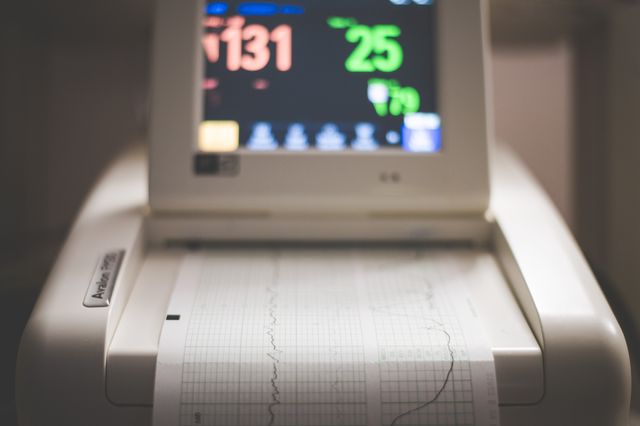
Artificial intelligence is becoming increasingly integrated into healthcare, supporting applications such as medical diagnosis, risk prediction, patient monitoring, medical imaging, clinical decision support, and resource management. The development and validation of a clinical AI model, however, represent only one stage of its lifecycle. Once an AI system is deployed in a real healthcare environment, its performance can change over time as patient populations, clinical practices, technologies, and data patterns evolve.
This phenomenon is closely associated with data drift. Data drift occurs when the characteristics or distribution of the data encountered by an AI model after deployment differ from those present during model development or validation. In clinical environments, such changes are particularly important because healthcare data are influenced by continuously changing biological, technological, operational, and social factors.
A model that performed well during development may therefore become less reliable after deployment without undergoing any intentional modification. A change in laboratory equipment, an update to an electronic health record system, a new clinical guideline, a shift in patient demographics, or an emerging disease can alter the data presented to the model. If these changes are not detected and managed, an AI system may gradually produce less accurate or less clinically useful results.
Monitoring data drift is consequently an essential component of responsible clinical AI. Rather than treating model deployment as the final stage of development, healthcare organizations need to view AI systems as continuously evolving technologies that require ongoing surveillance, evaluation, and governance.
Understanding Data Drift in Clinical AI
Data drift describes changes in the statistical properties of input data over time. An AI model is generally developed using historical data that represent a particular population, clinical environment, set of technologies, and period. When deployed, the model encounters new data generated under potentially different conditions.
For example, a clinical prediction model may have been developed using patient data collected over several years. After deployment, the hospital may begin treating a different demographic population or introduce new diagnostic technologies. Even if the relationship between patient characteristics and clinical outcomes remains broadly similar, the distribution of the model’s input variables may change.
Data drift should be distinguished from related concepts. Concept drift occurs when the relationship between input variables and the target outcome changes. In other words, the meaning of the relationship learned by the model changes over time. Prediction drift refers to changes in the distribution of model outputs. These different forms of change can occur independently or simultaneously.
The distinction matters because a model can experience changes in its input data without an immediate decline in predictive performance, while a relatively stable input distribution can coexist with changes in the underlying relationship between predictors and outcomes.
Why Data Drift Is Particularly Important in Healthcare
Healthcare environments are inherently dynamic. Patients change, diseases evolve, clinical guidelines are updated, technologies improve, and healthcare organizations modify their workflows.
A model trained on historical healthcare data therefore represents a particular point in time. Its performance reflects the conditions under which the training and validation datasets were generated.
Consider a diagnostic model developed using images produced by one generation of imaging equipment. If the hospital subsequently replaces that equipment with a newer system, the visual characteristics of the images may change. The model may encounter patterns that were uncommon or absent during training.
Similarly, an EHR-based prediction model can be affected by changes in documentation practices. A hospital may modify how clinicians record diagnoses, introduce new templates, change coding systems, or automate portions of documentation. These changes can alter the statistical characteristics of the data without any underlying change in patient health.
Clinical AI therefore needs monitoring mechanisms capable of detecting changes that may not be obvious through routine clinical observation.
Sources of Data Drift
Data drift can arise from many sources. One of the most common is a change in patient population. Hospitals may serve different populations over time due to demographic changes, referral patterns, changes in insurance coverage, or alterations in healthcare access.
Clinical practice can also generate drift. New treatment guidelines, diagnostic protocols, medications, and procedures can change the types of data entering an AI system.
Technological changes represent another major source. EHR upgrades, new laboratory analyzers, revised imaging protocols, sensor replacements, and changes in data integration pipelines can alter the characteristics of input variables.
External events can create particularly rapid changes. Disease outbreaks, environmental events, public health emergencies, and other disruptions may change patient characteristics and clinical workflows over short periods.
Finally, operational decisions can create artificial drift. Changes in how clinicians order tests, document encounters, or use particular healthcare services can modify the data distribution even when the underlying patient population remains similar.
Detecting Changes in Input Data
One of the first stages of drift monitoring is examining whether the distribution of model inputs has changed. This involves comparing current data with a reference dataset, which may represent the model’s training, validation, or baseline deployment period.
Statistical techniques can compare variables such as age, laboratory measurements, vital signs, imaging characteristics, medication patterns, or documentation features. Distributional differences can be measured using approaches such as population stability metrics, statistical distance measures, divergence measures, or other monitoring techniques.
For continuous variables, organizations may examine changes in means, variances, percentiles, or distribution shapes. For categorical variables, changes in category frequencies may provide an early indication of drift.
However, statistical significance alone does not determine whether a change is clinically important. With very large healthcare datasets, even small differences can become statistically significant. Monitoring systems should therefore combine statistical evidence with practical and clinical thresholds.
Monitoring Model Performance
Detecting data drift is important, but it does not automatically mean that the model has become clinically unreliable. Performance monitoring is therefore a complementary requirement.
When outcome data become available, healthcare organizations can evaluate whether the model’s predictive performance remains stable. Depending on the application, relevant measures may include discrimination, calibration, sensitivity, specificity, positive predictive value, negative predictive value, and other clinically appropriate measures.
Calibration is particularly important for risk prediction models. A model may continue to distinguish between higher- and lower-risk patients while becoming poorly calibrated, meaning that its predicted probabilities no longer correspond well to observed outcomes.
Performance should also be examined across clinically relevant patient subgroups. An overall performance measure can conceal deterioration in a particular demographic or clinical population.
Continuous performance monitoring therefore provides a more complete picture than input-drift detection alone.
The Importance of Calibration
Calibration describes the relationship between predicted risk and observed outcomes. In clinical settings, this relationship can be especially important because predictions are often used to support decisions based on estimated probabilities.
Suppose a model originally predicts a particular complication risk accurately. If treatment patterns or patient characteristics change over time, the same numerical prediction may no longer correspond to the same observed probability.
Poor calibration can lead to inappropriate clinical decisions even when the model retains reasonable discrimination.
For this reason, monitoring programs should evaluate calibration periodically and investigate meaningful changes. Recalibration may sometimes be appropriate when the model’s underlying relationships remain useful but the baseline risk or probability structure has shifted.
Monitoring Concept Drift
Data drift focuses primarily on changes in input distributions, whereas concept drift concerns changes in the relationship between inputs and outcomes.
Concept drift can occur when medical practice changes the causal or predictive relationships represented by the model. A treatment that was uncommon during model development may become standard practice, changing the relationship between clinical characteristics and outcomes.
Disease patterns can also evolve. An emerging infectious disease may present differently across patient populations or across stages of an outbreak. A model trained under earlier conditions may therefore encounter relationships that differ substantially from those it learned.
Detecting concept drift is more difficult than detecting changes in input distributions because it requires outcome information and careful statistical analysis. Nevertheless, it is essential for high-stakes clinical applications.
Data Quality Drift
Not all changes in model inputs represent genuine changes in patients or clinical practice. Some are caused by changes in data quality. A hospital may suddenly experience an increase in missing values because an interface between two systems has failed. A laboratory measurement may change scale after an equipment upgrade.
A coding field may become unavailable after an EHR configuration change. These problems can create apparent data drift while actually representing technical failures. Data-quality monitoring should therefore operate alongside model monitoring.
Healthcare organizations should track missingness, data ranges, data types, timestamps, coding consistency, unexpected values, and pipeline failures. A robust monitoring system should be able to distinguish between clinical change, operational change, and technical data problems.
Real-Time and Continuous Monitoring
The appropriate monitoring frequency depends on the clinical application. A model used for intensive care monitoring may require near-continuous surveillance, while a model supporting long-term population health management may be evaluated less frequently.
Real-time monitoring can be valuable when model outputs influence immediate clinical decisions. Automated systems can track incoming data and compare current distributions with established baselines.
When predefined thresholds are exceeded, the system can generate an alert for the responsible technical or clinical team. However, alert systems must be designed carefully to avoid excessive notifications.
A useful monitoring architecture should prioritize meaningful changes rather than every statistical fluctuation. It should also provide sufficient context for investigators to understand what changed and whether the change is likely to affect model performance.
Model Monitoring Dashboards
Clinical AI monitoring can benefit from dedicated dashboards that combine technical, statistical, and clinical indicators. Such dashboards can provide an overview of current data distributions, missingness patterns, model outputs, calibration, performance metrics, and subgroup behavior. A dashboard can also help teams identify when a change first appeared. This temporal information can be valuable when investigating the cause of drift.
For example, if a model’s performance declines immediately after an EHR upgrade, the temporal relationship may provide an important clue. If performance changes gradually over several months, the underlying cause may instead involve population changes or evolving clinical practice.
Monitoring dashboards should be designed for different stakeholders. Data scientists may need detailed statistical information, while clinical leaders may require a concise view of patient-impacting performance changes.
Thresholds and Escalation Strategies
Not every instance of drift requires immediate intervention. Minor fluctuations are normal in dynamic healthcare environments.
Organizations should therefore establish predefined thresholds that determine when investigation or action is required. These thresholds should consider the intended use of the model, the potential consequences of errors, the magnitude and persistence of the observed change, and the quality of available evidence.
For a high-risk clinical system, a relatively small performance decline may warrant investigation. A lower-risk administrative model may have different tolerances.
When a threshold is reached, the organization should have a defined escalation process. This may involve data-quality checks, clinical review, statistical investigation, model recalibration, temporary restrictions on use, or complete model replacement.
The key principle is that monitoring should lead to actionable governance rather than simply generating reports.
Retraining and Model Updating
When drift is confirmed, retraining may be one possible response. A model can be updated using newer data that better represent current patients and clinical practices.
However, retraining should not be automatic in every situation. New data may contain their own biases or quality problems. If the underlying cause of drift is not understood, retraining could simply incorporate the problem into the next version of the model.
Model updates should therefore follow controlled procedures. The updated model should undergo appropriate validation and comparison with the previous version. Its behavior should be evaluated not only on overall accuracy but also across clinically important populations.
In some cases, recalibration may be sufficient. In other situations, substantial changes in the underlying clinical environment may require redevelopment of the model.
Bias and Health Equity During Drift
Data drift can affect patient groups differently. A model may maintain acceptable overall performance while becoming less accurate for a particular demographic or clinical population.This is particularly important because changes in healthcare access, population composition, or documentation practices may not occur uniformly across groups.
Monitoring should therefore include subgroup-specific analysis where appropriate. Researchers and healthcare organizations should examine whether changes in performance disproportionately affect particular populations.
Fairness monitoring should not be treated as a one-time assessment performed before deployment. Because populations and healthcare environments change, equitable performance requires ongoing evaluation.
Governance and Accountability
Clinical AI monitoring requires clear responsibility. Healthcare organizations should determine who owns the model, who receives monitoring alerts, who evaluates potential drift, and who has authority to modify or suspend the system.
Model governance should include documentation of the model’s intended purpose, training population, validation conditions, known limitations, monitoring metrics, acceptable performance ranges, update procedures, and retirement criteria.
A model should also have a clearly defined lifecycle. Without governance, AI systems can remain in clinical environments long after their original validation conditions have changed.
Accountability is particularly important when AI outputs influence patient care. Clinicians need to know the appropriate role of the system and the circumstances under which its output should be questioned or ignored.
Human Oversight and Clinical Review
Automated monitoring can identify statistical changes, but clinical experts remain essential for interpreting their significance.
A change in a model’s input distribution may be clinically harmless, while a seemingly modest change in performance could have serious consequences for patient care. Clinical experts can help determine whether observed changes reflect legitimate evolution or indicate a problem requiring intervention.
Human oversight is also important when models are updated. A technically improved model may behave differently in ways that affect clinical workflows. Before deployment, clinicians should have opportunities to evaluate whether the updated system remains appropriate for its intended use.
Effective model monitoring is therefore a collaborative process involving clinicians, data scientists, engineers, quality teams, and organizational leadership.
Challenges in Clinical AI Drift Monitoring
Implementing continuous monitoring is not straightforward. One challenge is the availability of reliable outcome data. In many clinical applications, the true outcome may only become known weeks or months after a prediction is generated.
Another challenge is distinguishing meaningful drift from normal variability. Healthcare data naturally fluctuate, and monitoring systems must avoid treating every change as a model failure. There is also a risk of monitoring too many metrics without a clear decision framework. Large volumes of monitoring information can create a different form of information overload.
Infrastructure represents another challenge. Continuous monitoring requires reliable data pipelines, computational resources, secure storage, and integration with clinical information systems. Finally, healthcare organizations must balance the need for monitoring with privacy and governance requirements. The same protections applied to clinical data should extend to data used for AI monitoring and model evaluation.
The Future of Clinical AI Monitoring
The future of clinical AI is likely to involve more sophisticated automated monitoring systems capable of identifying multiple forms of change simultaneously. Instead of tracking only input distributions, next-generation monitoring platforms may integrate data quality, model performance, calibration, subgroup behavior, workflow changes, and clinical outcomes.
Artificial intelligence itself may assist in monitoring other AI systems by identifying unusual patterns and prioritizing potential issues for human investigation.
Model observability may also become increasingly integrated into healthcare IT infrastructure. Just as hospitals monitor the performance of critical technical systems, AI models may eventually be treated as operational components requiring standardized lifecycle monitoring.
The development of digital health ecosystems will make this increasingly important. As AI becomes embedded in more clinical workflows, organizations will need mechanisms for understanding how these systems behave over time and how changes in one component can affect another.
Conclusion
Data drift is an unavoidable consideration in clinical AI because healthcare environments are constantly changing. Patient populations evolve, technologies are replaced, clinical practices are updated, diseases change, and healthcare organizations modify their workflows. A model that performs well under one set of conditions may therefore behave differently when exposed to another.
Monitoring model performance after deployment is consequently not an optional technical exercise. It is a fundamental part of responsible clinical AI lifecycle management. Effective monitoring requires a combination of input-data analysis, model-performance evaluation, calibration assessment, data-quality checks, subgroup monitoring, and investigation of potential concept drift.
When drift is detected, the appropriate response may involve correcting data pipelines, recalibrating the model, retraining it with representative data, modifying its intended use, or replacing it entirely. The correct action depends on understanding why the change occurred and how it affects clinical performance.
Ultimately, successful clinical AI requires a continuous feedback loop between data, models, healthcare professionals, and patients. Deployment should be understood as the beginning of an ongoing evaluation process rather than the end of model development. By establishing robust monitoring and governance practices, healthcare organizations can identify changing conditions earlier, reduce the risk of silent model degradation, and maintain AI systems that remain appropriate for the clinical environments in which they are used.
Online Internship with Certificate
You may be interested

Knowledge Graphs for Connecting Genomic Variants With Clinical Outcomes
Anshika Jain - September 29, 2026The rapid growth of genomic medicine is transforming the way healthcare professionals understand disease, diagnosis, and treatment. Advances in next-generation sequencing have made it increasingly possible to…
Predictive Maintenance of Critical Medical Infrastructure Using IoT and Machine Learning
Anshika Jain - September 29, 2026Healthcare organizations depend on a complex network of medical equipment and critical infrastructure to provide safe, continuous, and efficient patient care. Ventilators, anesthesia machines, infusion pumps, imaging…

Intelligent Operating Rooms: Integrating Computer Vision, IoT and Clinical Decision Systems
Anshika Jain - September 29, 2026The operating room is one of the most technologically complex environments in modern healthcare. It brings together surgeons, anesthesiologists, nurses, technicians, medical devices, imaging systems, surgical instruments,…
Most from this category

AI-Assisted Triage Systems in Emergency Medicine: Architecture, Validation and Safety
Anshika Jain - September 29, 2026
From EHR Data Lakes to Clinical Intelligence Platforms: Architectures for Modern Healthcare Analytics
Anshika Jain - September 29, 2026
The Five-Minute Health Habit: Can Tiny Changes Become Long-Term Routines?
Anshika Jain - September 28, 2026

AI-Assisted Triage Systems in Emergency Medicine: Architecture, Validation and Safety
Anshika Jain - September 29, 2026From EHR Data Lakes to Clinical Intelligence Platforms: Architectures for Modern Healthcare Analytics
Anshika Jain - September 29, 2026The Five-Minute Health Habit: Can Tiny Changes Become Long-Term Routines?
Anshika Jain - September 28, 2026



.png)
Leave a Comment
You must be logged in to post a comment.