
Predictive Maintenance of Critical Medical Infrastructure Using IoT and Machine Learning

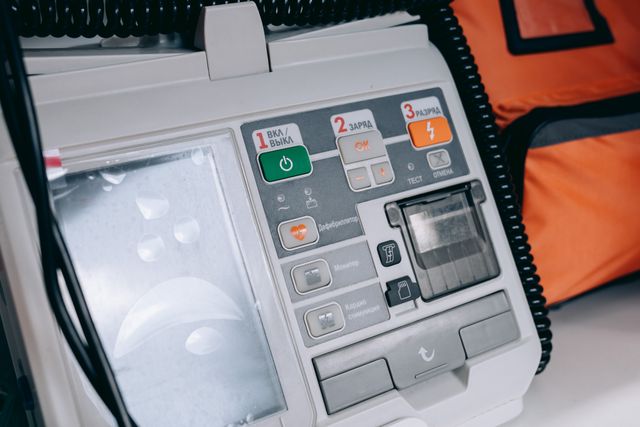
Healthcare organizations depend on a complex network of medical equipment and critical infrastructure to provide safe, continuous, and efficient patient care. Ventilators, anesthesia machines, infusion pumps, imaging systems, patient monitors, sterilization equipment, laboratory analyzers, refrigeration units, backup power systems, oxygen-generation infrastructure, and environmental control systems must remain operational when needed. A failure involving any of these systems can interrupt clinical workflows, increase operational costs, delay treatment, and potentially create risks for patients.
Traditionally, healthcare equipment maintenance has relied on preventive schedules or corrective maintenance. Preventive maintenance involves servicing equipment at predetermined intervals, regardless of its actual condition. Corrective maintenance, on the other hand, occurs after a device has developed a fault or stopped functioning. Although both approaches remain important, they may not fully address the complexity of modern healthcare infrastructure.
Predictive maintenance introduces a more data-driven approach. By combining Internet of Things technologies with machine learning, healthcare organizations can continuously monitor equipment conditions, identify unusual patterns, estimate potential failures, and schedule maintenance before a serious breakdown occurs.
The objective is not simply to predict when equipment will fail. A mature predictive maintenance strategy seeks to understand equipment behavior, identify early warning signals, optimize maintenance resources, reduce unexpected downtime, and improve the reliability of critical healthcare infrastructure.
Understanding Predictive Maintenance in Healthcare
Predictive maintenance is a maintenance strategy based on the continuous or periodic assessment of equipment condition. Instead of relying exclusively on fixed maintenance schedules, organizations use operational data to determine when intervention may be necessary.
In healthcare, this approach can be applied to both clinical devices and supporting infrastructure. A medical imaging system may generate information about temperature, operating hours, vibration, or internal component performance. A hospital’s backup generator may produce data related to fuel levels, battery condition, load, and engine performance. An air-handling system may provide information about pressure, temperature, humidity, and airflow.
When these measurements are collected over time, machine learning models can identify patterns associated with equipment degradation. The resulting predictions can help maintenance teams intervene before a failure causes significant disruption.
Predictive maintenance should not be viewed as a replacement for established safety inspections, regulatory requirements, or manufacturer recommendations. Instead, it can complement these practices by providing additional information about actual equipment condition.
Why Medical Infrastructure Requires Predictive Maintenance
Medical infrastructure differs from many conventional industrial environments because equipment failures can have direct clinical consequences. A malfunctioning device in a manufacturing facility may reduce productivity, while failure of a critical medical device can affect patient care.
Hospitals also operate continuously. Emergency departments, intensive care units, operating rooms, laboratories, and critical-care facilities may require equipment at any time of day. This makes unexpected downtime particularly challenging.
The financial consequences can also be significant. Equipment failures can result in emergency repairs, replacement parts, service contracts, procedure cancellations, patient transfers, and disruptions to hospital operations.
Predictive maintenance can help healthcare organizations shift from reactive responses toward proactive management. By identifying potential failures earlier, maintenance teams can plan interventions around clinical schedules and reduce the likelihood of unexpected interruptions.
The Role of IoT in Medical Equipment Monitoring
The Internet of Things provides the connectivity layer needed for predictive maintenance. IoT-enabled devices can collect information from sensors and transmit it to centralized monitoring platforms.
Sensors may measure variables such as temperature, vibration, pressure, electrical current, battery status, operating cycles, humidity, flow rates, and other equipment-specific parameters.
For example, an imaging system may generate temperature and operating-cycle information that can help identify abnormal operating conditions. A medical refrigeration unit can continuously report internal temperature and compressor behavior. A backup power system can provide information about battery performance and load levels.
The value of IoT lies in continuous visibility. Instead of discovering that a device has failed during a routine inspection or when a clinician attempts to use it, maintenance teams can receive information about changes in equipment condition as they occur.
Building an IoT Architecture for Predictive Maintenance
A predictive maintenance architecture typically begins with sensors and connected medical equipment. These devices collect operational information and transmit it through secure communication networks.
The next layer is the data ingestion and processing infrastructure. Incoming information must be organized, timestamped, validated, and associated with the correct device.
A centralized platform can then store historical measurements and make them available for analytics. Machine learning models operate on this information to identify patterns and estimate potential equipment problems.
The final layer is the maintenance and operational interface. When the system identifies a meaningful risk, the result can be communicated to biomedical engineers, facilities teams, maintenance personnel, or other responsible staff.
The architecture should also maintain an audit trail showing equipment status, detected anomalies, maintenance actions, and subsequent outcomes. This historical record can improve future analysis and support accountability.
Types of Equipment Suitable for Predictive Maintenance
Many categories of hospital equipment can potentially benefit from predictive maintenance. Medical imaging systems are particularly suitable because they contain complex mechanical, electrical, and cooling components that can generate measurable operational signals.
Ventilators and anesthesia systems can also provide information about performance and usage patterns. Monitoring pressure, flow, battery condition, and operating cycles may help identify abnormal behavior.
Infusion pumps, patient monitors, laboratory analyzers, sterilization equipment, and refrigeration systems can similarly generate useful maintenance data.
Hospital infrastructure is equally important. Elevators, generators, HVAC systems, electrical distribution equipment, water systems, oxygen infrastructure, and backup power systems can be monitored through IoT sensors.
The most appropriate applications are generally those where equipment failure has meaningful consequences and where reliable sensor data can be collected.
Data Collection and Quality
Machine learning models are only as reliable as the data used to develop and operate them. Predictive maintenance therefore begins with high-quality data collection.
Measurements should be accurately timestamped and associated with the correct equipment. Missing values, duplicated readings, inconsistent units, and sensor errors need to be identified and managed.
Data quality can also change over time. A sensor may become miscalibrated, a device may undergo modification, or a hospital may replace a component with a newer version.
The monitoring architecture should therefore include data-quality checks. Sudden changes in a sensor’s behavior should not automatically be interpreted as equipment failure. They may instead indicate a problem with the monitoring system itself.
Machine Learning for Failure Prediction
Machine learning enables predictive maintenance systems to identify complex relationships within equipment data. Models can learn from historical records containing normal operating conditions, maintenance events, faults, and component failures.
Different approaches may be appropriate depending on the available data. Supervised learning can be used when historical failure labels are available. Unsupervised and semi-supervised methods can be useful when failures are rare or poorly documented.
Anomaly detection is another important approach. Instead of predicting a specific failure type, the system learns what normal behavior looks like and identifies significant deviations.
Time-series models can analyze how equipment measurements evolve over time. This is particularly useful when gradual degradation precedes failure.
The choice of algorithm should be determined by the equipment, data quality, failure patterns, and operational requirements rather than by the popularity of a particular machine learning technique.
Anomaly Detection and Early Warning
Many medical equipment failures are relatively rare. This creates a challenge for supervised machine learning because there may be insufficient examples of specific failure types.
Anomaly detection can provide an alternative. The model establishes a representation of normal equipment behavior and identifies patterns that differ significantly from that baseline.
For example, a cooling system may normally operate within a particular temperature and pressure range. A gradual change in those measurements may indicate developing mechanical problems even if the equipment has not yet produced an explicit error code.
Early warning systems can then assign different levels of concern based on the magnitude and persistence of the anomaly.
This approach can help maintenance teams prioritize investigation before a minor abnormality becomes a major failure.
Remaining Useful Life Prediction
An advanced predictive maintenance system may attempt to estimate remaining useful life, referring to the expected period before an equipment component requires replacement or experiences failure.
Remaining useful life models can be valuable for maintenance planning because they provide more information than a simple failure alert.
For example, if a system identifies that a component is likely approaching the end of its operational life, maintenance teams may schedule replacement during a planned service window rather than waiting for a breakdown.
However, remaining useful life estimates should be interpreted as predictions rather than guarantees. Equipment behavior can change unexpectedly, and uncertainty should be considered when making maintenance decisions.
Integrating Maintenance Management Systems
Predictive analytics becomes more useful when connected to existing maintenance management systems. When an AI model identifies a potential issue, the result can be linked to the equipment’s maintenance history and service records.
Maintenance personnel can then examine previous repairs, component replacements, inspection results, and manufacturer recommendations.
Integration also allows organizations to record what happened after an alert. If an alert resulted in a successful intervention, that information can become part of the historical dataset used for future model improvement.
This creates a feedback loop in which operational experience continuously contributes to the predictive maintenance program.
Reducing Unplanned Downtime
One of the primary objectives of predictive maintenance is reducing unexpected equipment downtime. Unplanned failures can disrupt clinical workflows because equipment may become unavailable when it is needed.
For example, failure of an imaging system can affect scheduled examinations and emergency diagnostic capacity. Problems with sterilization equipment can interfere with surgical workflows. Failure of a critical environmental system can create broader operational challenges.
By identifying developing problems earlier, predictive maintenance can allow organizations to schedule repairs during less disruptive periods.
The resulting improvement is not simply technical reliability. It can contribute to greater continuity of clinical operations.
Optimizing Maintenance Resources
Maintenance departments often operate with limited staff, budgets, and spare parts. A purely preventive approach may result in unnecessary servicing of equipment that remains in good condition, while reactive maintenance can create emergency workloads.
Predictive maintenance can help prioritize resources based on equipment condition and estimated risk.
Maintenance teams can focus attention on assets showing meaningful changes rather than treating every device identically.
The approach can also improve spare-parts management. If several pieces of equipment show signs of developing problems, organizations may be able to anticipate component requirements and reduce delays caused by unavailable parts.
Predictive Maintenance in Critical Care
Critical-care environments provide particularly important applications for predictive maintenance because equipment availability can be essential for patient safety.
Ventilators, patient monitors, infusion devices, and other critical equipment must operate reliably. A failure during patient care can create immediate operational challenges.
IoT-enabled monitoring can provide continuous information about device condition. Maintenance systems can potentially identify battery degradation, abnormal operating temperatures, unusual pressure patterns, or other indicators of developing problems.
However, predictive maintenance systems used in critical-care environments require particularly strong validation. False alarms can increase workload, while missed failures can have serious consequences.
Cybersecurity and Connected Medical Devices
Connecting medical equipment to networks introduces cybersecurity considerations. A predictive maintenance architecture must protect not only patient information but also the integrity and availability of connected devices.
Unauthorized access, malicious modifications, or network disruptions could potentially affect equipment operations.
Security should therefore be integrated into the architecture from the beginning. Access controls, device authentication, network segmentation, encryption, monitoring, software updates, and incident-response procedures are important components of a secure environment.
Healthcare organizations must also consider the security practices of device manufacturers and technology vendors when deploying connected systems.
Privacy and Data Governance
Predictive maintenance often focuses on equipment rather than patients, but medical devices may generate information that can be linked to patient care.
For example, equipment logs may contain timestamps corresponding to patient encounters, procedure information, or other operational details. Organizations should therefore assess whether maintenance datasets contain protected health information.
Data governance should establish appropriate access controls, retention policies, and usage restrictions. Where patient information is unnecessary for maintenance analytics, architectures should minimize or remove such information.
Good governance allows organizations to obtain the benefits of predictive maintenance without creating unnecessary privacy risks.
Model Validation and Reliability
A predictive maintenance model must be validated before being relied upon for operational decisions. Validation should assess how accurately the model identifies anomalies, predicts failures, or estimates remaining useful life.
Performance should also be evaluated across different equipment models, operating environments, and usage patterns.
A model trained on one generation of equipment may not automatically generalize to another. Similarly, a model developed in one hospital may perform differently in another facility because maintenance practices and operating conditions vary.
Validation should therefore reflect the environment in which the system will actually be used.
Monitoring Model Performance After Deployment
Machine learning models can experience performance changes over time. Equipment populations may change, sensors may be replaced, software may be updated, and maintenance procedures may evolve.
This can create data drift, where the data encountered after deployment differ from those used during model development.
Continuous monitoring should therefore examine model performance, input distributions, sensor quality, false alerts, missed failures, and changes in equipment behavior.
When significant changes are detected, the model may need recalibration, retraining, or redevelopment.
Human Oversight and Maintenance Expertise
Predictive maintenance should support maintenance professionals rather than eliminate their role. Biomedical engineers and facilities teams possess contextual knowledge that cannot always be captured by machine learning models.
An AI system may identify an unusual pattern, but an experienced engineer can determine whether the pattern is associated with a known equipment condition, a recent repair, environmental factors, or a sensor problem.
Human expertise is therefore essential for interpreting predictions and deciding appropriate actions.
The system should provide maintenance professionals with sufficient information to understand why an alert was generated and what evidence supports the prediction.
Challenges in Implementation
Despite its potential, predictive maintenance can be difficult to implement across large healthcare organizations. Legacy equipment may not have built-in connectivity or suitable sensors.
Data integration can also be complex because medical devices may use different communication technologies and proprietary formats.
Another challenge is the limited number of documented failure events. Equipment is generally expected to operate normally, which means true failures can be rare compared with normal observations.
Organizations may also encounter difficulties with staff adoption. Maintenance teams need training to understand how predictive analytics should complement existing procedures.
Financial considerations are important as well. Sensors, connectivity, analytics infrastructure, cybersecurity controls, and system integration require investment. Organizations therefore need to evaluate the expected operational and clinical value of predictive maintenance initiatives.
The Future of AI-Driven Medical Infrastructure
The future of predictive maintenance is likely to involve increasingly intelligent and interconnected healthcare infrastructure. Medical devices may become capable of continuously reporting their condition, while AI systems analyze these data to identify emerging risks.
Digital twins may provide another development by creating virtual representations of physical equipment and infrastructure. These models could simulate equipment behavior and help organizations understand how different conditions affect reliability.
Edge computing may also become more important. Instead of transmitting every sensor reading to a centralized platform, some analysis can occur near the equipment itself. This can reduce latency and network requirements while allowing rapid detection of certain conditions.
More advanced systems may eventually coordinate maintenance planning across entire hospital networks, considering equipment condition, clinical schedules, technician availability, spare parts, and operational priorities.
Conclusion
Predictive maintenance using IoT and machine learning represents an important opportunity for healthcare organizations seeking to improve the reliability of critical medical infrastructure. By continuously collecting equipment data and applying analytical models, hospitals can move beyond purely scheduled or reactive maintenance toward condition-based decision-making.
The approach can help identify developing equipment problems, reduce unexpected downtime, optimize maintenance resources, improve spare-parts planning, and support continuity of clinical operations. Its potential extends from individual medical devices to hospital-wide infrastructure such as HVAC systems, generators, refrigeration units, oxygen systems, and electrical equipment.
However, successful implementation requires more than connecting devices to an analytics platform. Healthcare organizations must establish reliable data pipelines, appropriate machine learning models, strong cybersecurity, privacy controls, validation procedures, and continuous monitoring.
Human expertise remains essential. Predictive analytics should provide maintenance professionals with additional evidence rather than replace engineering judgment. Similarly, predictions should be treated as indicators of risk rather than guarantees of future equipment behavior.
As hospitals become increasingly connected, predictive maintenance can become a central component of healthcare infrastructure management. The combination of IoT, machine learning, equipment intelligence, and human expertise has the potential to create more resilient healthcare environments in which critical systems are monitored continuously and maintenance decisions are made proactively. The ultimate objective is not simply to prevent equipment failure, but to support safer, more reliable, and more efficient healthcare delivery.
Online Internship with Certificate
You may be interested

Portion-Size Drift: Can Computer Vision Detect
Anshika Jain - October 23, 2026The amount of food people consider a normal serving is not determined by hunger alone. It is also influenced by household habits, plate sizes, restaurant menus, food…

Ingredient Substitution Effect: Can AI Identify When a Reformulated Food Changes
Anshika Jain - October 23, 2026Food manufacturers regularly reformulate products to reduce production costs, improve shelf life, respond to consumer preferences, meet sustainability goals, or accommodate dietary requirements. A biscuit may contain…
Peptide Signal Library: How Digested Proteins Generate Molecules
Anshika Jain - October 23, 2026Proteins are commonly understood as essential building materials that help the body maintain muscles, repair tissues, produce enzymes, and support numerous cellular functions. However, their role in…
Most from this category

Mucus Barrier Economy: How Food Interact With Intestine’s Protective Interface
Anshika Jain - October 23, 2026
Beta-Cell Stress Signatures: AI Reveal Changes in the Biology of Insulin Secretion
Anshika Jain - October 23, 2026
Intestinal Transporter: Can AI Predict Which Nutrients Compete During Absorption?
Anshika Jain - October 23, 2026
Computational Gastronomy: How AI Is Decoding the Molecular Architecture of Flavour
Anshika Jain - October 22, 2026
Mucus Barrier Economy: How Food Interact With Intestine’s Protective Interface
Anshika Jain - October 23, 2026Beta-Cell Stress Signatures: AI Reveal Changes in the Biology of Insulin Secretion
Anshika Jain - October 23, 2026Intestinal Transporter: Can AI Predict Which Nutrients Compete During Absorption?
Anshika Jain - October 23, 2026
Portion-Size Drift: Can Computer Vision Detect
October 23, 2026

Peptide Signal Library: How Digested Proteins Generate Molecules
October 23, 2026

.png)
Leave a Comment
You must be logged in to post a comment.