
Brain–Computer Interfaces: How Neural Signals Could Become a New Communication Pathway

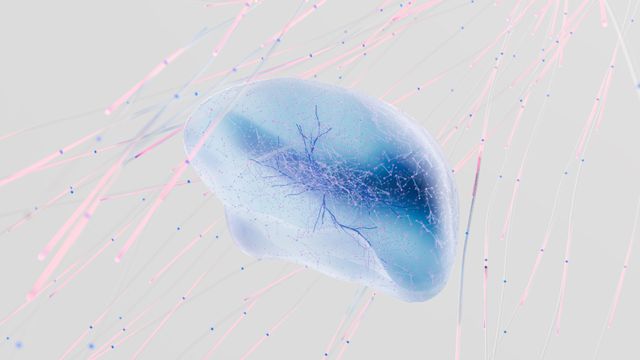
Human communication has traditionally depended on physical pathways. We speak by coordinating the brain, vocal muscles, tongue, lips, and respiratory system; We write or type by controlling our hands and fingers; We use facial expressions and gestures to communicate emotions, intentions, and additional meaning. When neurological disease, spinal cord injury, stroke, or other conditions disrupt these pathways, a person’s ability to communicate can be severely reduced even when their cognitive abilities remain intact.
Brain–computer interfaces, commonly known as BCIs, are creating a fundamentally different possibility. Instead of requiring communication to pass through muscles that may no longer function normally, a BCI can attempt to interpret patterns of neural activity directly and translate them into commands for an external device. In this model, the brain becomes the source of an information signal, while software and electronic systems act as an intermediary between neural activity and communication.
Research has progressed from relatively simple cursor control and letter selection toward increasingly sophisticated systems capable of decoding attempted speech, handwriting, gestures, and other aspects of communication. Recent work has even demonstrated systems that can combine speech and body-language signals simultaneously, bringing neural communication closer to the richness of natural human interaction.
The significance of this development extends beyond futuristic technology. For people who have lost the ability to speak or move because of paralysis or neurological disease, a reliable neural communication pathway could restore an important part of independence, social interaction, education, employment, and everyday life.
What Is a Brain–Computer Interface?
A brain–computer interface is a system that establishes a direct communication pathway between neural activity and an external computer or device. The basic concept is deceptively simple: neural signals are recorded, processed, interpreted by computational models, and converted into an output.
The complexity lies in the fact that the brain does not produce a simple digital language. Neural activity consists of electrical and biochemical processes distributed across populations of neurons. Different patterns of activity can represent movement intentions, speech-related actions, sensory information, attention, and other cognitive processes. A BCI therefore has to identify meaningful patterns within extremely complex biological signals.
Depending on the design, neural signals may be recorded non-invasively from outside the skull, through sensors placed on or near the brain, or through electrodes implanted within brain tissue. These approaches involve different trade-offs between signal quality, spatial resolution, invasiveness, durability, and practical usability.
Recent reviews describe BCI systems as involving neural recording followed by signal conditioning, feature extraction, decoding, and ultimately the generation of commands for an external device. Improvements in electrode technology and integrated systems are therefore just as important as improvements in artificial intelligence.
How Neural Signals Become Communication
The pathway from brain activity to communication involves several stages. A person first generates an intention, such as attempting to say a word, imagining handwriting, moving a cursor, or producing a gesture. That intention is associated with patterns of neural activity in particular brain networks.
Sensors capture some of those patterns. The recorded signals are then cleaned and transformed into useful information. Machine-learning algorithms can identify relationships between neural activity and the intended action. A decoder subsequently estimates what the person intended to communicate.
The final stage converts that decoded intention into an output. The result could appear as text on a screen, an artificially generated voice, a computer command, a virtual avatar, or movement of another assistive device.
This process means that the BCI is not literally reading every thought in the brain. Instead, it is decoding specific neural patterns that researchers have learned to associate with particular intentional actions or communication signals.
That distinction is essential. The practical objective of current communication BCIs is generally task-specific decoding rather than unrestricted access to a person’s complete thoughts.
From Cursor Control to Natural Communication
Early BCI research demonstrated that neural activity could be used to control relatively simple external systems. Cursor movement, selection tasks, and basic communication interfaces established the principle that brain signals could substitute for some forms of physical movement.
However, simple control is very different from natural communication. Human conversation is fast, continuous, expressive, and context-dependent. A communication system that requires a person to select individual letters slowly may be technically impressive but still feel extremely limited compared with ordinary speech.
This is why researchers have increasingly focused on decoding richer forms of communication.
One important development has been handwriting-based neural communication. Research has shown that attempted handwriting movements can produce neural patterns that contain enough information for high-speed decoding. A 2026 review highlights work in which attempted handwriting was decoded at around 90 characters per minute with 94% accuracy, substantially improving on earlier intracortical point-and-click communication approaches.
The significance of this approach is not simply speed. Handwriting represents a continuous motor sequence, meaning that neural activity can potentially provide a richer signal than selecting isolated characters one at a time.
Speech Neuroprostheses and the Return of a Voice
Speech has become one of the most important areas of BCI communication research.
People affected by amyotrophic lateral sclerosis, severe stroke, spinal cord injury, or other neurological conditions may retain the intention and cognitive ability to communicate while losing the physical ability to produce understandable speech. A speech neuroprosthesis attempts to bridge this gap by decoding neural activity associated with speech production.
Rather than waiting for the vocal muscles to produce sound, the system attempts to identify neural patterns associated with intended speech and convert them into words or synthetic speech.
Research has demonstrated increasingly sophisticated speech BCIs capable of producing text and synthesized speech. More recent work has moved beyond text toward direct voice synthesis. In 2025, researchers demonstrated an instantaneous voice-synthesis neuroprosthesis that decoded neural activity from implanted microelectrodes and produced synthesized voice with closed-loop audio feedback.
This represents an important conceptual transition. Communication is not simply about transferring words. Human speech contains rhythm, timing, emphasis, emotional expression, and vocal identity. A system capable of generating a personalized voice could therefore provide a much richer form of communication than a conventional text-to-speech interface.
From Speech to Language
One of the next challenges is separating the physical mechanics of speech from language itself.
Many existing speech BCIs focus on neural activity associated with attempting to produce speech. This works well when the relevant motor and speech-related brain networks remain sufficiently accessible. But some individuals have impairments that affect language production or word retrieval rather than simply the ability to move the speech muscles.
This has led researchers to consider language-level BCIs. Instead of decoding only the motor commands associated with speaking, future systems could potentially decode higher-level representations of language and meaning.
A 2026 Nature Reviews Bioengineering perspective describes this transition from speech BCIs toward language BCIs, suggesting that future communication neuroprostheses may attempt to decode conceptual representations that could potentially assist people with expressive aphasia and related communication difficulties.
This is a much more difficult scientific problem because language is distributed across interacting brain networks rather than stored as a simple sequence of isolated signals.
Communication Is More Than Words
Human communication does not consist exclusively of speech.
Gestures, facial expressions, body movements, timing, and other non-verbal signals can change the meaning of spoken language. Someone saying “I’m fine” while displaying a particular facial expression may communicate something very different from the literal words.
BCI researchers are therefore beginning to explore multimodal communication.
In September 2026, researchers reported a system that simultaneously decoded speech and upper-body gestures from neural activity recorded through a high-density electrocorticography implant in people with paralysis. The work demonstrated that a single neural interface could support multiple communication channels at the same time.
This development is important because it moves the field toward a broader concept of communication restoration. Instead of creating a device that simply converts thoughts into text, future neuroprostheses could potentially reconstruct several components of natural expression.
A virtual avatar could, for example, speak through a synthesized voice while simultaneously reproducing intentional gestures. Such a system could provide communication that is closer to how people naturally interact.
The Role of Artificial Intelligence
Artificial intelligence is becoming an increasingly important component of BCI systems because neural signals are highly complex and vary considerably between individuals.
Machine-learning models can learn relationships between patterns of neural activity and intended actions. Deep-learning approaches can identify complex temporal and spatial features that may be difficult to capture using traditional signal-processing techniques.
However, BCI development is not simply a matter of applying a larger AI model. Neural signals can change over time, recording quality can fluctuate, and the relationship between neural activity and behaviour may differ between individuals.
This makes adaptive algorithms particularly important. A practical BCI may need to continuously adjust its decoding strategy as the user’s neural signals and interaction patterns change.
Recent research has also explored neuromorphic computing, which attempts to process information using architectures inspired by aspects of biological neural systems. Such approaches could potentially make future BCIs more compact, energy-efficient, and capable of real-time processing.
The long-term direction may therefore involve a tightly integrated system in which neural sensors, AI algorithms, communication interfaces, and feedback mechanisms operate as one adaptive platform.
Why Long-Term Independence Matters
A laboratory demonstration can show that a technology is scientifically possible. A useful assistive technology must work reliably in everyday life.
This distinction has become increasingly important in BCI research. Communication systems need to operate for long periods, tolerate real-world conditions, and require minimal assistance from researchers.
A 2026 Nature Medicine study reported long-term independent use of an intracortical BCI for speech and cursor control by a person with paralysis and severe dysarthria caused by ALS. The system was used independently at home on a near-daily basis, demonstrating progress toward practical real-world operation rather than short laboratory sessions alone.
This represents an important shift in the field. The ultimate goal is not simply to demonstrate that neural decoding works under controlled experimental conditions. It is to create technology that becomes dependable enough to integrate into a person’s everyday routine.
Non-Invasive BCIs and the Accessibility Question
Implanted BCIs can provide relatively high-quality neural signals, but implantation requires surgery and introduces medical risks. Non-invasive approaches such as electroencephalography, or EEG, avoid brain surgery but generally provide signals with lower spatial resolution and greater susceptibility to noise.
This creates a central trade-off.
Higher-quality neural recordings may enable more detailed communication but require more invasive technology. Less invasive systems may be easier to deploy but may have more limited decoding performance.
Researchers are therefore exploring ways to improve both approaches. A 2026 Scientific Reports study, for example, examined an EEG-based communication framework for people with locked-in syndrome, highlighting continued interest in non-invasive communication pathways.
Future BCI ecosystems may therefore contain multiple levels of technology rather than a single universal interface. Some users may benefit from non-invasive systems, while people with severe communication disabilities may require more advanced implanted devices.
The Challenge of Neural Signal Stability
One of the biggest engineering challenges for implanted BCIs is maintaining stable neural recordings over long periods.
The brain is living tissue, and implanted electrodes exist within a changing biological environment. Electrode materials, tissue responses, signal quality, mechanical stability, and electronic integration can all influence performance.
A 2026 review of BCI materials and microsystems emphasizes that long-term performance depends on interactions among electrode design, materials, array architecture, and system integration. Improving recording stability is therefore a multidisciplinary engineering problem rather than a single software challenge.
Solving this problem will be essential if BCIs are to become long-term communication technologies rather than experimental systems used for limited periods.
Privacy and the Question of Neural Data
As BCIs become better at decoding neural activity, they raise an unusual form of privacy question.
Traditional digital technologies collect information that people consciously enter or generate through their actions. Neural interfaces introduce another category: data derived directly from brain activity.
This does not mean that current BCIs can freely read a person’s private thoughts. Their decoding capabilities remain limited, task-specific, and dependent on the signals and training conditions involved. Nevertheless, the possibility of increasingly sophisticated neural decoding creates important questions about ownership, consent, security, and control.
The issue becomes particularly sensitive if systems begin decoding language, intentions, emotional states, or other information that people may not want to communicate.
The development of neural communication therefore requires technical progress to be accompanied by ethical safeguards. People using BCIs should have meaningful control over when neural data are recorded, how they are processed, who can access them, and how long they are retained.
Could BCIs Change the Meaning of Communication?
The most interesting possibility is that BCIs may eventually change the architecture of communication itself.
Today, communication generally follows a sequence: the brain forms an intention, the body converts that intention into movement, the movement creates speech or writing, and another person perceives the result.
A BCI introduces the possibility of bypassing parts of this chain.
The future communication pathway could become brain activity, neural decoding, digital representation, and synthetic output. Instead of typing a sentence with the hands, a person might generate an intended motor or linguistic representation that software converts directly into text or speech.
This does not mean physical communication will disappear. Rather, BCIs could create an additional communication pathway for people whose conventional pathways are impaired.
For individuals with severe paralysis, this distinction could be transformative. Communication could become less dependent on the recovery of physical movement and more dependent on the ability to access and interpret preserved neural information.
From Assistive Technology to a New Human–Machine Interface
The first major role of BCIs is likely to remain restorative. Helping someone communicate, control a computer, operate a wheelchair, or interact with assistive technology represents a powerful medical objective.
However, the technology may eventually extend beyond restoring lost function.
Researchers are already investigating bidirectional systems that not only record neural activity but also provide stimulation or sensory feedback. This creates the possibility of closed-loop neurotechnology in which the brain and machine continuously exchange information.
Such systems could allow a user to receive feedback from a robotic limb, virtual environment, or communication device while simultaneously controlling it through neural signals.
This represents a transition from a one-way decoder to a dynamic human–machine partnership.
The Importance of Human-Centred Design
Technical performance alone will not determine whether BCIs become successful communication technologies.
A system may achieve impressive laboratory accuracy but still be difficult to use if calibration takes too long, the interface is uncomfortable, the equipment is expensive, or the output feels unnatural.
Communication is deeply personal. People care about speed, privacy, voice identity, emotional expression, independence, and the ability to participate naturally in conversations.
Future BCI development must therefore consider the user experience as seriously as decoding accuracy. A communication system should ideally adapt to the user rather than requiring the user to continuously adapt to the machine.
This is particularly important for people who may depend on the technology every day.
The Future of Brain-Based Communication
The future of BCI communication is likely to develop gradually rather than through a single technological breakthrough.
Near-term systems are likely to focus on improving speech decoding, handwriting, typing, cursor control, and multimodal communication. Longer-term research may explore language-level decoding, more natural synthetic voices, personalized avatars, non-invasive high-performance interfaces, and bidirectional neural communication.
The emergence of multimodal systems suggests that future BCIs may not simply replace keyboards or speech synthesizers. They may become broader communication platforms capable of reconstructing multiple aspects of human expression.
Artificial intelligence will likely play an increasingly important role in this evolution. Adaptive models could help BCIs learn individual neural patterns, compensate for changing signals, and generate increasingly natural outputs.
At the same time, engineering improvements in electrodes, wireless systems, power management, signal processing, and biocompatible materials will determine whether these systems can become practical outside specialized research environments.
Conclusion
Brain–computer interfaces are transforming an idea that once seemed almost purely futuristic into an increasingly practical area of neurotechnology. By recording and interpreting neural activity, researchers are developing systems that can translate attempted speech, handwriting, gestures, and other signals into digital communication.
The most important development may not be the ability to move a cursor with the brain. It is the possibility of restoring communication for people who have lost the physical pathways required for speech and movement.
Recent research demonstrates how quickly the field is expanding. Neural signals can now support increasingly sophisticated text communication, synthetic speech, cursor control, handwriting, and multimodal expression. Long-term independent use is also beginning to demonstrate that BCIs can move beyond controlled laboratory experiments toward everyday applications.
Yet major challenges remain. Neural signals must be recorded reliably, decoding systems must remain stable, implants must be safe over long periods, and interfaces must become easier to use. Ethical questions surrounding neural data, privacy, autonomy, consent, and access will become increasingly important as the technology improves.
Ultimately, the significance of brain–computer interfaces lies in their potential to create a new communication pathway between the human nervous system and the digital world. For people whose bodies can no longer reliably express what their minds intend to communicate, that pathway could represent far more than technological convenience. It could become a means of regaining independence, participation, identity, and connection with other people.
The future of communication may therefore not depend exclusively on faster keyboards, better microphones, or more sophisticated screens. It may also depend on our growing ability to understand the language of neural activity and responsibly translate that language into human expression.
Online Internship with Certificate
You may be interested
Polygenic Risk Scores: Can Thousands of Genetic Variants Improve Disease-Risk Assessment?
Anshika Jain - October 6, 2026For decades, medicine has tried to answer a deceptively difficult question: how likely is an individual to develop a particular disease? Traditional risk assessment usually combines factors…
Genomic Revolution in Healthcare: From Genetic Risk Scores to Personalized Medicine
Anshika Jain - October 6, 2026Healthcare is entering an era in which the genetic information carried by an individual can increasingly become part of routine medical decision-making. For much of modern medicine,…

Trained Immunity: Can the Innate Immune System Develop a Form of Biological Memory?
Anshika Jain - October 6, 2026For decades, immunological memory was considered one of the defining characteristics of the adaptive immune system. After encountering a pathogen, B cells and T cells can undergo…
Most from this category

The Virome Within Us: Exploring the Viruses That Naturally Reside in the Human Body
Anshika Jain - October 6, 2026
Postbiotics and the Next Generation of Microbiome-Based Health Research
Anshika Jain - October 6, 2026
Neuroplasticity Across the Lifespan: Can the Adult Brain Continue Reorganizing Itself?
Anshika Jain - October 5, 2026
Federated Learning in Healthcare: Training Medical AI Without Centralizing Sensitive Patient Data
Anshika Jain - October 5, 2026
The Virome Within Us: Exploring the Viruses That Naturally Reside in the Human Body
Anshika Jain - October 6, 2026Postbiotics and the Next Generation of Microbiome-Based Health Research
Anshika Jain - October 6, 2026Neuroplasticity Across the Lifespan: Can the Adult Brain Continue Reorganizing Itself?
Anshika Jain - October 5, 2026



.png)
Leave a Comment
You must be logged in to post a comment.