
AI Model How Food Packaging Chemicals Migrate Into Different Types of Food

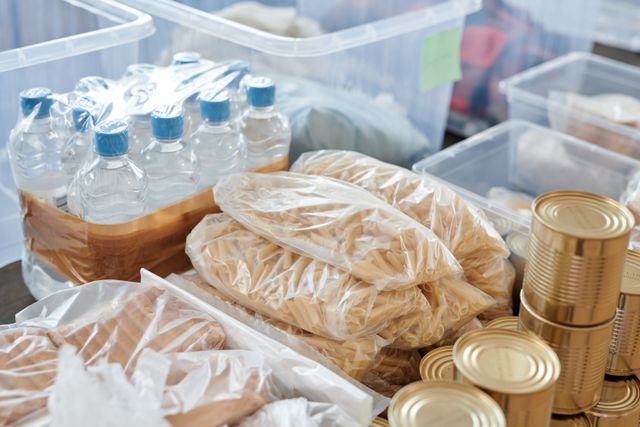
Food packaging is designed to protect products from contamination, moisture, oxygen, physical damage and changes in quality during storage and transportation. Plastic bottles, multilayer wrappers, paper cartons, metal cans, glass containers and food-grade coatings all help extend shelf life and make food distribution more convenient. However, packaging is not always chemically inert. Small quantities of substances present in packaging materials can sometimes transfer into the food or beverage they contain.
The same packaging material may interact differently with different foods. A plastic container holding water does not necessarily behave in the same way when it contains cooking oil, an acidic fruit drink, a dairy product or a high-fat sauce. Temperature, storage duration, food acidity, moisture, fat content and the surface area in contact with packaging can all influence the amount of a substance that migrates. These interactions make migration assessment a complex scientific task, particularly when manufacturers need to evaluate many packaging combinations and storage conditions.
Artificial intelligence could make this process more efficient by learning from experimental migration measurements, chemical properties, packaging characteristics and food-composition data. Machine-learning models can identify patterns that are difficult to capture through simple linear equations and estimate how migration may change across different food categories.
Understanding Chemical Migration From Food Packaging
Chemical migration refers to the transfer of substances from a material that comes into contact with food into the food itself. These substances may originate from the packaging polymer, additives, coatings, printing inks, adhesives or other components used during manufacturing. Examples of relevant chemical groups include plasticisers, antioxidants, stabilisers, residual monomers, oligomers and substances formed unintentionally during production or storage.
Migration does not necessarily mean that packaging has visibly deteriorated. A container can appear undamaged while small molecules move from its material into the food. The transfer may occur through direct contact, diffusion through the packaging, transfer through the gas space inside a package or other interactions between packaging layers and food.
It is also important to distinguish migration from the presence of a chemical hazard. Detecting a substance in food does not automatically establish that the food presents a health risk. AI-based migration prediction would therefore contribute to exposure assessment, but it would not independently determine whether a packaging product is safe.
Why Different Foods Interact Differently With the Same Packaging
One of the most important challenges in migration modelling is that food cannot be treated as a single uniform substance. Foods have different chemical compositions, physical structures and storage requirements. Their ability to absorb packaging chemicals varies according to characteristics such as fat content, acidity, water content, alcohol concentration and the presence of emulsions.
Fat-rich foods can be particularly relevant when evaluating chemicals that dissolve more readily in oils than in water. Cooking oils, butter-based products, creamy sauces, cheese and other high-fat foods may interact differently with certain packaging substances than water-based products. A chemical with a strong affinity for fats may move more readily into an oily food matrix under suitable conditions. However, the outcome depends on the specific chemical and packaging material rather than on fat content alone.
Acidic foods introduce another important variable. Fruit juices, tomato-based products, pickles, vinegar-containing sauces and other acidic foods can interact with packaging components differently from neutral foods. Acidity may influence the stability or solubility of particular substances, while the presence of water and other ingredients can affect their movement. AI models could learn these chemical relationships by comparing experimental measurements across foods with different pH values and compositions.
Dry foods require a separate approach. Flour, rice, cereals, powdered ingredients, biscuits and snacks have different moisture levels and surface structures. A dry food may have limited direct interaction with certain packaging chemicals, but its surface can still contact packaging materials, oils or coatings. Foods containing free surface fat may behave differently from dry products with little or no surface oil. These distinctions demonstrate why a useful AI system must represent food composition in more detail than a basic label such as liquid, solid or dry.
The Role of Packaging Material in Migration Prediction
Food packaging materials differ in their chemical composition, internal structure and ability to allow molecules to move through them. Plastics, paper, cardboard, metal, glass, rubber and multilayer materials each have different properties. Even within one category, different formulations can behave differently because of variations in additives, coatings, manufacturing processes and material thickness.
Plastic packaging is especially important in migration research because polymers may contain additives and residual substances that influence their interaction with food. The movement of a chemical through a polymer depends partly on its molecular size, polarity, solubility and compatibility with the polymer structure. The arrangement of polymer chains, crystallinity, free volume and temperature can also influence diffusion.
Paper and cardboard packaging may contain inks, adhesives, coatings and barrier layers. A food product may not contact the paper itself if an internal coating or liner is present, but substances can potentially transfer through layers or from one surface to another during manufacturing and storage. Metal packaging may involve protective internal coatings, while glass is generally a strong barrier but can still be associated with substances from closures, seals or other contact components.
Multilayer packaging makes prediction more complicated because different layers perform different functions. One layer may provide mechanical strength, another may act as a moisture or oxygen barrier, and an inner layer may contact the food. Chemicals can move through several layers before reaching the food, and the migration pathway may depend on the properties of each layer. An AI model that considers only the name of the outer packaging material would miss much of this information.
How AI Can Learn to Predict Chemical Migration
AI-based migration modelling begins with data. Researchers can collect experimental measurements showing how much of a particular chemical transfers from a packaging material into a food or food-simulating liquid under defined conditions. These measurements can be combined with information about the chemical’s molecular structure, the packaging composition, the food category and the storage environment.
The model then learns relationships between these variables and the measured migration outcome. For example, it may identify how a chemical’s molecular properties interact with packaging type, temperature and food composition. Rather than relying on a single general rule, machine-learning algorithms can identify nonlinear relationships and interactions between several variables. This is useful because migration behaviour may change substantially when multiple conditions occur together.
A 2023 study published in Food and Chemical Toxicology investigated machine-learning approaches for predicting chemical migration from food packaging materials into foods. The researchers used chemical properties, packaging material, food type and temperature as model inputs and evaluated multiple nonlinear algorithms. Their work demonstrated the potential of ensemble machine learning to improve migration prediction compared with earlier linear approaches. The models were also explored for profiling the migration potential of food-contact chemicals of concern.
More recent research has continued to examine machine-learning methods for predicting migration into food and water. A 2025 study evaluated multiple algorithms using experimental migration-related data across different materials and packaging compounds. It reported strong predictive performance for some models, including XGBoost. Such results are promising, but performance on a particular dataset does not guarantee that a model will predict every packaging material, food category or real-world storage condition accurately. Independent validation remains essential.
Building a Food-Specific Migration Prediction Model
A more advanced AI system could represent food as a collection of measurable properties rather than treating each product as a broad category. Its inputs might include fat percentage, moisture content, pH, salt concentration, alcohol content, water activity and the physical structure of the food. Where relevant, the system could also include information about emulsions, free oil, surface fat and the presence of ingredients that may interact with particular chemicals.
Packaging information would form another major part of the model. This could include polymer identity, material thickness, layer structure, coating composition, additives, manufacturing conditions and the chemical’s initial concentration in the packaging. The chemical itself could be represented through molecular descriptors such as molecular weight, polarity, solubility and partition-related properties. These descriptors help the model distinguish between substances that may behave very differently even when they originate from the same packaging material.
Storage conditions would provide the environmental context. Temperature, contact duration, refrigeration, freezing, heating, humidity and the intended use of the package can all influence migration. A package used for refrigerated storage may experience a different migration pattern from one used for hot filling or reheating. A useful model would therefore predict migration for a defined combination of packaging, food and use conditions rather than produce one universal estimate for a material.
The system could then estimate the likely migration level, identify the variables contributing most strongly to the prediction and indicate where the available data are insufficient. Such an approach would help researchers compare scenarios, prioritise experiments and identify combinations that deserve closer investigation.
Why Temperature and Storage Duration Matter
Temperature is one of the most important conditions in migration assessment because it can influence molecular movement and the properties of packaging materials. In many systems, higher temperatures increase diffusion and can accelerate the transfer of certain substances. However, the exact response depends on the chemical, polymer and food matrix. A model should not assume that every chemical migrates at the same rate or that temperature has an identical effect across all packaging systems.
Storage duration is equally important. Migration may increase over time as substances move from the packaging towards the food, although the rate may change during the process. Some systems approach an equilibrium, while others may continue to change depending on the available chemical concentration and the conditions of contact. Short-term testing may therefore be insufficient for products intended to remain packaged for months.
AI could model migration as a time-dependent process by learning from measurements collected at several storage intervals. Instead of predicting only one final concentration, a model could estimate how migration changes during storage and compare different temperature histories. This could be particularly useful for products that move through warm warehouses, refrigerated distribution systems and retail environments before reaching consumers.
Combining AI With Laboratory Testing
AI predictions are only as reliable as the evidence used to train and validate them. Laboratory migration testing remains essential because it provides measurements of what actually happens under defined experimental conditions. Common analytical approaches include chromatography and mass spectrometry, which can help identify and quantify substances transferred into food or food simulants.
Food simulants are selected to represent particular types of food or conditions of use. They allow researchers to investigate migration under controlled conditions without needing to test every possible food product. Regulatory frameworks also classify foods and conditions of use to help determine which migration tests are appropriate. The US Food and Drug Administration, for example, distinguishes food categories such as aqueous products, acidic foods, products containing free oil or fat, dairy products, beverages and dry solids. It also identifies different conditions of use, including refrigerated storage, hot filling, sterilisation and reheating.
AI can support this process by identifying which experiments are likely to provide the most useful information. If a model predicts uncertainty for a particular combination of packaging and food, researchers can prioritise that scenario for laboratory testing. The new results can then be added to the dataset, allowing the model to improve through repeated training and validation. This creates a feedback process in which computational prediction guides experiments and experimental evidence strengthens computational prediction.
Identifying Unknown Chemicals and Complex Packaging Interactions
Identifying unknown migrants can be difficult because packaging materials may contain complex mixtures. Advanced analytical techniques, including high-resolution mass spectrometry, can generate large datasets containing chemical signals that require further interpretation. AI could help prioritise these signals by comparing them with chemical databases, predicting possible molecular features and identifying patterns associated with particular packaging materials or manufacturing processes.
Machine learning may also help investigate interactions between chemicals. A packaging material can contain multiple additives, and their behaviour may not always be independent. Temperature, ageing, oxidation and contact with food ingredients may alter the chemical composition of the packaging or create new substances. A more advanced model could combine migration prediction with chemical identification and degradation analysis. Nevertheless, AI-generated chemical identities are hypotheses that require confirmation through appropriate analytical methods.
Potential Applications in Food Safety and Packaging Development
AI-based migration prediction could support packaging manufacturers during product development. Before selecting a material for a new food product, a manufacturer could compare candidate packaging structures under the expected storage and distribution conditions. The model could help identify combinations that require more extensive testing and support the development of packaging with lower migration potential.
Food producers could also use predictive tools when changing recipes, package sizes or storage conditions. A reformulation that increases fat content, changes acidity or introduces a new ingredient may alter the interaction between food and packaging. Instead of assuming that earlier test results apply to the new product, companies could use AI to identify whether the change creates a new migration scenario requiring evaluation.
Regulatory scientists and researchers may benefit from models that help prioritise chemicals for further assessment. When many food-contact substances and packaging combinations need to be considered, predictive systems can help focus experimental resources on scenarios with higher predicted migration or greater uncertainty. AI could also support comparisons between conventional plastics, recycled materials, paper-based packaging and emerging bio-based alternatives. However, sustainable or biodegradable packaging should not automatically be assumed to have lower chemical migration. Each material requires its own assessment.
Limitations and Scientific Challenges
Despite its potential, AI-based migration prediction faces several important limitations. The first is data availability. Experimental migration measurements are not always available for every chemical, material, food type and storage condition. Datasets may also contain results generated using different analytical methods, food simulants and experimental protocols.
The second challenge is generalisation. A model trained on a limited set of plastics may perform poorly when applied to a new polymer, a multilayer structure or a different coating. Similarly, predictions for one food category may not transfer reliably to foods with unusual compositions. Independent testing on materials and foods that were not included during training is therefore necessary.
Another limitation is the gap between predicting migration and assessing health risk. A model may estimate that a chemical can transfer into food, but it does not automatically establish the toxicological significance of the resulting exposure. Risk assessment requires reliable chemical identification, exposure estimates and toxicological evidence. Predictions should also communicate uncertainty rather than presenting every output as a precise measurement. Interpretability is important as well. Food manufacturers and regulators need to understand why a model predicts higher migration in one scenario than another.
The Future of AI-Driven Food Packaging Assessment
The next stage of research could involve integrating machine learning with diffusion models, chemical databases, food-composition datasets and laboratory analytical platforms. Such systems could simulate a wider range of packaging-food combinations and provide predictions that change according to the intended use of a package. Digital representations of packaging structures could also help researchers compare material thickness, barrier layers and chemical composition before a product enters large-scale production.
Another promising direction is uncertainty-aware prediction. Instead of giving a single migration estimate, an AI system could provide a range of likely outcomes and explain which missing measurements contribute most to uncertainty. This would make predictions more useful for deciding when additional laboratory testing is necessary. Models could also be updated as new measurements become available, improving their coverage of emerging packaging materials and previously uncharacterised substances.
In the longer term, AI may contribute to safer-by-design packaging. Manufacturers could use predictive models early in development to compare alternative additives, polymers, coatings and barrier structures. The objective would not simply be to predict migration after packaging has been produced, but to reduce undesirable chemical transfer through informed material selection and testing.
Conclusion
AI can model how food packaging chemicals migrate into different types of food by combining information about chemical properties, packaging materials, food composition, temperature and storage duration. Research has already demonstrated that nonlinear machine-learning methods can support migration prediction, while newer approaches may expand these capabilities across more materials and food categories. The most important advantage is the ability to examine complex combinations and identify which scenarios deserve closer experimental investigation.
However, AI should be viewed as a supporting scientific tool rather than a replacement for laboratory testing or regulatory assessment. Food-specific migration depends on detailed chemical and physical interactions, and predictions must be validated against reliable measurements. When combined with analytical chemistry, toxicological assessment and transparent uncertainty reporting, AI could help researchers and manufacturers develop more informed packaging strategies and strengthen the scientific evaluation of food-contact materials.
Online Internship with Certificate
You may be interested

Gut Virome Intelligence: Infect Bacteria Influence the Human Gut Ecosystem
Anshika Jain - November 6, 2026The human gut is home to a complex ecosystem containing bacteria, fungi, archaea and viruses. While gut bacteria have received considerable attention in research on digestion, immunity…

Human–Environment Health Interaction Maps: AI Connect Indoor Lighting
Anshika Jain - November 6, 2026Human health is influenced not only by genetics, nutrition, physical activity and medical care but also by the environments in which people spend their everyday lives. Homes,…

AI Predict Which Preventive Health Interventions Will Remain Effective
Anshika Jain - November 6, 2026Preventive healthcare traditionally focuses on identifying risk factors and recommending interventions that can reduce the likelihood of disease. However, a life-course approach recognises that health is shaped…
Most from this category

Science of Medical Device Fatigue: People Stop Using Health Technologies
Anshika Jain - November 6, 2026
Biological Tissue Aging Maps: AI Distinguish Functional Aging From Changes in Appearance
Anshika Jain - November 6, 2026
Retinal Microvascular Intelligence: Early Signs of Changes Beyond Eye Health
Anshika Jain - November 5, 2026
Hair Follicle Biology AI: Machine Learning Distinguish Nutritional Factors
Anshika Jain - November 5, 2026
Science of Medical Device Fatigue: People Stop Using Health Technologies
Anshika Jain - November 6, 2026Biological Tissue Aging Maps: AI Distinguish Functional Aging From Changes in Appearance
Anshika Jain - November 6, 2026Retinal Microvascular Intelligence: Early Signs of Changes Beyond Eye Health
Anshika Jain - November 5, 2026




.png)
Leave a Comment
You must be logged in to post a comment.