
Physiological Noise Cancellation: AI Separate Meaningful Biological Signals

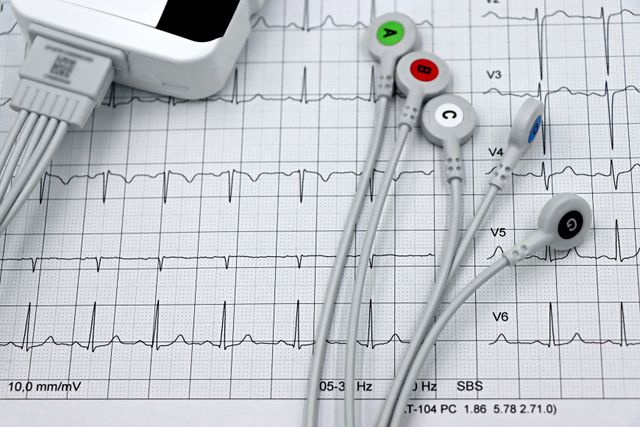
Physiological measurements contain information about the body’s internal activities, but the recorded data rarely represents biological activity alone. Measurements can include genuine physiological signals, random biological fluctuations, environmental interference and errors introduced by sensors or recording equipment. Separating these components is essential because an apparent change in a health measurement does not always indicate a meaningful change in the body’s condition.
Physiological noise can originate from several sources. External interference may come from electrical equipment, environmental temperature changes or movement during measurement. Sensor-related noise may result from loose electrodes, skin contact variations, device placement or inconsistent measurement conditions. Biological variability, meanwhile, may arise from breathing patterns, hormonal fluctuations, changes in posture, physical activity and natural differences between individuals.
An important distinction exists between measurement noise and genuine biological variation. A temporary increase in heart rate during exercise is a meaningful physiological response, even if it differs from the person’s resting measurement. Similarly, fluctuations in glucose levels after eating reflect real metabolic activity. An AI system that removes every unusual variation could accidentally eliminate important information.
Physiological noise cancellation must therefore do more than smooth measurements. Its objective is to identify which variations are caused by unreliable recording conditions and which represent genuine biological activity that deserves further investigation.
Why Meaningful Biological Signals Are Difficult to Identify
Biological signals are often nonlinear, time-dependent and influenced by several overlapping processes. Unlike a simple electronic signal, a physiological measurement may change its characteristics according to the individual’s activity, emotional state, environment and underlying health conditions.
For example, an electrocardiogram (ECG) records the electrical activity associated with the heart. However, movement, muscle activity, electrode displacement and electrical interference can distort the recorded waveform. Similarly, electroencephalography (EEG) measures electrical activity in the brain but can be affected by eye movements, facial muscle activity and environmental interference.
The difficulty becomes greater when multiple sources of variation occur simultaneously. A person wearing a smartwatch may experience changes in heart rate because of physical activity, emotional stress, caffeine consumption or a change in body temperature. The device records the resulting measurement, but it may not have enough contextual information to determine which factor caused the variation.
A 2025 review of AI-enhanced wearable monitoring explains that physiological signals are often nonlinear, non-stationary and highly individualised, making conventional processing methods less effective for complex multimodal measurements. AI-based signal extraction and data fusion offer potential approaches for handling these challenges.
How Artificial Intelligence Can Separate Meaningful Signals From Noise
AI-based physiological noise cancellation involves identifying unwanted components within recorded data while preserving the features needed for accurate interpretation. Different machine learning approaches can perform different parts of this process, depending on the type of signal, its recording conditions and the intended application.
Machine Learning for Noise Pattern Recognition
Machine learning models can be trained using physiological recordings containing both relatively clean signals and known forms of interference. By analysing the differences between these recordings, algorithms can learn patterns associated with particular types of noise.
For example, a model trained on ECG recordings may learn to recognise distortions caused by movement, baseline drift or electrical interference. When similar patterns appear in a new recording, the system can estimate which sections are unreliable and determine whether corrective processing is appropriate.
This approach is useful because noise does not always follow a simple mathematical pattern. Traditional filters are effective for certain types of interference, but complex physiological recordings may contain overlapping signals with similar frequency characteristics. Machine learning can potentially recognise more complicated patterns by considering the shape, timing and context of the measurements.
However, the reliability of these models depends on the quality and diversity of their training data. A model trained on stationary hospital recordings may perform poorly when applied to wearable measurements collected during walking, exercise or everyday activities.
Deep Learning for Signal Reconstruction
Deep learning models can analyse large amounts of sequential data and learn complex relationships between different parts of a physiological recording. Convolutional neural networks can identify local waveform patterns, while recurrent neural networks and related architectures can examine relationships across time.
These models may be trained to estimate what a physiological signal would look like without particular forms of interference. The algorithm compares the observed recording with patterns learned from cleaner examples and attempts to reconstruct the underlying biological activity.
For instance, an AI-based ECG denoising model may attempt to reduce movement-related distortions while preserving important waveform characteristics. In EEG analysis, deep learning systems may identify and reduce eye-blink or muscle-related interference without removing important neural activity.
The challenge is ensuring that the reconstructed signal remains biologically accurate. A smoother waveform is not necessarily a more reliable waveform. If an algorithm removes a small but clinically important feature, it may produce a visually improved recording while reducing its usefulness for medical interpretation.
Adaptive Noise Cancellation
Adaptive noise cancellation is particularly useful when the source of interference changes over time. Instead of applying one fixed correction throughout a recording, the algorithm continuously adjusts its processing according to the observed conditions.
For example, a wearable device may use movement measurements from an accelerometer as additional information when processing heart-rate signals. If the device detects significant physical movement, the algorithm can examine whether changes in the recorded signal are consistent with movement-related interference.
This is particularly relevant to wearable monitoring because users rarely remain completely still. Their devices must process signals while they walk, exercise, change posture and perform everyday activities.
Research published in 2025 on dynamic ECG noise suppression examines methods operating in the time domain, frequency domain, time-frequency domain and AI-based processing. It highlights the importance of balancing noise reduction, signal preservation and real-time performance in wearable devices.
Identifying Physiological Noise Across Different Health Measurements
Physiological noise cancellation is not limited to one type of health measurement. Different sensing technologies produce different signals, and each requires methods suited to its biological characteristics.
Heart Activity and ECG Measurements
ECG monitoring is widely used to investigate heart rhythm and electrical activity. However, recordings collected during movement may contain interference that changes the shape of the waveform and makes accurate interpretation more difficult.
AI systems can analyse waveform morphology, timing relationships and contextual sensor data to distinguish potentially meaningful cardiac features from recording artefacts. They may also identify sections of a recording where signal quality is too poor for reliable interpretation.
This is especially relevant to continuous monitoring because wearable ECG systems collect data outside controlled clinical environments. A 2025 review of wearable ECG processing identifies motion-related interference as a major obstacle to reliable analysis and discusses the potential of AI-based noise suppression.
Brain Activity and EEG Measurements
EEG signals are generally low in amplitude and particularly sensitive to interference. Eye movements, blinking, facial muscle contractions and electrical activity from other sources can affect the recorded data.
AI models could help identify these unwanted patterns by analysing signal characteristics and relationships between multiple recording channels. For example, an algorithm may recognise a recurring eye-blink pattern and estimate its contribution to the EEG recording.
However, this process requires considerable care because some genuine brain signals may overlap with the frequency characteristics of muscle or eye-related activity. Removing every component that resembles an artefact could also remove meaningful neurological information.
A 2025 systematic review of wearable EEG artefact detection highlights the challenges created by mobile recording conditions, dry electrodes and reduced scalp coverage. It also identifies the need for more consistent evaluation of artefact detection and removal methods.
Blood Oxygen and Heart Rate Measurements
Wearable pulse oximeters and optical heart-rate sensors commonly use photoplethysmography (PPG), which detects changes in blood volume through variations in light absorption. These measurements can be influenced by movement, skin contact, sensor positioning and environmental conditions.
AI systems may combine optical measurements with movement information and signal-quality indicators to estimate whether a reading is reliable. This can help reduce the influence of motion-related artefacts and identify periods when the sensor is not producing dependable data.
However, noise cancellation cannot correct every limitation of optical measurement. Poor sensor fit, low peripheral circulation and device-specific limitations may affect accuracy in ways that require improved hardware or additional validation rather than software correction alone.
Temperature, Respiration and Other Physiological Measurements
Not every physiological signal is equally sensitive to noise. Skin temperature measurements, for example, may be less affected by movement artefacts than ECG or EEG recordings, although environmental temperature and sensor placement can still influence the results.
Respiratory measurements can be affected by posture, speaking, physical activity and variations in breathing patterns. These changes may represent genuine physiological behaviour rather than unwanted interference.
AI systems must therefore understand the characteristics of each measurement type. A processing technique suitable for ECG signals cannot automatically be applied to temperature, respiration or blood pressure data without evaluating its effects on the underlying information.
Multimodal AI: Combining Different Biological Signals
One promising direction in physiological noise cancellation is multimodal data fusion. Instead of examining one measurement independently, AI systems can analyse several related signals to understand the context in which a change occurs.
For example, a wearable device may record heart rate, movement, skin temperature and respiratory activity simultaneously. If the heart-rate measurement changes during physical movement, the system can compare it with the accelerometer data and determine whether the variation is consistent with increased activity.
Similarly, a sudden change in skin temperature may be evaluated alongside environmental measurements and activity levels. This can help distinguish a possible physiological response from a change caused by external conditions.
Multimodal AI can also support personalised monitoring because the same measurement may have different meanings for different individuals. A heart rate that is unusual for one person may be normal for another, depending on age, fitness, medication and other factors.
However, combining multiple signals introduces additional technical challenges. Sensors may record at different sampling rates, measurements may be missing and some devices may have inconsistent time references. AI models must account for these differences before producing reliable interpretations.
Personalised Physiological Signal Analysis
Human physiology varies considerably between individuals. Heart-rate patterns, sleep-related measurements, breathing rhythms and metabolic responses may differ even among people with similar demographic characteristics.
Conventional signal-processing methods often rely on general assumptions about the expected shape or frequency of a biological signal. While these methods can be effective, they may not fully account for individual differences.
AI could support personalised noise cancellation by learning a person’s typical physiological patterns over time. For example, a model may establish an individual’s usual resting heart-rate range and movement-related signal characteristics. It could then use this information to interpret new recordings more appropriately.
Personalised systems may also adapt to changes in sensor placement or daily activity patterns. However, they must avoid assuming that every deviation from an individual’s historical measurements is noise. A genuine change in health may initially appear unusual precisely because it differs from the person’s previous pattern.
For this reason, personalised models should distinguish between signal quality, normal individual variation and potentially meaningful physiological change. The purpose is to improve interpretation, not automatically classify unfamiliar measurements as errors.
Measuring Whether AI Has Actually Removed Noise
An important challenge in physiological noise cancellation is determining whether an algorithm has improved a signal or simply changed its appearance. Signal-processing systems are often evaluated using measurements such as signal-to-noise ratio, reconstruction error and waveform similarity.
Signal-to-noise ratio estimates how strongly the desired signal stands out relative to unwanted interference. Reconstruction error compares an estimated clean signal with a reference signal when an appropriate reference is available. Other measures examine whether important waveform features remain intact after processing.
However, technical performance alone is not sufficient. A model may achieve strong noise reduction while unintentionally removing information needed for downstream analysis. Researchers must therefore examine whether the processed signal continues to support the original task, such as identifying heart rhythm patterns or analysing brain activity.
Recent research on physiological signal denoising also highlights the importance of evaluating computational cost and power consumption, particularly when algorithms are intended for low-power wearable devices. The 2025 IEEE EMBC study found that movement affected EEG and ECG recordings more substantially than skin-temperature measurements in its experimental setting, illustrating why denoising requirements should be matched to the type of signal and activity.
Challenges and Risks of AI-Based Noise Cancellation
Despite its potential, AI-based physiological noise cancellation presents several scientific and practical challenges. The most important is the risk of removing genuine biological information. Physiological signals often contain irregularities that may be meaningful, and an algorithm trained to favour smooth patterns could unintentionally suppress them.
Another challenge is generalisation. A model trained using data from one device, population or recording environment may not perform equally well in another. Differences in sensor design, skin contact, body movement and measurement conditions can change the characteristics of recorded noise.
There is also the issue of missing and unreliable data. If a wearable sensor loses contact with the skin or an electrode becomes displaced, the resulting recording may be too incomplete for accurate reconstruction. AI cannot reliably recover information that was never captured, even if it can estimate some missing patterns.
Computational efficiency is particularly important for continuous monitoring. Complex models may require substantial processing power, memory and battery consumption. This can limit their usefulness in small wearable devices unless algorithms are carefully optimised.
Finally, privacy and transparency must be considered. Continuous physiological monitoring can generate sensitive information about an individual’s health and daily behaviour. Systems should protect personal data and provide understandable explanations of signal-quality decisions, especially when processed measurements may influence medical interpretation. Recent reviews of AI-enabled wearable monitoring identify privacy, model interpretability, real-time processing and generalisation as continuing challenges.
The Future of Physiological Noise Cancellation
Future systems may move beyond conventional signal cleaning towards context-aware biological signal interpretation. Instead of applying the same processing method to every recording, AI could select different strategies according to the type of sensor, the individual’s activity and the quality of the incoming data.
For example, a wearable system might use a different processing approach during walking than during sleep. It could combine movement measurements with cardiac or respiratory signals and adjust its noise-handling strategy according to the recording environment.
Another important development may involve uncertainty-aware processing. Rather than always producing a reconstructed signal, an AI system could estimate how much confidence it has in the available data. When interference becomes too severe, it could flag the measurement as unreliable instead of generating a potentially misleading reconstruction.
Researchers may also develop models that preserve unusual but potentially important physiological events. This would require training systems not only to recognise common signal patterns but also to avoid suppressing rare features that may be relevant to health assessment.
The integration of AI with improved sensor hardware could further enhance measurement reliability. Better electrode materials, more stable skin contact, low-noise electronics and multiple sensing modalities may reduce the amount of interference that software needs to correct.
Ultimately, the objective is to create physiological monitoring systems that can distinguish recording errors from genuine biological changes while maintaining accuracy across different individuals and real-world conditions.
Conclusion
Physiological noise cancellation is an important research direction because health measurements contain a combination of meaningful biological activity, natural variation and unwanted interference. Separating these components is essential for interpreting signals collected through ECG, EEG, optical sensors, temperature monitors and other wearable technologies.
Artificial intelligence can contribute through machine learning, deep learning, adaptive filtering and multimodal data fusion. These approaches may help recognise complex noise patterns, reconstruct distorted signals and account for differences between individuals and recording environments.
However, effective noise cancellation must preserve genuine physiological information. Excessive filtering can remove important biological features, while poorly generalised models may produce unreliable results outside their training conditions. Signal-quality assessment, independent validation and transparent uncertainty reporting are therefore essential.
As wearable monitoring and digital health technologies continue to develop, AI may help transform raw physiological measurements into more dependable biological information. Its greatest contribution will not simply be making health data appear cleaner, but ensuring that meaningful changes in the human body remain visible, distinguishable and accurately interpreted.
You may be interested

Wellness Decision Overload Architecture: Conflicting health information changes
Anshika Jain - November 18, 2026Access to health information has expanded significantly through digital platforms, healthcare applications, social media, online communities and search engines. Individuals can now explore information about nutrition, exercise,…

Health Behaviour Switching Costs: Mental effort replace unhealthy routines
Anshika Jain - November 18, 2026Changing an unhealthy habit is often more complicated than simply understanding why it should be changed. People may recognise the importance of regular exercise, balanced nutrition, adequate…

Physiological Self-Regulation Capacity: Individuals Maintain Biological Stability
Anshika Jain - November 18, 2026The human body continuously responds to changes in its internal and external environment. Everyday activities such as walking, working, exercising, eating, sleeping, experiencing emotional pressure and adapting…
Most from this category

Food Fermentation Metabolite Competition: Microorganisms compete to produce compounds
Anshika Jain - November 18, 2026
Plant Pigment Stability Prediction: Cooking and storage influence anthocyanins
Anshika Jain - November 18, 2026
Starch Retrogradation Intelligence:Cooling and reheating change properties of cooked starch
Anshika Jain - November 18, 2026
Biological Response Reproducibility Intelligence: Same health intervention produces inconsistent results
Anshika Jain - November 17, 2026
Food Fermentation Metabolite Competition: Microorganisms compete to produce compounds
Anshika Jain - November 18, 2026Plant Pigment Stability Prediction: Cooking and storage influence anthocyanins
Anshika Jain - November 18, 2026Starch Retrogradation Intelligence:Cooling and reheating change properties of cooked starch
Anshika Jain - November 18, 2026




.png)
Leave a Comment
You must be logged in to post a comment.