
Starch Retrogradation Intelligence:Cooling and reheating change properties of cooked starch

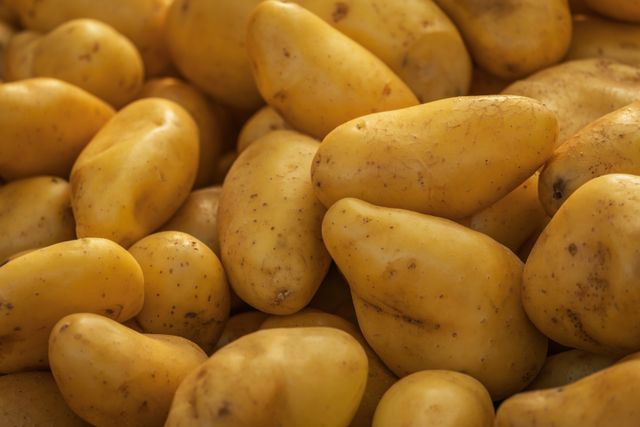
Starch is one of the most important components of everyday foods, forming the structural foundation of rice, potatoes, wheat products, corn-based foods, pasta and numerous other carbohydrate-rich meals. Although starch is commonly associated with energy supply, its behaviour extends far beyond its nutritional contribution. Its molecular structure changes significantly during cooking, cooling and reheating, influencing food texture, moisture retention, digestibility and storage stability.
A freshly cooked bowl of rice, for example, has a different texture from rice that has been refrigerated overnight. Cooked potatoes may become firmer after cooling, while bread gradually loses its softness during storage. These changes are connected to a process known as starch retrogradation, in which gelatinised starch molecules gradually reassociate and develop more ordered structures after cooking.
Traditionally, food scientists investigate retrogradation through laboratory experiments that measure changes in crystallinity, texture, thermal properties and molecular organisation. However, the process is influenced by several interacting factors, including cooling speed, storage temperature, moisture content, starch composition, cooking conditions and reheating intensity. Understanding these relationships can be challenging because different starch-based foods respond differently to the same environmental conditions.
Artificial intelligence introduces an opportunity to examine these complex relationships through computational modelling. By analysing molecular characteristics, processing conditions and experimental measurements, AI systems may help predict how starch structures reorganise during cooling and how those structures respond when food is reheated. This emerging approach can be described as Starch Retrogradation Intelligence.
Rather than treating cooling and reheating as simple temperature changes, this approach considers them as stages in a dynamic molecular process. It could support the development of improved food-processing techniques, more consistent product textures and better-informed investigations into starch digestibility.
Understanding Starch Gelatinisation Before Retrogradation
To understand retrogradation, it is necessary to examine what happens to starch during cooking. Starch is primarily composed of two glucose-based polymers known as amylose and amylopectin. Amylose generally has a relatively linear structure, while amylopectin contains extensive branching.
In raw ingredients such as rice, wheat, potatoes and corn, starch is organised into semi-crystalline granules. These granules contain ordered and less-ordered regions that help maintain their original physical structure. When starch is heated in the presence of sufficient water, the granules absorb moisture and begin to swell.
As heating continues, the internal organisation of starch granules becomes disrupted. Hydrogen bonds between starch chains weaken, crystalline regions lose their organisation, and some starch molecules begin to move into the surrounding water. This transformation is known as gelatinisation.
Gelatinisation is responsible for many familiar cooking changes. Rice grains become softer, potato starch contributes to a thickened texture, and flour-based mixtures develop the viscosity required for sauces, breads and other products. The extent of gelatinisation depends on temperature, water availability, starch composition and processing time.
However, gelatinisation does not mean that starch molecules remain permanently disorganised. When the cooked food begins to cool, some of the starch chains can reassociate. This molecular reorganisation creates the conditions for retrogradation.
What Is Starch Retrogradation?
Starch retrogradation is the gradual reassociation and ordering of starch molecules after gelatinisation. During cooling and storage, starch chains can move closer together and form new intermolecular associations, including hydrogen bonds. Some regions may develop more organised structures, resulting in changes to the physical properties of the food.
The process generally involves both amylose and amylopectin, although they behave differently. Amylose molecules are relatively mobile after gelatinisation and can reassociate comparatively quickly during cooling. This can contribute to early structural changes, including gel formation and increased firmness.
Amylopectin has a more complex branched structure. Its reassociation generally occurs more slowly because its chains must reorganise within a larger molecular framework. Amylopectin retrogradation is particularly important during longer storage periods and contributes to changes in the texture of bread, cooked rice and other starch-based foods.
Retrogradation is not simply the return of cooked starch to its original raw condition. The resulting structures are different from the original granules because cooking has already altered their organisation. Instead, it involves the formation of new ordered regions within the gelatinised starch system.
The speed and extent of retrogradation vary according to the food matrix. A high-moisture rice product may behave differently from a relatively dry bread structure, even if both contain similar starch components. This variation makes retrogradation an important subject for predictive food science.
Why Cooling Changes the Structural Properties of Cooked Starch
Cooling provides an environment in which gelatinised starch molecules can gradually reassociate. As the temperature decreases, molecular movement changes, allowing starch chains to form new associations. The rate of this process depends on how quickly the food cools and the conditions under which it is stored.
Rapid cooling and slow cooling may produce different structural outcomes. A fast temperature reduction can limit the time available for certain molecular rearrangements, while slower cooling may allow more opportunities for starch chains to interact. However, the final result also depends on moisture content, starch composition and the temperature range through which the food passes.
Storage temperature is particularly significant. Refrigeration can influence the rate and extent of starch reassociation, while freezing introduces additional complications because ice formation can redistribute water within the food structure. During frozen storage and subsequent thawing, changes in moisture distribution may affect texture and starch organisation.
Water availability is another important factor. Starch chains require sufficient molecular mobility to reorganise, but excessive water loss can also change the physical environment in which reassociation takes place. Consequently, the same cooling conditions may produce different results in foods with different moisture levels.
These relationships demonstrate why a single temperature measurement cannot fully explain retrogradation. A more complete prediction must consider the food’s thermal history, molecular composition and physical structure.
How Reheating Influences Retrograded Starch
Reheating introduces another stage of structural change. When previously cooled starch-based food is heated again, some of the structures formed during retrogradation may become disrupted. The extent of this disruption depends on the strength and organisation of the reassociated regions, the amount of available water and the temperature reached during reheating.
Some retrograded structures can melt or partially disorganise when sufficient heat and moisture are supplied. This may soften the food and alter its texture. However, not all retrograded starch behaves identically. Certain ordered regions, particularly those associated with more stable amylopectin structures, may show different thermal responses from less stable structures.
The number of cooling and reheating cycles can also influence starch organisation. Repeated temperature changes may cause further molecular rearrangements, moisture redistribution and changes in crystallinity. The outcome is not necessarily a simple reversal of the original retrogradation process.
For example, refrigerated rice reheated with sufficient moisture may become softer, but its texture and molecular organisation may not return completely to their freshly cooked state. Similarly, reheated bread may regain some softness temporarily, while other structural changes remain.
This distinction is important because reheating should not be understood as resetting starch to its original condition. It is another transformation within a continuing structural process.
What Is Starch Retrogradation Intelligence?
Starch Retrogradation Intelligence is an AI-assisted approach for predicting how gelatinised starch reorganises during cooling, storage and reheating. It combines food composition data, thermal processing information, structural measurements and computational models to estimate the development and disruption of retrograded starch structures.
Traditional food analysis often examines retrogradation through individual measurements. For example, differential scanning calorimetry can identify thermal transitions associated with the melting of retrograded structures. X-ray diffraction can provide information about crystalline organisation, while texture analysis can measure changes in firmness and elasticity.
AI can combine these measurements to identify relationships that may not be obvious when each variable is studied separately. A predictive model could examine how amylose content, cooling rate, storage duration, moisture level and reheating temperature collectively influence structural changes.
The objective is not simply to predict whether a food becomes harder after refrigeration. More advanced systems could estimate the likely extent of starch reassociation, identify conditions associated with increased crystallinity and predict how reheating may alter the resulting structure.
Such modelling could eventually help food manufacturers and researchers compare different cooking and storage strategies before conducting extensive physical experiments.
How Artificial Intelligence Can Model Starch Structural Changes
Predicting Retrogradation Through Machine Learning
Machine learning models can identify patterns between processing conditions and experimentally measured changes in starch. Training datasets may include starch composition, cooking temperature, gelatinisation time, cooling speed, storage duration, moisture content and texture measurements.
A model trained on sufficiently diverse data could learn how different combinations of these variables influence retrogradation. For example, it might estimate how the firmness of cooked rice changes after different refrigeration periods or how the storage behaviour of a starch-based dessert varies with its formulation.
Regression algorithms can estimate continuous outcomes such as crystallinity, firmness and thermal transition temperatures. More advanced approaches may classify samples according to their structural state or predict the probability of particular changes occurring under specified conditions.
The reliability of these predictions would depend on the quality and relevance of the training data. A model developed using one rice variety should not automatically be assumed to perform equally well for potatoes, wheat products or modified starch ingredients.
Using Molecular and Structural Data
Starch retrogradation occurs at the molecular level, making structural information particularly valuable. AI models could analyse data describing molecular chain lengths, branching patterns, crystallinity and the distribution of ordered regions.
Graph-based machine learning may offer a useful framework for representing molecular structures and their relationships. Such models could help researchers investigate how differences in amylose and amylopectin organisation influence the formation of reassociated structures.
Spectroscopic and diffraction measurements can also generate complex datasets. Machine learning algorithms may identify patterns within these signals that correspond to different stages of starch reorganisation.
However, interpreting molecular structure requires appropriate scientific validation. An AI system may detect a relationship between a spectral pattern and a measured property, but additional experiments are necessary to confirm the underlying structural explanation.
Combining AI With Thermal Kinetic Modelling
Starch retrogradation is a time-dependent process. Its development depends not only on the final storage temperature but also on how long the food remains at different temperatures.
Kinetic models can describe how structural changes develop over time. AI can complement these models by learning how the process responds to variations in starch composition, water availability and processing conditions.
A hybrid model could combine established kinetic equations with machine learning predictions. This approach may help estimate the rate of retrogradation during refrigerated storage and predict how much structural organisation remains after reheating.
Such systems could be particularly useful for products with complex manufacturing and distribution histories, where temperature conditions vary across multiple stages.
The Role of Advanced Analytical Technologies
AI-based retrogradation prediction depends on reliable measurements of starch structure and physical behaviour. Several analytical technologies can provide the information needed to develop and validate these models.
Differential scanning calorimetry is widely used to investigate thermal transitions associated with starch gelatinisation and retrogradation. By measuring heat flow during controlled heating, researchers can estimate the energy required to disrupt certain ordered structures.
X-ray diffraction provides information about crystalline organisation within starch. Changes in diffraction patterns can help identify the development of ordered regions during cooling and storage.
Fourier-transform infrared spectroscopy can provide information about molecular bonding environments and changes in starch organisation. When combined with suitable calibration data, machine learning may use these spectral patterns to estimate structural properties.
Texture profile analysis measures physical characteristics such as hardness, cohesiveness, elasticity and chewiness. These measurements are important because molecular rearrangements often influence the way a food feels when eaten.
Microscopy can provide additional information about the physical organisation of starch-containing foods. Imaging methods may help researchers observe structural changes in granules, gels and surrounding food matrices.
When data from these technologies are combined, AI models can connect molecular-level changes with measurable food properties. This creates an opportunity to develop more comprehensive representations of starch behaviour.
Applications in Rice, Potatoes, Bread and Other Starch-Based Foods
Improving the Texture of Cooked Rice
Rice is an important example of a food affected by retrogradation. Its texture changes during cooling and refrigerated storage, with the extent of change depending on variety, amylose content, cooking conditions and moisture distribution.
AI models could help predict how different rice varieties respond to cooling and reheating. Manufacturers of ready-to-eat rice products could use these predictions to evaluate cooking conditions, packaging moisture and reheating instructions.
This may help improve texture consistency and reduce undesirable hardening during storage. It could also support research into rice varieties and processing approaches that maintain preferred eating qualities.
Understanding Potato Starch Reorganisation
Potatoes contain starch granules that undergo gelatinisation during cooking. Cooling can promote molecular reassociation, contributing to changes in firmness and other structural characteristics.
AI could help researchers compare the behaviour of boiled potatoes, mashed potatoes and processed potato products under different storage conditions. These foods have different moisture distributions and physical structures, which may influence retrogradation.
A predictive model could support product development by identifying processing conditions associated with more consistent texture during refrigeration and reheating.
Predicting Bread Staling
Bread staling is a complex process involving starch retrogradation, moisture redistribution and changes in interactions between starch and other components. Although retrogradation is an important contributor, it is not the only mechanism responsible for bread firming.
AI models could examine how flour composition, baking conditions, cooling time, packaging and storage temperature influence bread texture. By combining structural and moisture-related measurements, researchers may develop more accurate predictions of staling behaviour.
Such models could support the development of bread formulations with improved softness retention and more effective storage strategies.
Developing Better Starch-Based Food Products
Starch is used in desserts, noodles, sauces, bakery products, frozen meals and plant-based food formulations. Each application requires particular structural characteristics.
AI-assisted modelling could help food scientists select starch ingredients and processing conditions based on the desired cooling and reheating behaviour. This could improve product consistency while reducing the need for repeated formulation trials.
Can AI Predict Changes in Starch Digestibility?
One of the most interesting research possibilities involves the relationship between starch retrogradation and digestibility.
Some retrograded starch structures become less accessible to digestive enzymes. A portion of this material may contribute to resistant starch, particularly resistant starch type 3, which is formed when cooked starch retrogrades during cooling.
Resistant starch is not digested in the same way as readily digestible starch in the small intestine. Some of it reaches the large intestine, where it can be fermented by gut microorganisms.
However, the amount of resistant starch formed varies considerably according to starch source, amylose content, cooking conditions, cooling duration and subsequent processing. Reheating may also affect the structures that developed during cooling, although its effects depend on the food system and heating conditions.
AI could help researchers estimate how processing conditions influence the formation and stability of retrograded starch. By combining structural measurements with in vitro digestion experiments, models may identify conditions associated with changes in starch digestibility.
It is important to distinguish structural predictions from nutritional outcomes. An AI model estimating crystallinity cannot independently establish how much starch will resist digestion in humans. Laboratory digestion studies and, where appropriate, human research are required to evaluate nutritional effects.
Challenges in Developing Reliable Retrogradation Models
Despite its potential, AI-based starch modelling faces several challenges.
One major difficulty is the diversity of starch sources. Rice, wheat, corn and potato starch differ in amylose content, amylopectin structure and granule characteristics. These differences influence gelatinisation and retrogradation, meaning that a model trained on one ingredient may not generalise to another.
The food matrix creates further complexity. Starch rarely exists alone in processed foods. Proteins, fats, sugars, salts and hydrocolloids can influence water availability and molecular interactions. These ingredients may accelerate, slow or otherwise modify structural changes.
Moisture measurement is another challenge. Two food samples may contain similar total water levels but have different water distributions. Since molecular mobility depends partly on the local environment, measuring total moisture alone may not provide sufficient information.
Experimental datasets may also differ in measurement methods, sample preparation and storage protocols. Inconsistent data can reduce model accuracy and make comparisons between studies difficult.
Finally, AI predictions must be validated under realistic processing conditions. A model that performs well in a controlled laboratory experiment may produce less reliable results in industrial production, where food composition, equipment and temperature conditions can vary.
The Future of AI-Driven Starch Processing
Future research may combine molecular simulation, machine learning, thermal analysis and real-time processing data to develop more advanced starch prediction systems.
Digital twins could provide computational representations of starch-based foods throughout cooking, cooling, storage and reheating. These models could incorporate information about ingredient composition, processing history and temperature changes to estimate the structural condition of a product.
In manufacturing, AI systems may eventually support adaptive processing decisions. A production system could evaluate cooling conditions and predict whether a product is likely to develop excessive firmness during storage. Manufacturers could then investigate alternative cooling rates, formulations or moisture-management strategies.
Another promising direction is personalised food formulation. Different products require different starch properties, and AI could help researchers design formulations that achieve specific textures or storage characteristics. This may be valuable for ready-to-eat meals, refrigerated snacks, bakery products and plant-based foods.
Researchers may also develop more detailed models connecting starch structure with digestive behaviour. These systems could help investigate how cooling and reheating influence resistant starch formation, while maintaining a clear distinction between laboratory predictions and demonstrated human nutritional outcomes.
The long-term opportunity is to move from observing retrogradation after it occurs to predicting how it will develop under different processing conditions.
Conclusion
Starch Retrogradation Intelligence offers a promising direction for combining artificial intelligence with food chemistry, molecular structure analysis and food processing. By examining how cooling and reheating influence gelatinised starch, AI models may help predict changes in crystallinity, firmness, moisture behaviour and potentially digestibility.
The approach has applications across rice, potatoes, bread, noodles, desserts and other starch-based foods. It could help manufacturers improve texture consistency, optimise storage conditions and develop products with more predictable reheating characteristics.
However, accurate prediction requires more than temperature data. Starch composition, water distribution, food matrix interactions, processing history and storage duration must all be considered. Experimental measurements remain essential for validating computational predictions.
As food science datasets become more comprehensive and analytical technologies continue to improve, AI could provide researchers with a deeper understanding of how starch structures evolve throughout the food lifecycle. This may transform retrogradation from a process understood mainly through post-storage measurements into one that can be modelled and investigated before a product reaches consumers.
You may be interested

Wellness Decision Overload Architecture: Conflicting health information changes
Anshika Jain - November 18, 2026Access to health information has expanded significantly through digital platforms, healthcare applications, social media, online communities and search engines. Individuals can now explore information about nutrition, exercise,…

Health Behaviour Switching Costs: Mental effort replace unhealthy routines
Anshika Jain - November 18, 2026Changing an unhealthy habit is often more complicated than simply understanding why it should be changed. People may recognise the importance of regular exercise, balanced nutrition, adequate…

Physiological Self-Regulation Capacity: Individuals Maintain Biological Stability
Anshika Jain - November 18, 2026The human body continuously responds to changes in its internal and external environment. Everyday activities such as walking, working, exercising, eating, sleeping, experiencing emotional pressure and adapting…
Most from this category

Food Fermentation Metabolite Competition: Microorganisms compete to produce compounds
Anshika Jain - November 18, 2026
Plant Pigment Stability Prediction: Cooking and storage influence anthocyanins
Anshika Jain - November 18, 2026
Biological Response Reproducibility Intelligence: Same health intervention produces inconsistent results
Anshika Jain - November 17, 2026
Physiological Compensation Cascades: Body Attempts to Correct Biological Imbalance
Anshika Jain - November 17, 2026
Food Fermentation Metabolite Competition: Microorganisms compete to produce compounds
Anshika Jain - November 18, 2026Plant Pigment Stability Prediction: Cooking and storage influence anthocyanins
Anshika Jain - November 18, 2026Biological Response Reproducibility Intelligence: Same health intervention produces inconsistent results
Anshika Jain - November 17, 2026




.png)
Leave a Comment
You must be logged in to post a comment.