
Plant Pigment Stability Prediction: Cooking and storage influence anthocyanins

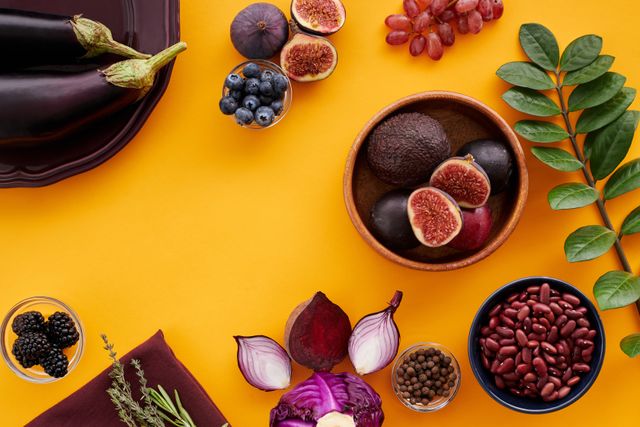
The natural colours found in fruits, vegetables, grains and other plant-based foods are more than visual characteristics. They are produced by specialised compounds known as plant pigments, which contribute to food appearance and may also possess important nutritional and functional properties. Anthocyanins create the red, purple and blue colours found in foods such as berries, purple cabbage and black rice. Carotenoids produce yellow, orange and red shades in carrots, tomatoes, pumpkins and other vegetables, while chlorophyll gives green vegetables their characteristic colour.
These pigments are chemically sensitive. Their stability can change during harvesting, transportation, washing, cutting, cooking, drying, packaging and storage. Exposure to heat, oxygen, light, moisture and variations in acidity can alter their molecular structures, resulting in colour fading, pigment degradation or the formation of new compounds. Consequently, a vegetable that appears brightly coloured when freshly harvested may develop a noticeably different appearance after processing or prolonged storage.
Food manufacturers traditionally use controlled processing conditions, laboratory testing and established preservation methods to maintain pigment quality. However, the stability of plant pigments depends on several interacting variables, making it difficult to predict their behaviour using a single measurement or temperature guideline.
Artificial intelligence introduces a new possibility: predicting how different processing and storage conditions influence individual pigment families. By analysing chemical structures, environmental conditions, processing records and laboratory measurements, AI systems could help researchers estimate pigment degradation, identify vulnerable compounds and develop more effective food preservation strategies.
This emerging research direction can be described as Plant Pigment Stability Prediction. It aims to move beyond observing colour changes after processing and toward understanding and predicting the chemical transformations responsible for those changes.
Understanding Plant Pigments and Their Chemical Importance
Plant pigments are naturally occurring compounds responsible for the colours of many fruits, vegetables, flowers and other plant materials. Their molecular structures determine how they absorb and reflect different wavelengths of visible light. Differences in chemical structure therefore produce different colours and influence how pigments respond to environmental conditions.
Although plant pigments are often grouped together because of their visual functions, they belong to different chemical families. Anthocyanins are water-soluble flavonoid pigments, carotenoids are generally fat-soluble compounds, and chlorophylls are magnesium-containing pigments associated with photosynthesis.
These differences are important when predicting stability. Anthocyanins are particularly sensitive to changes in pH, temperature and certain chemical interactions. Carotenoids can undergo oxidation and structural changes, including isomerisation, while chlorophyll can lose its central magnesium ion under acidic conditions, producing compounds such as pheophytins.
A preservation technique that protects one pigment family may not necessarily protect another. For example, an acidic environment may help maintain the colour of certain anthocyanins but can contribute to the conversion of chlorophyll into olive-coloured derivatives. This creates a significant challenge for food manufacturers working with products containing multiple natural pigments.
AI-based prediction could help researchers understand these differences and identify processing conditions that provide the best possible balance between colour retention, nutritional quality and product stability.
Anthocyanins: Predicting the Stability of Red, Purple and Blue Pigments
Anthocyanins are responsible for the characteristic colours of many berries, purple vegetables and coloured grains. They are found in foods such as blueberries, blackberries, strawberries, purple sweet potatoes, purple cabbage and black rice.
Their colour depends on their molecular structure and the surrounding chemical environment. One of their most distinctive properties is their sensitivity to pH. Under different acidity conditions, anthocyanins can exist in different structural forms, producing changes in colour and stability.
Temperature is another important factor. During heating, anthocyanins may undergo degradation, oxidation or other chemical transformations. The rate of these changes depends on the pigment type, food composition, heating duration and environmental conditions.
Storage can introduce additional challenges. Light and oxygen may contribute to pigment deterioration, while interactions with sugars, organic acids, metals and other food components can influence colour stability. In some food systems, certain interactions may also improve pigment stability.
AI models could analyse these relationships using experimental datasets containing pigment concentration, pH, temperature, oxygen exposure and storage duration. By learning from these measurements, algorithms may estimate how much anthocyanin is likely to remain after a particular processing treatment.
For example, researchers could compare the predicted stability of anthocyanins in purple sweet potato puree stored under different temperature and packaging conditions. The model could help identify combinations associated with slower pigment degradation.
However, colour alone cannot always reveal the concentration of intact anthocyanins. Changes in pH may alter visible colour without producing an equivalent change in total pigment concentration. Reliable prediction therefore requires chemical measurements alongside colour analysis.
Carotenoids: Modelling the Stability of Yellow, Orange and Red Pigments
Carotenoids are a large family of naturally occurring pigments found in carrots, tomatoes, pumpkins, mangoes, leafy vegetables and other plant foods. Beta-carotene, lycopene and lutein are among the well-known members of this group.
Their chemical structures contain extended systems of conjugated double bonds, which are responsible for their ability to absorb visible light. These structures also make carotenoids vulnerable to certain chemical changes.
Heat can cause carotenoids to undergo isomerisation, in which their molecular arrangement changes. Oxidation can also break down their structures, reducing pigment concentration and potentially changing colour characteristics.
The effect of cooking is not always negative. In some vegetables, heat treatment can disrupt cellular structures and improve the release or extractability of certain carotenoids. Cooking tomatoes, for example, can change the accessibility of lycopene by modifying the surrounding plant tissue. The final nutritional effect depends on processing conditions, food composition and the way the product is consumed.
AI systems could help distinguish between pigment degradation and changes in extractability. This distinction is essential because a measured increase in extractable carotenoids after cooking does not necessarily mean that the food has produced additional pigment. It may indicate that existing compounds have become easier to measure or release from the food matrix.
By analysing temperature, cooking time, oxygen exposure, fat content and pigment measurements, predictive models could estimate how different cooking methods influence carotenoid stability. Such research may support the development of tomato products, vegetable purees, fortified foods and plant-based beverages with more consistent pigment characteristics.
Chlorophyll: Understanding Green Pigment Transformation During Cooking
Chlorophyll is the pigment responsible for the green colour of many vegetables, including spinach, broccoli, peas, beans and leafy greens. It plays an essential role in photosynthesis and has a chemical structure that differs considerably from anthocyanins and carotenoids.
One of the most noticeable changes in green vegetables occurs during cooking. Fresh green vegetables may become olive-coloured when exposed to heat, particularly under acidic conditions. This transformation is partly associated with the replacement of magnesium in the chlorophyll molecule by hydrogen ions, producing pheophytin.
Other chlorophyll-related transformations can also occur during processing and storage. Heat, light, oxygen and changes in acidity may influence pigment stability and contribute to colour deterioration.
The surrounding food matrix is important as well. Cooking vegetables in water, steaming them, roasting them or processing them into purees creates different environments for pigment transformation. The duration of heating and the availability of water can influence the extent of these changes.
AI models could analyse chlorophyll concentration, acidity, heating conditions and storage data to predict the likelihood of green colour deterioration. For food manufacturers, this could help identify processing conditions that retain a more desirable appearance in canned vegetables, frozen products, soups and ready-to-eat meals.
However, predicting chlorophyll stability requires distinguishing between different degradation products. A model based only on surface colour may not identify whether a green pigment has been converted into pheophytin or has undergone more extensive degradation.
What Is Plant Pigment Stability Prediction?
Plant Pigment Stability Prediction is an AI-assisted approach for estimating how natural pigments change during food processing and storage. It combines chemical information, food composition, environmental conditions and laboratory observations to predict the stability of pigments over time.
Traditional food analysis often measures pigment concentration at specific stages, such as before cooking, immediately after processing and following storage. These measurements provide valuable information but may not reveal every transformation occurring between sampling points.
AI can help connect these observations. A machine learning model could examine how changes in temperature, pH, oxygen exposure and storage duration relate to pigment concentration and colour characteristics. More advanced systems may also consider the chemical structure of individual pigments and their possible degradation pathways.
The objective is to estimate how different conditions influence pigment stability before processing decisions are finalised. Researchers could compare alternative cooking methods, packaging materials or storage temperatures using predictive simulations.
For example, a model might estimate whether a particular combination of heating time and oxygen exposure is likely to accelerate anthocyanin degradation in a fruit beverage. Another model could compare the expected colour stability of chlorophyll-rich vegetable products under different storage conditions.
These predictions would not replace laboratory experiments. Instead, they could help researchers identify the most relevant processing conditions to investigate and reduce unnecessary experimental trials.
How Artificial Intelligence Can Predict Pigment Degradation
Machine Learning and Environmental Data Analysis
Machine learning algorithms can identify relationships between processing conditions and measured pigment changes. Training datasets may include pigment concentration, pH, temperature, heating duration, light exposure, oxygen availability, moisture content and storage time.
Regression models can estimate continuous outcomes, such as the remaining concentration of a pigment after a specific storage period. Classification models can identify whether a sample is likely to retain its original colour category or undergo substantial deterioration.
More advanced algorithms can examine interactions between variables. For example, a model may discover that temperature has a different effect on anthocyanin stability at different pH levels. Similarly, oxygen exposure may influence carotenoid degradation differently in an oil-rich food compared with a water-based vegetable beverage.
This ability to examine several variables together makes machine learning valuable for studying complex food systems.
Molecular Structure-Based Prediction
Different pigments respond differently to environmental conditions because of their molecular structures. AI models could use chemical descriptors to identify structural features associated with greater or lower stability.
These descriptors may include molecular size, functional groups, polarity and the arrangement of chemical bonds. By combining molecular information with experimental degradation data, researchers could investigate why particular pigments are more sensitive to heat, oxygen or light.
Graph neural networks and other molecular machine learning techniques may be useful for analysing relationships between chemical structures and degradation behaviour. Such approaches could eventually help researchers screen potential natural pigments before incorporating them into new food formulations.
Predicting Degradation Pathways
Pigment degradation is not always a single-step process. A compound may first undergo structural rearrangement and then break down into smaller molecules through additional reactions.
AI-based pathway mapping could help researchers organise these transformations and estimate which degradation routes are more likely under particular conditions. For example, carotenoids may undergo oxidation and isomerisation, while anthocyanins may form different degradation products depending on their chemical environment.
However, identifying a predicted pathway requires experimental confirmation. AI can suggest possible chemical transformations, but analytical techniques are needed to verify the compounds actually formed.
The Role of Advanced Analytical Technologies
Reliable AI predictions depend on high-quality experimental data. Several analytical technologies can help researchers measure pigment concentration, identify degradation products and observe changes in food colour.
High-performance liquid chromatography is widely used to separate and quantify individual pigments. When combined with appropriate detection methods, it can provide detailed information about anthocyanins, carotenoids and chlorophyll-related compounds.
Liquid chromatography–mass spectrometry can provide additional information about molecular composition and degradation products. It is particularly valuable when researchers want to identify compounds formed during processing or storage.
Spectrophotometry can measure light absorption at selected wavelengths and provide information about pigment concentration. Colour measurement instruments can also quantify changes in parameters such as lightness, redness, yellowness and overall colour difference.
Hyperspectral imaging offers another promising possibility. It collects information across multiple wavelengths and can reveal spatial variations in food composition. Machine learning models may analyse these images to identify early changes in pigment distribution or quality.
When these technologies are combined, AI systems can connect chemical measurements with visible colour changes. This is important because a food may experience chemical degradation before obvious visual deterioration becomes noticeable.
Applications in Plant-Based Food Processing
Improving the Colour Stability of Fruit Products
Fruit beverages, purees, jams and concentrates often contain anthocyanins and other natural pigments. Their colour can change during pasteurisation, storage and exposure to light.
AI could help manufacturers compare processing temperatures, acidity levels and packaging conditions to estimate pigment retention. This may support the development of fruit products with more consistent colour and quality throughout their intended storage period.
Preserving Natural Colours in Green Vegetables
Green vegetables are particularly vulnerable to undesirable colour changes during heating and storage. Chlorophyll transformation can affect the appearance of canned vegetables, frozen foods and ready-to-eat meals.
Predictive models could help food scientists investigate cooking duration, blanching conditions, acidity and cooling strategies. These predictions may support the development of processing methods that preserve desirable green colour without compromising food safety.
Optimising Carotenoid-Rich Products
Carrots, tomatoes, pumpkins and other carotenoid-rich ingredients are used in juices, sauces, nutritional products and plant-based meals.
AI could estimate how processing conditions influence carotenoid concentration and extractability. Manufacturers could use these insights when developing formulations that balance colour, nutrient retention, flavour and storage stability.
Developing Natural Food Colouring Ingredients
Natural pigments are increasingly relevant to food formulation because they can provide alternatives to certain synthetic colouring ingredients. However, their stability can vary considerably across different products.
AI-based screening could help researchers identify pigment combinations and food environments that provide more consistent colour. This may be useful for developing naturally coloured beverages, confectionery, bakery products and plant-based desserts.
Intelligent Packaging and Predictive Storage Systems
Packaging plays an important role in protecting plant pigments from environmental conditions. Light-resistant materials, oxygen barriers and moisture-control technologies can help reduce certain forms of degradation.
AI could support the selection of packaging systems by predicting how different materials influence pigment stability. For example, a model could compare the expected stability of an anthocyanin-rich beverage stored in transparent packaging with one stored in a light-protective container.
The integration of sensors could make these predictions more responsive to actual storage conditions. Temperature sensors and other monitoring technologies could provide information about the environment experienced by a food product during transportation and distribution.
A predictive system could use this information to estimate the potential risk of pigment deterioration. Rather than relying exclusively on fixed storage assumptions, manufacturers could investigate how the product’s actual environmental history influences its quality.
Such systems would require validation through chemical analysis and real-world storage studies. A sensor reading cannot directly establish the remaining concentration of every pigment, but it can provide useful input for a validated prediction model.
Challenges in Developing Reliable AI Pigment Models
Despite its potential, plant pigment stability prediction involves several scientific and technical challenges.
One major difficulty is the diversity of pigment structures. Anthocyanins, carotenoids and chlorophylls belong to different chemical families and respond differently to environmental conditions. A model developed for one pigment cannot automatically be applied to another.
The food matrix creates additional complexity. Sugars, proteins, fats, minerals, organic acids and other compounds may influence pigment stability. These interactions can change the way pigments respond to heating, oxygen exposure and storage.
Another challenge is separating pigment degradation from changes in extractability. Cooking may make some pigments easier to extract from plant tissues even when their total concentration has not increased. Without appropriate analytical methods, an AI model may interpret these changes incorrectly.
Experimental datasets can also be inconsistent. Different laboratories may use different extraction methods, instruments and storage protocols. These variations can reduce the reliability of models trained using data from multiple sources.
Finally, colour and nutritional properties are not interchangeable. A food may retain much of its visible colour while experiencing changes in individual bioactive compounds. Conversely, colour may change because of pH or molecular rearrangement without an equivalent loss of total pigment. Predictive systems must therefore distinguish visual stability from chemical stability and nutritional retention.
The Future of AI-Driven Plant Pigment Research
Future developments may combine machine learning, molecular simulation, spectroscopy and real-time monitoring to create more advanced pigment stability systems.
Digital twins could represent the chemical and physical behaviour of pigment-containing foods throughout processing and storage. Such models could incorporate ingredient composition, heating conditions, packaging characteristics and temperature history to estimate pigment changes over time.
Researchers may also develop predictive systems capable of comparing several preservation strategies before production begins. A manufacturer could examine whether changing the heating process, reducing oxygen exposure or selecting a different packaging material is likely to improve pigment retention.
Another promising direction involves designing food formulations around pigment stability. AI could help identify combinations of natural pigments, acidity levels and surrounding ingredients that maintain desirable colour characteristics.
More advanced systems may eventually connect pigment stability with nutritional composition and sensory quality. This could support the development of plant-based products that maintain their appearance while retaining important chemical and nutritional characteristics.
Nevertheless, these possibilities depend on reliable experimental measurements and validation across different ingredients and food categories. AI should be used as a scientific prediction tool rather than a substitute for food analysis, quality testing or food safety controls.
Conclusion
Plant Pigment Stability Prediction represents a promising application of artificial intelligence in food chemistry and plant-based food innovation. By analysing how temperature, oxygen, light, acidity and storage duration influence anthocyanins, carotenoids and chlorophyll, AI systems may help researchers predict pigment degradation and identify more effective preservation strategies.
The approach has potential applications in fruit beverages, vegetable products, natural food colouring, ready-to-eat meals and other plant-based formulations. It could support better processing decisions, more consistent product appearance and improved understanding of the chemical changes occurring during storage.
However, reliable prediction requires more than visual colour measurements. Molecular structure, food matrix interactions, pigment concentration, extractability and degradation products must also be considered. Laboratory analysis remains essential for validating AI-generated predictions.
As analytical technologies and food science datasets continue to advance, AI may help transform pigment stability research from a process based mainly on post-processing measurements into a predictive discipline. This could make natural colour preservation more precise and support the development of food products that maintain their desired quality throughout processing, storage and consumption.
You may be interested

Extracellular Vesicle Communication Analysis: Tiny particles released by cells transport biological information between tissues
Anshika Jain - November 19, 2026The human body contains billions of cells that continuously exchange information to coordinate biological activities. Cells communicate through chemical signals, hormones, electrical impulses and direct physical interactions.…

Glycoprotein Structure Prediction: Changes in Protein-linked sugar structures
Anshika Jain - November 19, 2026Proteins are responsible for many essential biological activities, including cellular communication, immune defence, molecular transport, tissue development and the regulation of biochemical reactions. However, proteins do not…

Cellular Autophagy Regulation Intelligence: Cells recycle damaged components
Anshika Jain - November 19, 2026Every living cell continuously performs a complex maintenance process to preserve its internal environment, remove damaged structures and maintain normal biological activity. Proteins become misfolded, cellular membranes…
Most from this category


Organelle-Level Disease Intelligence: Dysfunction in Cellular Structures
Anshika Jain - November 19, 2026
Behavioural Adaptation Under Uncertainty: People maintain health routines
Anshika Jain - November 19, 2026
Wellness Decision Overload Architecture: Conflicting health information changes
Anshika Jain - November 18, 2026
RNA Modification Mapping: Chemical Modifications to RNA Influence
Anshika Jain - November 19, 2026Organelle-Level Disease Intelligence: Dysfunction in Cellular Structures
Anshika Jain - November 19, 2026Behavioural Adaptation Under Uncertainty: People maintain health routines
Anshika Jain - November 19, 2026



RNA Modification Mapping: Chemical Modifications to RNA Influence
November 19, 2026
.png)
Leave a Comment
You must be logged in to post a comment.