
Mallakhamb is the king of all workouts.


It is challenging to understand and not glamourous, but the health benefits of mallakhamb far exceed the pressure factors.
It was an exercise that started in Maharashtra in the 19th era, but today, it is followed even in some countries in the West, especially in Germany. However, there are not too numerous practitioners of mallakhamb in India.
What is mallakhamb?
The word mallakhamb comes from the words ‘malla’ (gymnast) and ‘khamb’ (a post), some Marathi words. In Mumbai, a primary practitioner of the system is Uday Deshpande (55), compared with the Samarth Vyayamshala at Shivaji Park, Dadar, for many years. He has held a mallakhamb practitioner since he was 4 years old. He says,
“Though this is such a great and old carnival, the knowledge about it is requiring. In the last some years, however, people have risen to it after seeing some mallakhamb acts being made in certainty shows on Indian TV.”
At its core, the sport is easy – one must balance himself on a wooden pole erected in the ground or take the whole body weight on a strong rope attached to the roof. The pole is made of well-oiled before the player uses it to withdraw skin burns and abrasions. But how tough is it? “Very tough,” says Deshpande. “It is not just about ascending a pole and settling on it. It takes every measure of energy and intensity to perform the easiest of poses,” he explains.
The thing that ups the sport’s pain level is the point that mallakhamb is a high sport. “A person’s fear system enhances the higher up he goes from the ground, and this is great for improving focus,” Uday explains. “It takes a special talent to climb the pole against gravitation or hold one’s body on a rope.”
What are the benefits?
– Apart from expecting very little expense by way of workout clothes – mallakhamb is best exercised while wearing fewer clothes– the sport needs the least fitness level before one takes it up. “In some postures, you have to climb up the pole and keep your body in the site using only your toes,” Deshpande explains. “This requires energy, shape, and stability.”
– It is also the best full-body workout, mixing a range of strength and cardio exercises. “You don’t need any extra exercise if all you do is mallakhamb. It improves overall fitness by exercising every muscle in the body; it also promotes skill, consistency, and balance. The excellent part is, anyone above five years of age can take it up. This is also the most affordable workout – all one requires is a pole or a rope, and there is a mixture of workouts one can do.”
– Interestingly, visually stimulated people benefit a lot from this activity. “They are hindered from moving about because they can’t see, so their health declines. They have poor tissue function, their heart is weak, and they lack faith in physical exercise. But with this sport, we can see a great improvement in several visually challenged children that we train – their density grows, their mental ability progress, and their bodies become fit and active,” he says.
– Even senior citizens are urge to take up the game, given they do not have arthritis or other debilitating diseases and have a primary fitness level. “We don’t usually support very old people to take it up, but there is an 80-year-old man who orders with us,” Deshpande says. “It depends on the person.
Many health forms change with this exercise – people have found that their blood sugar comes under control. They have a better respiratory function; some even state that their heart condition has changed after catching up with mallakhamb. It is all about taking up an intense exercise and rediscovering how important one’s body and mind can be.”
You may be interested
Health Data Blind Spot: Medical AI Cannot Learn From Missing Biological Measurements
Anshika Jain - October 26, 2026Artificial intelligence is increasingly being used to analyse medical images, interpret clinical records, estimate disease risks, and support healthcare decisions. These systems can identify patterns across large…
Nutrient Timing Paradox: Sequence of Eating Matter Independently of the Meal Itself
Anshika Jain - October 26, 2026Nutrition research has traditionally focused on what people eat, how much they consume, and how different foods affect health over time. Calories, protein, carbohydrates, fats, dietary fibre,…

Biological Bottleneck Theory: When One Weak Link Limits an Entire Health System
Anshika Jain - October 26, 2026The human body operates as an interconnected network of biological systems rather than a collection of independent organs. The brain coordinates movement and cognition, the cardiovascular system…
Most from this category

Personal Baseline Paradox: Why a Change Within One Person May Matter More Than a Population Average
Anshika Jain - October 26, 2026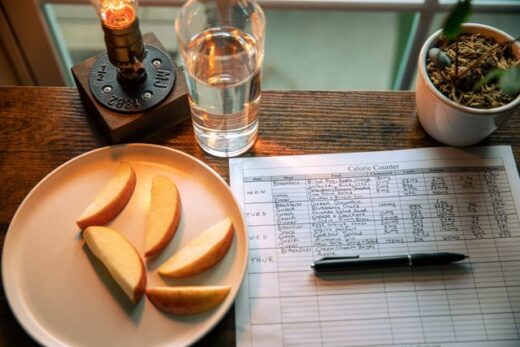

Uncertainty-Aware Health Model: AI Should Know When Not to Predict
Anshika Jain - October 26, 2026Personal Baseline Paradox: Why a Change Within One Person May Matter More Than a Population Average
Anshika Jain - October 26, 2026

Treatment Response Map: AI Discover the Same Intervention
October 26, 2026
.png)
Leave a Comment
You must be logged in to post a comment.