
Rise of Intelligent Biosensors: Detecting Foodborne Pathogens

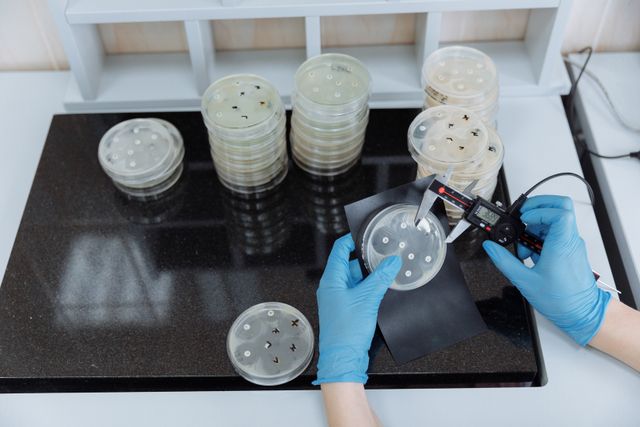
Food safety is one of the most important challenges facing modern food production, distribution, and public health. Every day, agricultural products, processed foods, beverages, and ready-to-eat meals move through complex supply chains before reaching consumers. Although established hygiene practices and quality-control procedures reduce contamination risks, foodborne pathogens can still enter products during cultivation, processing, packaging, transportation, or storage. Microorganisms such as Salmonella, pathogenic Escherichia coli, and Listeria monocytogenes can cause serious illness, making early and reliable detection essential for preventing foodborne outbreaks.
Traditional pathogen detection methods often depend on microbial culture, laboratory analysis, and specialised equipment. These approaches remain important because they can provide valuable evidence about the presence and characteristics of microorganisms. However, some methods require substantial time, trained personnel, and carefully controlled laboratory conditions. When a contaminated batch must be identified quickly, delays can complicate decisions about product release, distribution, and recalls.
Intelligent biosensors are emerging as a promising approach to addressing these challenges. They combine biological recognition elements with transducers, electronic systems, and analytical software to detect specific biological targets and convert recognition events into measurable signals. When integrated with rapid molecular analysis, these systems can identify genetic material or other molecular markers associated with foodborne pathogens.
However, rapid detection is not simply a matter of placing a sensor against a food sample. Reliable testing requires appropriate sample preparation, validated molecular targets, contamination controls, and an understanding of what the resulting signal actually represents. Exploring the rise of intelligent biosensors reveals how molecular biology, sensor engineering, and artificial intelligence are changing food safety monitoring.
Understanding Intelligent Biosensors
A biosensor is an analytical device that uses a biological recognition component to detect a target and converts the interaction into a measurable output. Depending on the design, the recognition component may be an antibody, enzyme, nucleic acid probe, receptor, or another biological material that selectively interacts with a particular substance.
The biological component provides recognition, while the transducer converts the resulting interaction into a physical signal. This signal may involve a change in electrical current, voltage, optical intensity, fluorescence, mass, or another measurable property. Electronic circuits and software then process the signal to determine whether the target is likely to be present and, in some applications, estimate its concentration.
Intelligent biosensors extend this principle through automated measurement, digital processing, and computational interpretation. A system may compare measurements with established thresholds, analyse patterns across multiple signals, monitor changes over time, or transmit results to a central quality-management platform. More advanced systems may incorporate machine-learning models to improve signal classification, although their reliability depends on the quality of their training and validation data.
The term intelligent does not mean that every biosensor independently understands whether a food is safe. A sensor detects the target for which it has been designed, and the analytical system interprets the resulting evidence within defined limits. A device intended to detect one pathogen cannot automatically detect every other microorganism or chemical hazard.
The main advantage of intelligent biosensors is their potential to combine biological specificity with rapid measurement and automated interpretation. When appropriately validated, this combination can support more efficient food safety screening and help laboratories or manufacturers respond more quickly to possible contamination.
The Role of Molecular Analysis in Pathogen Detection
Molecular analysis identifies biological targets through their genetic material or other characteristic molecules. In food safety applications, nucleic acid testing is particularly important because microorganisms possess DNA or RNA sequences that can be used to identify specific organisms or groups of organisms.
Polymerase chain reaction, commonly known as PCR, is one of the best-established molecular techniques. It amplifies a selected DNA region, producing enough copies for detection when the target sequence is present. Real-time PCR can monitor amplification as it occurs, providing information that supports the detection and, under appropriate conditions, estimation of the amount of target genetic material in a sample.
For RNA targets, reverse-transcription PCR converts RNA into complementary DNA before amplification. This approach is used in applications where the selected biological target is RNA rather than DNA. Other molecular methods, including isothermal amplification, can amplify nucleic acids at a relatively constant temperature and may be suitable for compact testing systems.
Intelligent biosensors can incorporate molecular recognition into a broader analytical workflow. For example, a system may use a target-specific nucleic acid probe to identify an amplified sequence and then convert the interaction into an optical or electrical signal. Software processes the measurement and reports whether the result meets the system’s predefined detection criteria.
Molecular methods can offer high analytical specificity when the target sequences are well chosen. However, genetic detection does not always establish that a microorganism is alive or capable of causing infection. DNA from dead cells may remain detectable, and the presence of a target sequence does not necessarily reveal whether the organism can grow under the conditions relevant to the food.
For this reason, molecular results must be interpreted according to the method, target, sample type, and intended use. In regulated food safety testing, established confirmation procedures may still be required.
How Intelligent Biosensors Detect Foodborne Pathogens
The detection process typically begins with collecting a representative food sample. This stage is crucial because contamination may be unevenly distributed across a batch. A highly sensitive sensor cannot reliably detect a pathogen that is absent from the portion actually tested, even if contamination exists elsewhere in the product.
The sample may then undergo preparation to release microbial cells or their genetic material. Depending on the food matrix, preparation may involve homogenisation, filtration, separation, concentration, or other procedures to reduce interference from fats, proteins, pigments, salts, and other substances. Some methods also use enrichment, in which microorganisms are allowed to multiply under controlled conditions before analysis. Enrichment can improve the likelihood of detecting low levels of contamination, but it adds time to the workflow.
The transducer then converts the molecular event into a signal. Optical biosensors may measure fluorescence, changes in light absorption, or other optical responses. Electrochemical biosensors may detect changes in electrical current, potential, or impedance associated with the recognition process. The specific signal depends on the sensor architecture and the chemistry used.
Finally, electronic processing and analytical software evaluate the signal. The system may compare the measurement against a validated threshold, assess control results, and determine whether the test is valid, positive, negative, or inconclusive. A well-designed system must also identify invalid measurements rather than forcing every result into a positive or negative category.
This integrated workflow is what makes intelligent biosensors promising for rapid food safety testing. Their effectiveness, however, depends on every stage, from sampling and preparation to molecular recognition and result interpretation.
Major Types of Intelligent Biosensors
Optical biosensors detect changes in light associated with biological recognition. Fluorescence-based systems are particularly useful in molecular testing because fluorescent labels can generate measurable signals when a target sequence or molecule is detected. Some optical approaches can measure multiple targets by using distinguishable signals, allowing a single test to examine more than one pathogen or marker.
Electrochemical biosensors convert molecular interactions into electrical measurements. They may use electrodes modified with recognition molecules that bind to a target and alter current, voltage, or impedance. These systems can potentially be compact and compatible with portable electronic readers, making them attractive for applications outside central laboratories. Their performance depends on electrode design, sample composition, signal stability, and the specificity of the recognition chemistry.
Nucleic acid biosensors use DNA or RNA recognition to identify characteristic genetic sequences. Immunosensors use antibodies or related recognition components to detect pathogen-associated antigens or other target molecules. They can be useful for rapid screening, particularly when a suitable target is abundant and accessible.
Some advanced platforms combine multiple recognition or sensing methods. Such systems may use molecular amplification together with optical or electrical detection, or integrate biosensors with microfluidic devices that control the movement of small sample volumes. Combining these components can reduce manual handling and support automated testing, although system complexity may increase the demands of manufacturing, calibration, and maintenance.
The Contribution of Artificial Intelligence and Smart Data Processing
Intelligent biosensors increasingly depend on software to interpret measurements and manage the flow of information. Biological signals are not always perfectly clean. Background fluorescence, electrical noise, temperature changes, food components, and variations between sensor units can affect the recorded data.
Signal-processing algorithms can help distinguish meaningful measurements from background interference. They may correct baseline variations, identify abnormal readings, and compare the result with expected control patterns. In systems that collect repeated measurements, software can also monitor signal development over time rather than relying on a single reading.
Machine learning can be useful when a system generates complex data that are difficult to interpret using simple thresholds. A trained model may identify combinations of signal features associated with positive samples, negative samples, or particular classes of interference. When validated appropriately, this can improve automated interpretation and help standardise results across repeated tests.
However, artificial intelligence cannot compensate for poor sample collection, an unsuitable molecular target, or an inadequately designed assay. A model may also perform poorly when it encounters food types, environmental conditions, or sensor units that differ from those represented in its training data. Independent validation is therefore essential before using algorithmic results to make consequential food safety decisions.
Connected biosensor systems can also transmit results to digital dashboards and quality-management platforms. This allows manufacturers to compare findings across production lines, monitor recurring problems, and maintain records for traceability. Where systems are properly integrated, a positive result can trigger a defined review or escalation procedure.
The value of intelligence lies not in replacing scientific judgement, but in making validated measurements easier to process, document, and use consistently.
Applications Across the Food Supply Chain
Food production facilities can use rapid biosensor-based tests as part of environmental monitoring and product screening programmes. Processing equipment, work surfaces, drains, and other areas may require routine sampling to identify conditions that could contribute to contamination. Molecular testing can help detect selected organisms or genetic targets, although the interpretation of environmental results depends on the sampling strategy and the method used.
In meat and poultry processing, rapid detection systems may support monitoring for pathogens such as Salmonella and certain pathogenic E. coli. These applications are especially important because contamination can occur at several stages, including slaughter, handling, cutting, and packaging.
Dairy processing presents another important application area. Rapid molecular systems can help shorten the time required to obtain a screening result, but they do not remove the need for appropriate pasteurisation, sanitation, cold-chain management, and other preventive controls.
Fresh produce can present additional challenges because soil, plant material, natural microorganisms, and complex surface structures may interfere with testing.
Food manufacturers may also use biosensor platforms to support investigations when contamination is suspected. Rapid results can help prioritise additional sampling and inform decisions about whether a batch requires further testing. Nevertheless, product release, withdrawal, or recall decisions must follow applicable regulations, validated procedures, and the manufacturer’s food safety plan rather than relying on an unverified sensor result alone.
Advantages Over Conventional Testing Methods
The main advantage of intelligent biosensors is their potential to reduce the time between sample collection and obtaining a useful analytical result. Traditional culture-based testing may require incubation and subsequent confirmation, while certain molecular platforms can produce results much sooner under suitable conditions. The time savings vary according to the organism, food matrix, enrichment requirements, and testing method.
Portability is another potential benefit. Some biosensor systems are designed for use in smaller laboratories or near production facilities, reducing the need to transport every sample to a central testing location. Portable equipment can be particularly useful when rapid screening is needed, provided environmental conditions and operator training are appropriately controlled. Automation can reduce manual handling and improve consistency. Automated data records can also support traceability and quality assurance.
Sensitivity and specificity are additional considerations. A sensitive method can detect low levels of a target under validated conditions, while a specific method helps distinguish the intended target from related organisms or background material. They complement, rather than automatically replace, conventional microbiology and other established food safety methods.
Challenges in Accuracy, Reliability, and Commercial Adoption
One major challenge is the complexity of food samples. Meat contains proteins and fats, produce may contain pigments and plant compounds, and powdered products can include substances that interfere with molecular reactions or sensor measurements.
Low pathogen concentrations create another difficulty. Sample enrichment or concentration may improve detection, but these steps can increase cost and extend the testing time.
False-positive results may occur when a test detects a related organism, contamination from previous samples, or residual genetic material that does not represent viable pathogens. Appropriate positive, negative, and process controls help identify some of these problems.
Calibration and reproducibility are also important. Sensor surfaces may degrade, reagents can lose activity, and environmental conditions may influence measurements. Commercial systems need defined procedures for maintenance, calibration, quality control, and operator training.
Finally, cost remains a practical consideration. A biosensor’s total cost includes more than the initial instrument. Consumables, reagents, calibration materials, maintenance, software, staff training, and confirmatory testing can all affect the economics of adoption. A system is commercially useful only when its performance and workflow provide sufficient value for the intended application.
Biosensors and the Future of Preventive Food Safety
The future of foodborne pathogen detection is likely to involve increasingly integrated systems that combine molecular biology, compact sensing hardware, automation, and digital monitoring. Improvements in microfluidics may allow sample preparation and molecular reactions to occur within small cartridges, reducing manual steps and limiting opportunities for contamination between samples.
Multiplex testing is another promising direction. Instead of testing for one pathogen at a time, a validated assay may detect several targets within a single workflow. This can make screening more efficient, although the design must account for differences in target abundance, amplification efficiency, and possible interactions between reactions.
Advances in nucleic acid recognition and amplification may also support portable testing systems that require less specialised infrastructure. Such tools could be useful in smaller production facilities, field inspections, or locations where access to large laboratories is limited. Their adoption will depend on demonstrating that performance remains reliable under real-world conditions.
Integration with supply-chain software may make test results more actionable. When a positive or inconclusive result is linked to a production batch, sampling location, and time of collection, quality teams can investigate more efficiently. Digital records can also support trend analysis, helping identify recurring contamination risks rather than treating every result as an isolated event.
Even with these advances, intelligent biosensors will remain one component of a broader preventive system. Good agricultural practices, sanitation, validated processing controls, temperature management, employee training, and traceability remain essential. Rapid detection is most effective when it helps identify problems early enough for appropriate action.
Conclusion: From Molecular Signals to Safer Food Systems
The rise of intelligent biosensors represents an important development in food safety because it brings molecular recognition, rapid sensing, and automated analysis into a more integrated testing process. By detecting genetic sequences, antigens, or other biological markers, these systems can help identify selected foodborne pathogens and support faster screening across different stages of the food supply chain.
Their greatest potential lies in combining sensitive molecular techniques with reliable sample preparation, suitable transducers, and carefully validated data interpretation. Optical and electrochemical biosensors, nucleic acid detection platforms, and connected analytical systems each offer different advantages, depending on the target and intended application.
A negative result applies only within the limitations of the sampling plan and validated method, while a positive molecular signal may require additional interpretation or confirmation. Intelligent biosensors cannot compensate for poor sampling or replace essential preventive controls.
As technology improves, these systems may help food producers and laboratories respond more efficiently to contamination risks, strengthen traceability, and reduce delays in decision-making. Their long-term value will depend on scientific validation, affordability, dependable performance, and integration with established food safety practices.
Ultimately, intelligent biosensors turn molecular information into practical evidence. When used responsibly, they can contribute to a more responsive food safety system in which potential hazards are identified earlier and decisions are supported by reliable analytical data.
Online Internship with Certificate
You may be interested

Science of Oral Processing: How Chewing, Saliva and Eating Speed Influence Digestion
Anshika Jain - October 20, 2026Eating is often treated as a simple process of consuming food to satisfy hunger and provide energy. However, digestion begins long before food reaches the stomach. The…
Amino Acid Sensing and mTOR Signalling: Cells Respond to Protein Availability
Anshika Jain - October 20, 2026Every cell in the human body must continuously assess whether sufficient nutrients are available to maintain its functions, repair damage, and produce new cellular components. Among these…

Lipid Signalling Network: Cellular Communication and Metabolic Regulation
Anshika Jain - October 20, 2026Dietary fats are commonly discussed in terms of energy storage, cardiovascular health, and their contribution to cell membranes. However, their biological importance extends far beyond these familiar…
Most from this category

Metabolic Fate of Fructose: Liver Processes Different Sources of Dietary Sugar
Anshika Jain - October 20, 2026
Spectroscopy Meets Artificial Intelligence: Approach to Detecting Food Adulteration
Anshika Jain - October 20, 2026
First-Pass Metabolism of Nutrients: Intestine and Liver Transform What We Eat
Anshika Jain - October 15, 2026
Endocrine Architecture of Eating: Gut Hormones Coordinate Nutrient Processing
Anshika Jain - October 15, 2026
Metabolic Fate of Fructose: Liver Processes Different Sources of Dietary Sugar
Anshika Jain - October 20, 2026Spectroscopy Meets Artificial Intelligence: Approach to Detecting Food Adulteration
Anshika Jain - October 20, 2026First-Pass Metabolism of Nutrients: Intestine and Liver Transform What We Eat
Anshika Jain - October 15, 2026



.png)
Leave a Comment
You must be logged in to post a comment.