
Metabolic State Reconstruction: Can AI Infer What the Body Is Doing Between Blood Tests?

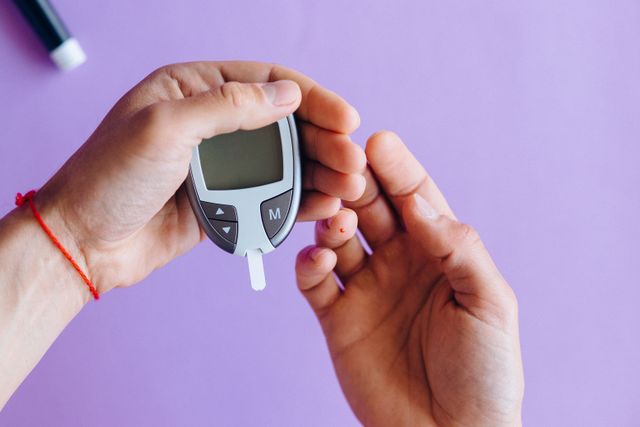
Blood tests provide important information about the body’s internal condition, but they capture only a limited moment in a continuously changing biological system. Glucose levels fluctuate after meals, insulin secretion responds to nutrient availability, the liver adjusts its production and storage of energy, and muscles change their fuel requirements according to physical activity. Hormones, sleep, stress, hydration, medication and illness can influence these processes throughout the day. Yet a conventional blood test usually records only a small selection of biomarkers at a specific time.
This creates a fundamental challenge for modern healthcare: how can clinicians understand metabolic activity that occurs between measurements? A normal glucose result in the morning, for example, may not reveal a substantial rise after lunch or an overnight disturbance. Similarly, a single measurement of triglycerides, insulin or liver-associated biomarkers cannot fully describe how the body responds to changing nutritional and physiological conditions.
Metabolic state reconstruction is an emerging approach that uses artificial intelligence, mathematical models and data collected over time to estimate the body’s changing internal condition from incomplete observations. Rather than treating every blood test as an isolated result, this approach attempts to build a continuous, evidence-based picture of metabolic activity. It could help researchers identify patterns that conventional testing misses, understand individual responses to food and exercise, and investigate early changes in metabolic health.
However, reconstructing a biological state is not the same as directly measuring it. AI can estimate hidden processes, but the reliability of those estimates depends on the available data, the assumptions built into the model and the biological variability of the individual. Understanding both the possibilities and the limitations is essential before metabolic state reconstruction can become a dependable part of healthcare.
What Is Metabolic State Reconstruction?
Metabolic state reconstruction refers to the process of estimating a person’s changing physiological and biochemical condition from measurements that are incomplete, intermittent or indirect. The metabolic state may include variables such as glucose availability, insulin activity, energy expenditure, lipid metabolism, glycogen storage and the body’s balance between storing and releasing energy.
Some of these variables can be measured directly under specific conditions, while others are difficult to observe continuously in everyday life. Blood tests can measure glucose, cholesterol, triglycerides, hormones and other biomarkers at the moment a sample is collected. Continuous glucose monitors provide more frequent estimates of glucose concentrations in the fluid beneath the skin. Wearable devices may capture movement, heart rate, sleep patterns and other signals associated with physiological activity. Nevertheless, these sources do not reveal every biochemical process occurring inside organs and tissues.
AI-based reconstruction combines these different observations to estimate what may have happened between measurements. If a person’s glucose readings rise after a meal and then decline, for instance, a model may estimate the changing relationship between glucose absorption, insulin action and glucose uptake. Additional information about meal timing, physical activity and sleep could improve the interpretation.
The resulting picture is a model-derived estimate rather than a direct recording of every metabolic event. Its purpose is to connect scattered observations into a coherent timeline while accounting for uncertainty. This distinction matters because several different biological processes can sometimes produce similar measurable outcomes.
Why Blood Tests Cannot Reveal the Entire Metabolic Story
Metabolism Changes Across Time
Metabolism is a dynamic network rather than a fixed laboratory value. After eating, carbohydrates are digested and absorbed, glucose enters circulation, insulin secretion changes, and tissues adjust their uptake and storage of nutrients. During fasting, the body shifts towards using stored energy, while the liver helps maintain circulating glucose. Exercise changes energy demand, and recovery influences how nutrients are used afterwards.
These transitions occur at different speeds. Glucose may change within minutes, while some hormonal responses, changes in liver fat or longer-term alterations in insulin sensitivity develop over different timescales. A laboratory result can accurately describe the biomarker measured in the sample, but it cannot automatically reveal the entire sequence that preceded or followed it.
The timing of measurement can therefore influence interpretation. Two people may have similar fasting glucose levels but show different glucose responses after meals. Likewise, one person may display different metabolic patterns on days with poor sleep, prolonged sitting, strenuous exercise or unusual meal timing. Reconstructing these differences requires observations across time rather than a collection of unrelated snapshots.
The Difference Between a Biomarker and a Biological Process
A biomarker is an observable measurement, whereas a metabolic process is the biological activity that produces or influences that measurement. Blood glucose, for example, reflects the combined effects of glucose entering circulation and glucose being removed from it. A glucose reading alone does not specify exactly how much glucose is being released by the liver, absorbed from the intestine or taken up by individual tissues.
This is an example of an inverse problem. Researchers observe the outcomes of a complex biological system and attempt to infer the hidden processes responsible for those outcomes. The difficulty is that several combinations of underlying mechanisms may produce similar measurements. A model must therefore use additional evidence and biological constraints to distinguish between plausible explanations.
This challenge is central to metabolic state reconstruction. The objective is not merely to predict the next laboratory result, but to estimate the internal processes that may explain the observed trajectory.
How AI Reconstructs Metabolic Activity
Integrating Data From Multiple Sources
An AI reconstruction system could combine laboratory results with continuous glucose monitoring, food records, activity data, sleep information, medication schedules and relevant clinical history. Each source contributes a different part of the picture. Laboratory tests offer detailed biochemical measurements, glucose sensors provide frequent observations of glucose patterns, and wearable devices supply contextual information about movement and sleep.
The system first aligns these observations along a common timeline. It must account for differences in sampling frequency, missing readings, uncertain meal records and sensor noise. It can then identify patterns and estimate relationships between observed events and metabolic responses. For example, it may learn that a particular individual’s glucose response is consistently different after late meals than after earlier meals, provided sufficient reliable data are available.
However, combining more data does not automatically produce a more accurate reconstruction. A food diary may omit portion sizes, a wearable may misclassify activity, and a glucose sensor may not reflect blood glucose changes instantaneously. AI systems need methods for identifying unreliable inputs, representing missing information and communicating how confident they are in their estimates.
Time-Series Analysis and Machine Learning
Metabolic measurements are naturally suited to time-series analysis because their order and timing matter. Machine-learning models can learn patterns in sequential data, such as recurring glucose rises, overnight changes or differences between working days and weekends. Deep-learning approaches can capture complex temporal relationships, although their performance depends on the quality and diversity of the training data.
Research on continuous glucose monitoring is already exploring methods that go beyond simple averages and isolated thresholds. A 2025 review describes how functional data analysis and AI can reveal patterns in glucose trajectories that conventional summary measures may not capture. A separate 2026 scoping review compares mechanistic, machine-learning and hybrid approaches to modelling continuous glucose data, highlighting the potential of different methods for event detection and forecasting.
Yet predicting a glucose trajectory is only one part of reconstructing metabolism. A model might forecast that glucose will rise after a meal without determining precisely how insulin secretion, intestinal absorption or tissue sensitivity contributed to the rise. Reliable reconstruction therefore requires more than a model that forecasts numbers accurately.
Mechanistic Models and Physiological Constraints
Mechanistic models describe biological processes through mathematical relationships. Glucose–insulin models, for example, can represent how glucose concentration changes in response to insulin, nutrient intake and other physiological factors. These models help constrain AI estimates so that the reconstructed state remains consistent with established biological principles.
Data-driven models and mechanistic models have complementary strengths. Machine learning can identify patterns that are difficult to specify in advance, while mechanistic models provide a structured explanation of how variables may interact. Hybrid models combine these approaches, using observed data to adapt physiological parameters or using biological equations to guide machine-learning predictions.
Research into AI and metabolic digital twins has identified hybrid modelling as an important direction for personalised metabolic care. A digital twin is a computational representation of an individual that can be updated as new observations arrive and used to simulate possible future states. These systems are promising, but they are still developing and should not be confused with complete, clinically validated replicas of a person’s metabolism.
What a Reconstructed Metabolic Timeline Might Reveal
Responses to Meals and Fasting
Imagine a person whose fasting glucose appears stable during routine check-ups. A reconstruction system receives several weeks of glucose readings, meal timestamps, activity data and sleep information. It identifies recurring glucose elevations after certain meals and a different response when those meals are followed by walking.
The system could estimate the timing, magnitude and duration of these responses and compare them with the individual’s earlier patterns. If the same pattern occurs repeatedly, it may help identify a relationship worth investigating with a healthcare professional. However, the system cannot safely conclude from glucose data alone that a specific food caused insulin resistance or that an organ is malfunctioning.
During fasting, the model could also estimate changes in glucose availability and the likely contribution of stored energy. These estimates would remain indirect unless supported by measurements specifically designed to assess the relevant physiological process. The distinction between a plausible explanation and a confirmed mechanism must remain explicit.
Exercise, Sleep and Daily Routines
Physical activity changes the body’s energy requirements and influences glucose uptake by skeletal muscles. The timing, intensity and duration of activity can alter the shape of a person’s glucose trajectory. Sleep and circadian timing may also influence metabolic regulation, meaning that similar meals can produce different responses under different conditions.
A reconstruction model could compare repeated days to determine whether certain patterns reliably coincide with poor sleep, prolonged inactivity or changes in exercise. It could help researchers examine how an individual’s metabolic responses vary with routine and recovery. Such insights may support personalised research or clinical discussions, although observational patterns alone cannot establish causation.
Early Changes in Metabolic Function
One proposed application is identifying persistent changes before they become obvious in occasional laboratory measurements. For example, a model might detect that glucose responses are becoming slower to return towards baseline, or that the relationship between activity and glucose patterns has changed over several weeks.
These signals would not independently establish a diagnosis. Changes may arise from sensor differences, illness, medication, stress, altered routines or other factors. A clinically useful system would need to distinguish meaningful biological changes from normal variability and technical noise, then test whether its warnings improve outcomes compared with established screening methods.
From Metabolic Reconstruction to Personalised Digital Twins
Building an Individual Baseline
A major advantage of metabolic state reconstruction is the possibility of comparing a person with their own established baseline rather than relying exclusively on population averages. Two people with similar age, body weight and fasting glucose may have different daily routines, physiological responses and medical histories. A general model may overlook these differences, whereas a personalised model can gradually adjust its estimates as more observations become available.
The initial stage would involve establishing a baseline from laboratory measurements, relevant medical history and repeated observations. As additional data arrive, the model could update its estimates of recurring patterns and the uncertainty surrounding them. It might also recognise that a person’s usual response changes during illness, after a medication adjustment or following a major change in activity.
This approach is related to the concept of a metabolic digital twin, in which an individual’s data continuously inform a computational representation of their physiology. Researchers have proposed using such models to study metabolic flexibility, including the body’s ability to switch between different energy sources according to physiological demand. Nevertheless, translating these ideas into dependable healthcare applications requires rigorous testing, long-term data and meaningful clinical validation.
Simulating Alternative Scenarios
Once a model has been calibrated to an individual, researchers may use it to explore hypothetical scenarios. For example, they could compare predicted glucose trajectories under different meal timings, activity schedules or sleep patterns. These simulations may help generate hypotheses about which factors deserve closer examination.
A crucial limitation is that a simulated response is not necessarily the response that would occur in real life. The model may not fully represent medication effects, hormonal changes, illness or the complex interactions between organs. It may also produce convincing-looking results when the input data are insufficient to support a reliable estimate.
Consequently, scenario testing should be interpreted as a way to explore possibilities, not as proof that a particular intervention will produce a specific outcome. Clinical decisions must continue to rely on appropriate measurements, professional assessment and evidence-based care.
The Scientific Challenges of Reconstructing Hidden Metabolism
The Problem of Identifiability
One of the most important technical difficulties is identifiability: whether the available observations are sufficient to distinguish between different underlying biological explanations. Suppose glucose concentration rises more than expected after a meal. This could reflect several interacting factors, including meal composition, absorption, insulin secretion, insulin sensitivity and liver glucose production.
If a model observes only glucose concentrations, it may not be able to determine which factor contributed most. Multiple hidden states may fit the same observed data. The system could generate an estimate, but the estimate would not necessarily be uniquely supported by the evidence.
Researchers can reduce this problem by incorporating additional measurements, established physiological relationships and carefully designed experiments. However, some metabolic variables remain difficult to estimate without specialised tests. A responsible reconstruction system must therefore distinguish between what it can estimate confidently and what remains uncertain.
Missing Data, Sensor Limitations and Biological Noise
Real-world health data are rarely complete. People may remove wearable devices, forget to record meals or experience sensor interruptions. Laboratory tests may be collected at irregular intervals, and different devices may use different measurement methods. Even when a sensor operates correctly, its readings may differ from direct blood measurements because it measures a related but not identical physiological signal.
Continuous glucose monitors, for example, measure glucose in interstitial fluid rather than directly measuring blood glucose. A reconstruction algorithm must account for these uncertainties rather than treating every reading as exact. It should identify gaps, estimate the reliability of available measurements and avoid presenting interpolated values as if they were directly observed. Where the evidence is weak, the appropriate output may be a broad range of possible states rather than one precise number.
Generalisation Across Different People
A model trained on one population may perform poorly in another. Age, genetics, medication, existing medical conditions, lifestyle, sensor type and data-collection practices can all affect the patterns a model learns. A system developed mainly with data from people who have diabetes, for example, may not provide equally reliable estimates for people without diabetes.
Recent reviews of digital twins in cardiometabolic care identify limited data integration, challenges in personalisation and validation, privacy concerns and early-stage implementation as important barriers.
Reliable deployment would require testing across diverse populations and clinical settings. Researchers would need to determine not only whether a model performs well on average, but also whether it remains accurate for individuals whose characteristics differ from those represented in the original training data.
Privacy, Transparency and Clinical Responsibility
Metabolic reconstruction may require particularly sensitive information because it combines health measurements with patterns of everyday life. Meal times, sleep, movement, medication use and physiological signals can reveal personal routines and potentially expose sensitive details about a person’s health. Secure storage, informed consent, limited data collection and clear rules for sharing information are therefore essential.
Transparency is equally important. A model should communicate whether a result is directly measured, statistically estimated or generated through simulation. It should provide a meaningful explanation of the factors contributing to its conclusions and indicate when data quality is inadequate. A highly precise-looking dashboard can create false confidence if it hides uncertainty behind a single score.
Clinical responsibility must remain clear as well. Metabolic reconstruction should complement, not replace, established diagnostic tests and professional judgement. It should not independently advise people to change medication, disregard laboratory results or interpret a predicted metabolic state as a confirmed disease.
The Future of Metabolic State Reconstruction
The next stage of development may involve combining continuous sensors, periodic laboratory testing, metabolomics and increasingly sophisticated physiological models. Metabolomics examines small molecules involved in biological processes and could provide additional information about how the body uses nutrients and responds to changing conditions. When integrated with time-series data, such measurements may help researchers investigate metabolic processes that cannot be inferred reliably from glucose alone.
Another important direction is uncertainty-aware AI. Instead of reporting only one estimated metabolic state, a system could provide a range of plausible values, indicate which measurements support the estimate and explain when additional testing would improve confidence. This would make the model more useful for research and potentially safer for clinical decision support.
Future systems may also distinguish short-term fluctuations from sustained changes. A temporary glucose rise after a meal is not equivalent to a persistent alteration in metabolic regulation. By analysing patterns over days, weeks and months, models could help researchers investigate whether changes are recurring, context-dependent or associated with broader health developments.
Ultimately, progress will depend on combining computational sophistication with sound physiology. The goal should not be to create the most detailed digital picture possible, but to produce estimates that are accurate enough to answer specific questions, transparent about their limitations and useful in real-world settings.
Conclusion: Can AI Reveal What Happens Between Blood Tests?
AI can already analyse continuous glucose patterns, combine observations over time and support mathematical models of glucose–insulin dynamics. By integrating laboratory results with sensor data, behaviour and physiological knowledge, future systems may reveal patterns that isolated blood tests cannot capture.
However, reconstructing hidden metabolic activity remains a difficult scientific problem. The same observable result can arise from different biological mechanisms, and incomplete data can make a model’s conclusions uncertain. The most credible systems will combine machine learning with physiological models, individual baselines, independent validation and explicit uncertainty estimates.
Its long-term value will depend on whether it can turn incomplete measurements into trustworthy insights without confusing prediction with proof. If that challenge is addressed, AI could help move metabolic assessment from occasional snapshots towards a more continuous and personalised understanding of human physiology.
Online Internship with Certificate
You may be interested

Nutrient Release Kinetics: Can AI Predict When Food Actually Makes Its Nutrients Available?
Anshika Jain - October 27, 2026Food labels tell us how much protein, carbohydrate, fat, vitamins, and minerals a food contains, but they do not fully explain when those nutrients become available during…

Metabolic Resilience Mapping: Some Bodies Recover Faster From the Same Dietary Stress?
Anshika Jain - October 27, 2026Two people can eat the same meal, consume similar amounts of energy and follow comparable diets, yet experience different metabolic responses. One person's glucose and triglyceride levels…

Protein Quality Under Physiological Stress: AI Predict When Dietary Protein Is Less Effectively Used?
Anshika Jain - October 27, 2026Protein is essential for maintaining muscle, repairing tissues, producing enzymes and hormones, supporting immune function and sustaining numerous biological processes. However, the amount of protein consumed does…
Most from this category

Microvascular Nutrition Mapping: AI Detect When Nutrients Reach Tissues
Anshika Jain - October 27, 2026
Mitochondrial Reserve Intelligence: AI Predict When Cellular Energy Flexibility
Anshika Jain - October 27, 2026
Health Data Blind Spot: Medical AI Cannot Learn From Missing Biological Measurements
Anshika Jain - October 26, 2026
Nutrient Timing Paradox: Sequence of Eating Matter Independently of the Meal Itself
Anshika Jain - October 26, 2026
Microvascular Nutrition Mapping: AI Detect When Nutrients Reach Tissues
Anshika Jain - October 27, 2026Mitochondrial Reserve Intelligence: AI Predict When Cellular Energy Flexibility
Anshika Jain - October 27, 2026Health Data Blind Spot: Medical AI Cannot Learn From Missing Biological Measurements
Anshika Jain - October 26, 2026




.png)
Leave a Comment
You must be logged in to post a comment.