
Nutrient Release Kinetics: Can AI Predict When Food Actually Makes Its Nutrients Available?

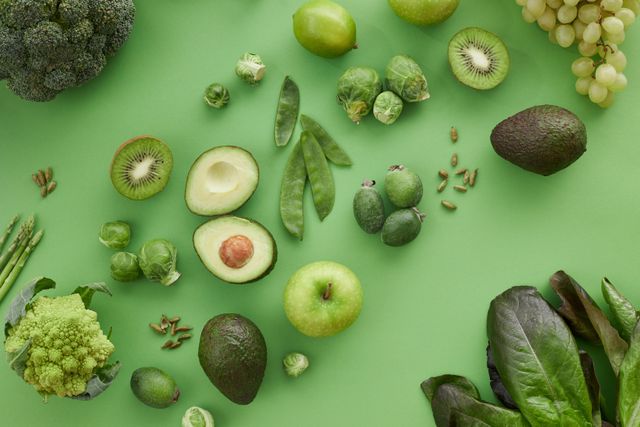
Food labels tell us how much protein, carbohydrate, fat, vitamins, and minerals a food contains, but they do not fully explain when those nutrients become available during digestion. Two foods with similar nutritional compositions can behave very differently inside the gastrointestinal tract. One may release nutrients rapidly, while another may retain them within a dense structure that takes longer to break down. Some nutrients may become accessible during digestion but still remain difficult for the intestine to absorb. This difference between what food contains and what the body can potentially use has become an important area of modern food science.
Nutrient release kinetics offers a way to understand this process by examining how quickly, and to what extent, nutrients are released from a food matrix over time. The process depends on food structure, cooking methods, particle size, digestive enzymes, acidity, fat content, and interactions among different ingredients. Artificial intelligence (AI) could help researchers combine these variables to predict nutrient release patterns before a food is tested extensively in laboratory or human studies.
Emerging research is exploring how machine learning, computational digestion models, and advanced analytical techniques can improve predictions of nutrient bioaccessibility and delivery. A 2025 review of AI-enhanced bioavailability research describes opportunities to integrate food composition, molecular information, and experimental data to support food formulation and nutritional research. However, predicting the actual release of a nutrient is not the same as proving that the nutrient will be absorbed and used by the body.
The central question is therefore not simply whether AI can identify nutritious foods. It is whether AI can estimate the changing timeline of nutrient release, explain why that timeline differs between foods, and help researchers design meals and food products that deliver nutrients more effectively.
Understanding Nutrient Release Kinetics
What Does Nutrient Release Mean?
Nutrient release begins when a food’s physical and chemical structure starts to change during digestion. Chewing breaks food into smaller pieces, while saliva begins processing certain carbohydrates. In the stomach, acidity, muscular movement, and digestive enzymes help dismantle the food matrix. Further digestion in the small intestine exposes proteins, fats, carbohydrates, and micronutrients to additional enzymes and other digestive conditions.
The speed of these changes is not uniform. A nutrient may be released quickly from one food but remain trapped inside another. For example, the structure of a whole grain can restrict enzyme access compared with a finely milled grain, while cooking can soften plant tissues and change the accessibility of certain nutrients. The final outcome depends on the nutrient itself and the structure surrounding it.
Nutrient release kinetics describes these changes over time. Researchers may measure the concentration of a nutrient released after different periods of simulated digestion, estimate a release rate, or determine the fraction that becomes accessible under specified conditions. Instead of recording a single final value, they examine the pattern from the beginning of digestion to its later stages.
Nutrient Content, Bioaccessibility, and Bioavailability Are Different
A reliable prediction system must distinguish three related concepts. Nutrient content refers to the amount present in the food before consumption. Bioaccessibility describes the fraction released from the food matrix during digestion and made available for potential intestinal absorption.
These stages cannot be treated as interchangeable. A food may contain a substantial amount of a mineral, but some of it may remain bound to other components during digestion. Another food may release the mineral into the digestive mixture, yet its absorption can still be limited by chemical interactions or the body’s physiological state. Research on predicting nutrient bioavailability therefore emphasizes the need to account for factors beyond the total amount listed in food composition databases.
For AI, this distinction is essential. A model trained to predict nutrient content cannot automatically predict release kinetics. Similarly, a model that accurately estimates release in a laboratory digestion system cannot be assumed to predict human absorption without appropriate validation.
Why Nutrients Are Released at Different Speeds
The Food Matrix Controls Access to Nutrients
The food matrix is the physical arrangement of a food’s components, including proteins, starches, fats, fibres, water, and microscopic structural features. It influences how digestive fluids penetrate the food, how enzymes reach their targets, and how released molecules move through the digestive mixture.
In whole plant foods, nutrients may be enclosed within cell walls or embedded in structures that slow their release. Milling, blending, fermentation, and cooking can modify these structures, sometimes increasing nutrient accessibility. Yet the effect is not always positive for every nutrient. Processing may improve the accessibility of one compound while degrading another or changing the way it interacts with other ingredients.
These relationships make nutrient release a complex prediction problem: a model must understand not just which ingredients are present, but also how they are organised.
Cooking and Processing Change Release Timelines
Cooking is a major factor in the kinetics of nutrient release. Heating can soften plant tissues, alter starch structure, denature proteins, and change the size or stability of fat droplets. Grinding and milling can increase surface area, allowing digestive enzymes to reach more material. Fermentation may transform food components and change the structure of the finished product.
However, there is no universal rule that more processing always means better nutrient availability. The result depends on the food, nutrient, processing intensity, and digestive environment. A treatment that improves the accessibility of a compound may also reduce the concentration of a heat-sensitive nutrient. Likewise, a food designed to release an ingredient gradually may behave differently from one intended for rapid release.
AI could learn these relationships by combining processing records with measured digestion curves. Given information about ingredients, particle size, cooking temperature, processing duration, and food structure, a model could estimate how a proposed manufacturing change might alter the release timeline. These estimates would guide experiments rather than replace laboratory verification.
Digestive Conditions Change the Outcome
Food does not encounter a fixed environment after consumption. The acidity of the stomach changes during digestion, digestive enzymes act on different substrates, and food moves through different gastrointestinal compartments. The size and composition of a meal can also affect the conditions under which its nutrients are released.
Individual differences add another layer of complexity. Age, digestive physiology, medication use, and health conditions may influence aspects of digestion or absorption. Laboratory experiments generally standardise conditions to make results comparable, but this means they cannot represent every possible human response.
This is why a useful AI system would need to predict nutrient release under clearly defined conditions. A forecast for a standardised laboratory digestion test is a different output from a prediction for a particular person eating a mixed meal. The latter requires stronger evidence and more detailed validation.
How Artificial Intelligence Could Predict Nutrient Release
From Static Nutritional Data to Time-Based Prediction
Traditional food analysis often measures nutrient composition at a particular point, while nutrient release kinetics requires observations across multiple stages of digestion. Researchers may need to measure how much of a nutrient becomes accessible after several time intervals, then compare these results across food formulations and processing conditions.
AI could turn this information into predictive models. A system might receive data about a food’s protein structure, fibre content, moisture, particle size, processing temperature, and measured digestion outcomes. It could then estimate the expected release curve for a new formulation, including the initial release rate, the time required to reach a particular level of accessibility, and the fraction likely to remain unreleased under the tested conditions. These outputs would be estimates, not direct observations of digestion inside a person.
A research initiative at the University of California, Davis, is exploring AI-enabled models and digital twins for food digestion and nutrient delivery, including predictions of micronutrient bioaccessibility from different food structures.
Learning the Shape of a Nutrient Release Curve
One of the most useful applications of AI would be to predict the shape of a nutrient release curve rather than produce a single number. Some foods may release a substantial fraction of an accessible nutrient early in digestion, followed by slower release. Other foods may show a delay before the nutrient becomes accessible, while some may release it gradually throughout the simulated digestive process.
Machine-learning methods can identify relationships between food characteristics and these different patterns. For example, a model could compare foods with similar nutrient composition but different particle sizes, textures, or manufacturing methods. By learning from measured results, it might identify which structural features are associated with faster release or a greater accessible fraction.
The analysis could also reveal that different nutrients in the same food follow different timelines. Protein breakdown, lipid digestion, starch digestion, and the release of plant-derived compounds involve different mechanisms. A useful model would therefore predict each target separately or use a carefully designed multi-output approach rather than assume that all nutrients become available at the same rate.
Researchers could combine machine learning with mathematical descriptions of diffusion, enzyme activity, and structural breakdown. This hybrid approach would allow predictions to reflect both observed data and established physical or biochemical principles. Recent reviews of digestion modelling identify mathematical kinetics, dynamic digestion systems, and data-driven methods as complementary tools for understanding nutrient release.
Integrating Food Imaging, Chemistry, and Digestion Data
Nutrient release is influenced by microscopic structures that may not be captured by a standard nutrition label. Advanced imaging can help describe the size and arrangement of food particles, pores, fat droplets, and plant tissues. Chemical analysis can identify nutrients and compounds formed during processing, while digestion experiments reveal how those components change over time.
AI could integrate these different forms of evidence into a single prediction framework. Image-analysis models might extract structural measurements, while other algorithms analyse ingredient composition, processing records, and digestion results.
For example, a food developer could compare two plant-based products containing similar quantities of iron. One formulation might contain ingredients that restrict iron accessibility, while another might be designed to improve its release during digestion. AI could help identify promising formulation changes for laboratory testing, but it would still require direct measurement to establish whether the change improves iron bioaccessibility and whether that improvement translates into greater absorption.
Research using advanced digestion platforms, chromatography, mass spectrometry, and computational models is creating opportunities to connect food structure with nutrient transformation. The challenge is to ensure that the data from these methods are sufficiently consistent for AI to learn meaningful relationships rather than differences caused by laboratory procedures.
What Nutrients Could AI Track?
Protein and Amino Acid Release
Protein release is not simply a matter of measuring how much protein is present in a meal. During digestion, proteins are broken into smaller peptides and amino acids, and the rate of breakdown depends on protein structure, processing, and interactions with other food components. Different protein sources can therefore produce different digestion profiles even when their total protein content is similar.
AI could help predict how processing methods such as heating, fermentation, or texturisation influence protein digestion. In plant-based foods, this could support the development of products designed to improve protein accessibility without compromising taste or texture. The model might also estimate which formulations require further testing for digestibility or the release of individual amino acids.
Standardised approaches such as the INFOGEST framework provide controlled methods for studying gastrointestinal digestion. A 2026 Nature Protocols publication describes INFOGEST Quant, an extension designed to assess total protein digestibility, individual amino acid digestibility, and the digestible indispensable amino acid score. Such measurements could provide valuable reference data for training and validating future AI systems.
Carbohydrates and the Timing of Digestion
Carbohydrates can be released and digested at different rates depending on starch structure, particle size, cooking conditions, and the presence of fibre and other ingredients. AI could analyse these properties to estimate how a food behaves during simulated digestion and identify formulation features associated with different carbohydrate release patterns.
This could be relevant to cereal products, breads, pasta, plant-based meals, and specialised foods designed around particular digestive characteristics. Researchers might compare different cooking processes or ingredient combinations to understand how the structure of a finished product influences starch accessibility.
However, the release of glucose from food during digestion should not be treated as identical to an individual’s blood-glucose response. The latter also depends on gastric emptying, intestinal absorption, hormones, physical activity, and individual metabolic characteristics. A model predicting carbohydrate digestion would need additional human data before it could reliably estimate an individual’s physiological response.
Vitamins, Minerals, and Plant Bioactive Compounds
Micronutrients and plant-derived bioactive compounds present a particularly complex prediction challenge. For instance, the accessibility of carotenoids in vegetables can change with cooking and physical disruption of plant tissue. The presence of fat and the formation of digestive structures can also influence their potential absorption.
AI could compare the effects of different processing methods and ingredient combinations, helping researchers identify conditions that preserve sensitive compounds or improve their release. Yet each compound requires appropriate analytical measurements because an increase in extractability does not necessarily prove greater bioavailability or a better health outcome. Recent research on food matrices and bioactive compounds highlights the importance of structure, processing, and interactions in determining their behaviour during digestion.
How Researchers Could Build an AI Nutrient Release Model
Step One: Establish Reliable Experimental Data
The first requirement is a well-characterised dataset. Researchers would collect food samples, document their ingredients and processing conditions, and measure nutrient release at multiple stages of simulated digestion. They would also record relevant experimental conditions, including pH, enzyme activity, temperature, digestion time, and the ratio of food to digestive fluids.
Standardised methods are important because differences between laboratories can otherwise create misleading patterns. The INFOGEST static digestion protocol was developed to improve comparability across food digestion studies, although its conventional static format is not designed to capture every time-dependent feature of digestion. Researchers interested in release kinetics may need time-resolved measurements or dynamic digestion systems.
Step Two: Train the Model to Recognise Patterns
Once sufficient data are available, researchers can train machine-learning algorithms to associate food properties with observed nutrient release curves. Depending on the size and structure of the dataset, they might use regression models, random forests, gradient boosting, neural networks, or models that incorporate known physical and biochemical constraints.
The objective would be to predict outcomes for new formulations. For example, a model trained on multiple cereal-based foods might estimate how changing particle size or moisture affects the release of a particular nutrient.
Researchers must also guard against data leakage, in which closely related samples appear in both training and testing datasets and make a model seem more accurate than it really is. Independent validation across different food types, laboratories, and processing conditions is particularly important when the intended application extends beyond the original experiments.
Step Three: Build a Digital Twin of Food Digestion
A more advanced approach would connect the food itself with a computational representation of its digestion. This digital twin could combine a model of the food’s structure with simulations of changing digestive conditions. As the simulated food moves through oral, gastric, and intestinal stages, the system would estimate how its structure changes and how much of each nutrient becomes accessible.
Such a model could help researchers investigate questions that would otherwise require many separate experiments. They might simulate different cooking conditions, ingredient ratios, particle sizes, or delivery systems and identify which variations deserve laboratory testing. Digital twins of digestion remain an emerging research direction rather than a universally established method for predicting nutrient availability in humans.
Applications in Food Manufacturing and Personalised Nutrition
Designing Foods Around Nutrient Delivery
Food manufacturers could use nutrient release predictions to move beyond formulations based only on ingredient quantities. A product might be redesigned to improve the accessibility of a specific nutrient, preserve a sensitive compound during processing, or create a more predictable release profile.
This approach could be useful in fortified foods, plant-based proteins, sports nutrition products, specialised foods for older adults, and products intended for populations with particular nutritional needs. Instead of testing every possible formulation, manufacturers could use AI to narrow the options and prioritise the most promising candidates for further evaluation.
The aim would not always be to maximise release speed. A faster release may be desirable for one application, while a slower or more sustained release may be preferable for another. The appropriate target depends on the nutrient, the food’s intended purpose, and evidence about its physiological effects.
Supporting More Precise Nutrition Research
In the longer term, nutrient release models could contribute to personalised nutrition research. Scientists might combine food-specific digestion predictions with information about digestive physiology, microbiome activity, or measured responses to meals to investigate why people respond differently to the same food.
However, a person’s response cannot be inferred from food structure alone. Even if a model accurately predicts nutrient release in a laboratory system, predicting absorption, blood concentrations, tissue utilisation, or clinical outcomes requires additional evidence. A credible personalised system would need to distinguish these stages and communicate uncertainty clearly.
Research into AI-enhanced bioavailability prediction is investigating ways to integrate experimental digestion results, chemical data, and biological information. The field offers promising possibilities, but its practical applications still require rigorous validation and transparent reporting.
Challenges That Could Limit Prediction Accuracy
Incomplete and Inconsistent Data
One major challenge is the lack of large, harmonised datasets covering diverse foods, nutrients, processing methods, and digestive conditions. Studies may use different enzymes, analytical methods, sampling intervals, and definitions of bioaccessibility. A model trained on one experimental setup may perform poorly when applied to another.
Food databases also tend to describe composition more consistently than they describe microstructure and time-dependent digestion.
The Complexity of Real Human Digestion
Laboratory digestion systems are useful because they allow controlled comparisons, but they cannot reproduce every aspect of the human gastrointestinal tract. Dynamic changes in digestive fluids, intestinal transport, microbial transformations, hormonal responses, and individual physiological differences introduce additional uncertainty.
Static digestion models are particularly useful for standardised screening, whereas dynamic systems can represent more changing conditions. Neither approach automatically reproduces the complete physiological process. Researchers need to establish how well laboratory measurements correspond to human outcomes before treating model predictions as evidence of real-world nutrient absorption.
Explainability and Scientific Validation
A prediction is more useful when researchers can understand why the model produced it. If an algorithm predicts faster nutrient release after a change in food texture, scientists need to determine whether that result reflects a plausible mechanism or an accidental correlation in the training data.
Explainable AI methods, sensitivity analysis, and mechanistic modelling may help identify the variables driving a prediction. Nevertheless, identifying a strong statistical association does not establish causation. Laboratory experiments and, where necessary, human studies remain essential for verifying whether the predicted effect actually occurs.
Another challenge is avoiding misleading nutritional claims. A food manufacturer should not claim that a product provides superior absorption merely because an AI model predicts a higher release rate in simulated digestion. Claims about human bioavailability or health benefits require evidence appropriate to those claims.
The Future of Nutrient Release Intelligence
Nutrient release kinetics could become an important bridge between food science, AI, and precision nutrition. Instead of treating a food as a fixed list of nutrients, researchers could represent it as a dynamic system whose components become accessible at different times under changing digestive conditions.
Future models may combine high-resolution food imaging, chemical analysis, time-series digestion measurements, and mechanistic simulations. As experimental datasets improve, these systems could help identify promising formulations more efficiently, reduce unnecessary laboratory trials, and explain how processing changes the nutritional behaviour of complex foods.
The most valuable progress will come from connecting prediction with verification. But it cannot establish human absorption or health benefits without the relevant evidence.
Conclusion
Nutrient release kinetics asks a question that conventional food labels cannot fully answer: when does a food actually make its nutrients available during digestion? The answer depends on food structure, processing, digestive conditions, and interactions between nutrients and other components of the meal.
Artificial intelligence could help predict these time-dependent processes by learning from laboratory digestion experiments, chemical measurements, food imaging, and mathematical models. Such systems may eventually support better-designed fortified foods, more effective food processing, and more detailed investigations of individual nutritional responses.
For now, the strongest application is as a research and food-design tool. AI can prioritise experiments, estimate nutrient release curves, and reveal patterns that would be difficult to detect through isolated measurements. With standardised datasets, independent validation, and careful separation of bioaccessibility from actual absorption, nutrient release intelligence could help make nutritional science more precise and food formulation more evidence-driven.
Online Internship with Certificate
You may be interested

Metabolic Resilience Mapping: Some Bodies Recover Faster From the Same Dietary Stress?
Anshika Jain - October 27, 2026Two people can eat the same meal, consume similar amounts of energy and follow comparable diets, yet experience different metabolic responses. One person's glucose and triglyceride levels…
Protein Quality Under Physiological Stress: AI Predict When Dietary Protein Is Less Effectively Used?
Anshika Jain - October 27, 2026Protein is essential for maintaining muscle, repairing tissues, producing enzymes and hormones, supporting immune function and sustaining numerous biological processes. However, the amount of protein consumed does…

Microvascular Nutrition Mapping: AI Detect When Nutrients Reach Tissues
Anshika Jain - October 27, 2026The human body depends on a complex transport system to deliver oxygen, glucose, amino acids, fatty acids, vitamins, minerals and other essential substances to its tissues. After…
Most from this category
Mitochondrial Reserve Intelligence: AI Predict When Cellular Energy Flexibility
Anshika Jain - October 27, 2026
Metabolic State Reconstruction: Can AI Infer What the Body Is Doing Between Blood Tests?
Anshika Jain - October 27, 2026
Health Data Blind Spot: Medical AI Cannot Learn From Missing Biological Measurements
Anshika Jain - October 26, 2026
Nutrient Timing Paradox: Sequence of Eating Matter Independently of the Meal Itself
Anshika Jain - October 26, 2026
Mitochondrial Reserve Intelligence: AI Predict When Cellular Energy Flexibility
Anshika Jain - October 27, 2026Metabolic State Reconstruction: Can AI Infer What the Body Is Doing Between Blood Tests?
Anshika Jain - October 27, 2026Health Data Blind Spot: Medical AI Cannot Learn From Missing Biological Measurements
Anshika Jain - October 26, 2026




.png)
Leave a Comment
You must be logged in to post a comment.