
Circadian Neuroscience: How Biological Timekeeping Influences the Brain and Body

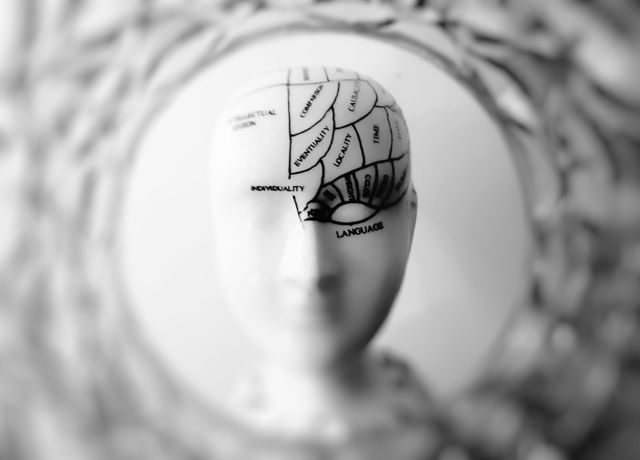
The human body does not function at exactly the same level throughout the day. Alertness rises and falls, body temperature changes, hormones follow daily patterns, digestion responds to different periods of activity, and the brain shifts between states that support attention, learning, rest, and recovery. These recurring changes are not simply responses to daily routines. They are partly coordinated by an internal biological timing system known as the circadian system.
Circadian neuroscience is the study of how biological clocks interact with the brain, nervous system, hormones, metabolism, sleep, behaviour, and the surrounding environment. The word “circadian” comes from Latin terms meaning approximately “around a day,” reflecting biological rhythms that generally follow a roughly 24-hour cycle. Although the external environment provides important timing signals, the body contains internal molecular clocks that help coordinate physiological processes across the day and night.
Understanding circadian neuroscience provides a different perspective on sleep and health. Sleep is not merely a period when the body stops being active. It is part of a larger timing system that influences when the brain is prepared for alertness, when the body expects food, when certain hormones are released, and when cellular processes associated with repair and maintenance become more prominent. Disrupting these rhythms through irregular schedules, nighttime light exposure, shift work, jet lag, or inconsistent sleep can affect multiple biological systems simultaneously.
The Biological Clock Inside the Brain
One of the central structures in circadian neuroscience is the suprachiasmatic nucleus, or SCN, a small region located in the hypothalamus of the brain. Despite its small size, the SCN plays a major role in coordinating the body’s central circadian timing system.
The SCN receives information about environmental light through specialised retinal pathways. This allows the brain to compare internal timing with the external day-night cycle. Light reaching the eyes during the appropriate part of the day can influence the timing of the biological clock, while darkness provides a different signal.
The importance of the SCN does not mean that every organ simply follows instructions from one central clock. Many tissues throughout the body contain their own molecular clocks. The central clock helps coordinate these peripheral clocks, allowing physiological processes to remain organised in relation to one another.
This arrangement resembles a biological timing network rather than a single mechanical clock. The brain provides coordination, while clocks in organs and tissues help regulate local processes. Communication between these systems allows the body to maintain temporal organisation.
Light Is One of the Most Powerful Time Signals
Light is one of the most important environmental signals affecting the circadian system. The human brain uses information about the timing of light exposure to adjust biological rhythms to the external environment.
Specialised retinal cells containing melanopsin are particularly important for circadian signalling. Their responses are communicated to the brain and ultimately influence the SCN. This pathway helps the biological clock distinguish between periods associated with daylight and periods associated with darkness.
The timing of light exposure matters. Bright light during the biological morning can help shift the circadian system earlier, while light exposure later in the evening can delay the timing of biological rhythms in some circumstances. This is one reason that exposure to bright artificial light late at night can interfere with the body’s preparation for sleep.
Modern lifestyles have dramatically changed the lighting environment. Electric lighting, smartphones, computers, televisions, and other illuminated devices can extend exposure to light well beyond sunset. The issue is not simply that screens exist, but that artificial light can provide timing information at a period when the biological system historically received much less light.
Circadian Rhythms and the Sleep-Wake Cycle
The relationship between circadian timing and sleep is one of the most extensively studied areas of circadian neuroscience. However, the circadian system does not simply determine whether a person is asleep or awake.
Sleep is influenced by at least two interacting processes. One involves the accumulation of sleep pressure during prolonged wakefulness, while another involves the circadian system creating periods of greater biological readiness for wakefulness or sleep.
This distinction explains why someone can feel tired but still struggle to sleep when their internal clock is misaligned with their desired bedtime. Conversely, a person may remain awake for a period despite accumulating sleep pressure because circadian signals temporarily promote alertness.
The interaction between sleep pressure and circadian timing is therefore central to understanding sleep patterns. A consistent schedule can help these processes remain aligned, whereas irregular schedules may create a mismatch between biological timing and social expectations.
The Circadian Regulation of Hormones
Circadian rhythms influence the timing of several hormonal processes. Melatonin is among the best-known examples. Produced primarily by the pineal gland, melatonin secretion normally increases during the biological night and is strongly influenced by the light-dark cycle.
Melatonin is often described as a “sleep hormone,” but its role is more accurately understood as part of the body’s timing system. Its nighttime rise provides information about biological night and contributes to the coordination of circadian rhythms.
Cortisol also follows a pronounced daily rhythm, although its pattern differs from that of melatonin. Cortisol levels generally rise around the period of waking and decline across the day. This rhythm is connected with processes involved in metabolism, energy availability, immune regulation, and the body’s response to physiological demands.
The timing of these hormonal changes illustrates an important principle of circadian neuroscience: biological processes are not merely controlled by how much of a substance is present but also by when that substance becomes more or less active.
Circadian Timing and Brain Function
The brain itself is highly sensitive to circadian timing. Attention, alertness, cognitive performance, emotional regulation, and learning can vary according to time of day and an individual’s internal biological schedule.
Many people experience predictable periods of high and low alertness. Some individuals naturally feel more energetic in the morning, while others experience greater alertness later in the day. These differences are influenced by chronotype, genetics, age, environmental factors, and behavioural schedules.
Circadian timing may also interact with memory and learning. The brain’s ability to encode, consolidate, and retrieve information is influenced by sleep and biological timing. Because sleep contributes to memory consolidation, disruption of circadian rhythms can indirectly affect learning by altering the quality and timing of sleep.
This relationship has practical significance for students and professionals. Productivity is not necessarily determined only by motivation or discipline. Biological timing can influence the conditions under which attention and cognitive performance are easier or more difficult to sustain.
The Molecular Clock Within Cells
Circadian neuroscience also extends to the molecular level. Biological clocks are created through interconnected molecular feedback systems involving clock-related genes and proteins.
At a simplified level, certain clock proteins accumulate within cells and influence gene activity. Their levels subsequently change through regulatory processes, creating recurring cycles of molecular activity. These cycles help cells anticipate predictable changes across the day.
Importantly, circadian regulation affects a large number of biological pathways. It influences metabolism, hormone signalling, cellular repair, immune activity, and other physiological processes.
This molecular perspective helps explain why circadian disruption can affect more than sleep. If cellular processes depend partly on temporal organisation, repeated disruption of biological timing may influence multiple systems simultaneously.
Circadian Rhythms and Metabolism
The timing of food intake and metabolic activity is another important area of research. The body does not necessarily process nutrients in exactly the same way at every hour of the day.
Circadian clocks exist in metabolic tissues, including the liver and other organs involved in nutrient processing. These clocks help coordinate metabolic functions with daily patterns of feeding and fasting.
When eating patterns become highly irregular or occur predominantly during periods normally associated with biological rest, metabolic rhythms can become misaligned. Research into time-restricted eating and chrononutrition is investigating how the timing of food intake interacts with circadian biology.
This does not mean that the clock alone determines metabolic health. Diet quality, physical activity, sleep, genetics, age, and many other factors remain important. Circadian neuroscience instead adds another dimension: the timing of behaviour may matter alongside its content.
Circadian Disruption in Modern Life
Human biology evolved under environmental cycles that were strongly influenced by natural light and darkness. Modern society has reduced many of these environmental constraints.
People can work throughout the night, travel rapidly across time zones, eat at irregular hours, remain exposed to artificial light after sunset, and maintain different schedules on weekdays and weekends. These behaviours can create situations in which the internal biological clock and external schedule do not fully agree.
Shift workers provide a particularly clear example. Their work requires activity during periods when the circadian system may promote sleep and rest during periods when the environment promotes daytime activity.
Jet lag represents another form of circadian disruption. When a person rapidly travels across several time zones, the external schedule changes faster than the biological clock can immediately adjust. The resulting temporary mismatch can affect sleep, alertness, digestion, and general functioning.
Social Jet Lag and Everyday Schedules
Circadian disruption does not require international travel or night-shift employment. Ordinary weekly schedules can also create what researchers often call social jet lag.
A person may wake early on weekdays because of school or work but sleep substantially later on weekends. The resulting difference between socially required timing and preferred biological timing can create a recurring mismatch.
Young people may be particularly affected because adolescence is associated with changes in circadian timing that can naturally shift sleep preferences later. Early school or work schedules may therefore conflict with biological tendencies toward later sleep.
Understanding these differences can help explain why maintaining consistent sleep timing may be difficult for some individuals. Circadian neuroscience provides a framework for considering biological timing rather than viewing sleep behaviour purely as a matter of personal discipline.
Circadian Rhythms and Mental Health
Researchers are increasingly investigating connections between circadian rhythms and mental health. Sleep disruption and circadian abnormalities are observed across several psychiatric and neurological conditions, although the relationships are complex and can work in both directions.
Changes in sleep timing can influence mood, cognitive functioning, and emotional regulation. At the same time, changes in mental health can disrupt sleep and daily routines. This makes it difficult to determine simple cause-and-effect relationships in every situation.
Circadian research is therefore exploring whether interventions that stabilise biological timing may have therapeutic value for certain conditions. Approaches under investigation include controlled light exposure, sleep scheduling, behavioural interventions, and other methods designed to influence circadian alignment.
These areas remain active fields of scientific research, and findings should not be interpreted as evidence that circadian interventions can independently treat every mental health condition.
Age Changes the Circadian System
Circadian rhythms also change throughout the lifespan. Children, adolescents, adults, and older adults can have different patterns of sleep timing and biological rhythms.
During adolescence, the circadian system often shifts toward later timing. In later adulthood, sleep and circadian patterns may become earlier and more fragmented for some individuals.
The aging process can also influence the strength and coordination of circadian rhythms. Changes in light exposure, activity patterns, health conditions, medication use, and social routines may contribute to these alterations.
Recognising age-related differences is important because there is no single circadian schedule that fits every stage of life. Biological timing is dynamic and influenced by both development and environment.
Chronotype and Individual Biological Timing
Chronotype refers broadly to an individual’s tendency toward earlier or later timing of sleep and activity. Some people naturally wake and become alert relatively early, while others are inclined toward later schedules.
Chronotype is influenced by genetic, developmental, environmental, and behavioural factors. It is not simply a preference that can always be changed through willpower.
Modern institutions often operate according to fixed schedules, which means some people experience a greater mismatch between their internal timing and external demands than others.
Recognising individual differences can support more nuanced approaches to education, workplace scheduling, sleep management, and productivity. Rather than assuming everyone should function optimally at the same time, circadian neuroscience highlights the biological diversity of human timing.
Why Circadian Neuroscience Matters
Circadian neuroscience demonstrates that time is an important biological variable. The same behaviour can have different physiological consequences depending partly on when it occurs.
Sleep, light exposure, food intake, exercise, learning, work, and social interaction all take place within a temporal environment. The body continuously integrates information about when these activities occur and coordinates biological systems accordingly.
This perspective can influence how researchers think about medicine, education, workplace design, and public health. Chronobiology is increasingly relevant to questions such as when medications should be administered, how sleep schedules should be designed, how artificial lighting should be managed, and how work patterns can accommodate biological differences.
The emerging field of chronomedicine, for example, investigates whether the timing of treatments can influence their effectiveness or side effects. While many applications remain under investigation, the underlying concept is straightforward: biological systems operate according to time-dependent patterns.
The Future of Circadian Research
Advances in wearable technology, neuroscience, molecular biology, and artificial intelligence are creating new opportunities to study biological timing. Researchers can increasingly collect information about sleep, activity, body temperature, light exposure, heart rate, and other physiological signals over long periods.
These technologies may help researchers understand how individual circadian rhythms vary in real-world environments rather than only in controlled laboratories.
Future research may also improve personalised approaches to sleep and health. Instead of relying entirely on standardised schedules, individuals may eventually receive recommendations based on their chronotype, behavioural patterns, environmental exposure, and physiological responses.
However, more data does not automatically produce better conclusions. Circadian systems are complex, and correlations between behavioural patterns and biological outcomes do not necessarily establish causation. Scientific validation, privacy protection, and careful interpretation will remain essential as digital monitoring becomes more sophisticated.
Conclusion
Circadian neuroscience reveals that the human body operates according to an intricate biological timetable. From the suprachiasmatic nucleus in the brain to molecular clocks inside individual cells, multiple layers of biological timing work together to coordinate sleep, hormones, metabolism, cognition, immune activity, and daily behaviour.
The modern environment can challenge this system through artificial light, irregular schedules, shift work, travel, nighttime technology use, and inconsistent sleep patterns. Understanding circadian biology does not mean that every activity must follow a rigid schedule. Instead, it provides a scientific framework for understanding why timing can influence how the brain and body function.
As research continues, circadian neuroscience may become increasingly relevant to personalised medicine, sleep science, education, workplace design, nutrition, and digital health. The broader lesson is that human biology is not only organised around what we do but also around when we do it. Biological time is an essential dimension of human health and behaviour, and understanding that timing may help researchers develop more precise ways of supporting the brain and body.
Online Internship with Certificate
You may be interested

Computational Gastronomy: How AI Is Decoding the Molecular Architecture of Flavour
Anshika Jain - October 22, 2026Flavour is one of the most complex experiences produced by food. A dish may contain hundreds or thousands of chemical compounds that interact with one another, change…

Hyperspectral Imaging in Food Safety: Detecting Hidden Quality Changes
Anshika Jain - October 22, 2026Food safety inspection has traditionally relied on visual examination, laboratory testing, and established chemical and microbiological methods. Colour, shape, texture, and visible defects can provide useful information…

Toward a Systems Biology of Eating: Integrating Food Chemistry and Environmental Context
Anshika Jain - October 22, 2026Eating is one of the most fundamental human behaviours, yet its underlying mechanisms are remarkably complex. The decision to eat, the selection of a particular food, the…
Most from this category


From Ingredient Chemistry to Clinical Outcomes: Evidence-Based Architecture
Anshika Jain - October 22, 2026
Environmental Trade-Offs of Alternative Proteins: Evaluating Systems Together
Anshika Jain - October 21, 2026
From Ingredient Chemistry to Clinical Outcomes: Evidence-Based Architecture
Anshika Jain - October 22, 2026


Computational Food–Human Interface: Biological Regulation
October 22, 2026
Limits of Algorithmic Eating: Human Nutrition
October 22, 2026 .png)
Leave a Comment
You must be logged in to post a comment.