
Liquid Biopsy Technology: Can Blood Samples Reveal Molecular Signals From Tumors?

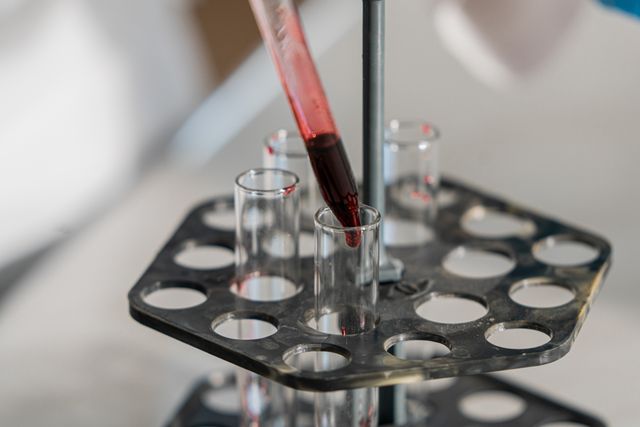
Cancer diagnosis and monitoring have traditionally depended heavily on tissue biopsies, imaging, and laboratory testing. A tissue biopsy can provide valuable information because it allows pathologists to examine cancer cells directly and investigate their molecular characteristics. However, obtaining tumor tissue can require an invasive procedure, may be difficult when a tumor is located in a challenging anatomical position, and may provide information about only one part of a biologically heterogeneous cancer.
Liquid biopsy technology is changing this landscape by investigating tumor-derived material that circulates through the blood and, in some applications, other body fluids. A liquid biopsy can examine cancer cells, fragments of DNA, RNA, proteins, or other molecular signals released by tumors. The National Cancer Institute describes liquid biopsy as a test performed on blood or another body fluid to look for cancer cells or molecular material released by tumors. It can potentially be used for cancer detection, treatment planning, treatment monitoring, and identifying recurrence.
Among the most extensively studied signals is circulating tumor DNA, or ctDNA. These are small fragments of DNA released by tumor cells into the bloodstream, particularly as cancer cells die. Scientists can analyze ctDNA to identify mutations and other molecular characteristics associated with a tumor.
The significance of liquid biopsy goes beyond replacing a needle with a blood draw. Its deeper potential lies in creating a more dynamic view of cancer biology. Instead of examining a tumor only at diagnosis, clinicians and researchers may be able to repeatedly examine molecular signals in the bloodstream and observe how a cancer changes over time. This could eventually make cancer monitoring more continuous, personalized, and responsive to molecular changes.
What Is a Liquid Biopsy?
A liquid biopsy is not a single technology or one specific laboratory test. It is a broader approach to analyzing biological material circulating in body fluids, most commonly blood, to obtain information about disease.
In cancer research, scientists can examine circulating tumor cells, circulating tumor DNA, cell-free RNA, proteins, methylation patterns, extracellular vesicles, and other biological signals. Different liquid biopsy approaches provide different types of information and have different levels of clinical validation.
The blood contains enormous quantities of cell-free DNA released naturally by cells throughout the body. Only a small proportion may originate from a tumor, particularly when the cancer is small or located at an early stage. This creates a major technical challenge: researchers must distinguish extremely small quantities of tumor-derived material from a much larger background of normal biological material.
The development of increasingly sensitive sequencing and molecular analysis technologies has made it possible to investigate these signals in much greater detail. Current liquid biopsy research includes targeted mutation analysis as well as broader genomic, epigenomic, and fragmentomic approaches.
Circulating Tumor DNA: The Molecular Signal in Blood
Circulating tumor DNA is one of the most important components of modern liquid biopsy research. When tumor cells die, fragments of their DNA can enter the bloodstream. These fragments may contain genetic alterations that distinguish the cancer from normal cells.
A blood sample can therefore contain molecular traces of a tumor even when the tumor itself remains inside an organ. Researchers can isolate cell-free DNA from plasma and use sequencing or other molecular techniques to search for tumor-associated alterations.
The amount of ctDNA can vary substantially between patients and cancer types. Larger or more biologically active tumors may release more ctDNA, while small tumors can release quantities that are extremely difficult to detect. Tumor location and biological characteristics can also influence how much tumor-derived DNA reaches the bloodstream.
This means that a negative liquid biopsy does not necessarily prove that cancer is absent. The sensitivity of a test depends on the amount of tumor-derived material present, the assay design, the biological characteristics of the cancer, and the technical ability to distinguish true tumor signals from background DNA.
How Liquid Biopsy Differs From a Tissue Biopsy
Tissue biopsy and liquid biopsy should not necessarily be viewed as competing technologies. They provide different forms of biological information and can complement one another.
A tissue biopsy allows direct examination of tumor architecture, cellular morphology, and molecular characteristics within a specific tumor location. It can provide information that may be difficult to obtain from circulating material.
Liquid biopsy, in contrast, can be performed through a blood draw and can potentially be repeated multiple times. The National Cancer Institute notes that the ability to take multiple liquid biopsy samples over time may help researchers and clinicians understand molecular changes occurring within a tumor.
This repeatability is particularly important for a disease that evolves. A tissue sample collected at diagnosis represents the tumor at one particular moment. A later blood sample may reveal molecular changes that emerged during treatment.
The most useful future model may therefore involve combining tissue-based characterization with repeated liquid-based monitoring.
Liquid Biopsy and Personalized Cancer Treatment
One of the established research and clinical applications of liquid biopsy is molecular characterization for treatment planning.
Some cancers contain genetic alterations that influence which targeted therapies may be appropriate. When obtaining sufficient tumor tissue is difficult or when additional molecular information is needed, blood-based testing can sometimes provide useful information about tumor-associated alterations.
The NCI notes that liquid biopsies can be used as biomarker tests and that FDA-approved liquid biopsy tests are available for identifying certain cancer-associated genetic alterations.
This creates a connection between liquid biopsy and precision oncology. Instead of viewing a tumor solely according to its anatomical location, clinicians can investigate molecular characteristics that may influence treatment selection.
However, the clinical interpretation of a liquid biopsy result depends on the specific test, cancer type, biomarker, and clinical context. A detected mutation does not automatically mean that a particular treatment will be effective, and a negative result does not necessarily exclude a mutation that may be present in the tumor but below the assay’s detection threshold.
Monitoring Treatment Response
Another major application of ctDNA is monitoring how a tumor responds to treatment.
Traditional methods for evaluating cancer response often involve imaging, physical examination, laboratory measurements, and changes in symptoms. These approaches remain essential, but molecular changes may sometimes occur before measurable anatomical changes become apparent.
If the amount of tumor-derived DNA decreases after treatment, that molecular change may provide information about tumor burden or treatment response. Conversely, increasing ctDNA may indicate that tumor-associated molecular signals are becoming more detectable.
A 2025 review in npj Precision Oncology describes ctDNA as an increasingly important dynamic biomarker that can potentially inform treatment selection, response monitoring, and identification of drug resistance.
The appeal of this approach is its potential to provide a molecular readout between conventional imaging assessments. However, researchers continue to investigate exactly when changes in ctDNA should influence clinical decisions and how these measurements should be standardized.
Detecting Minimal Residual Disease
One of the most promising applications of liquid biopsy is the detection of minimal residual disease, also called measurable residual disease.
After surgery or other treatment, imaging may show no visible tumor. Yet microscopic cancer cells may remain in the body. These residual cells can potentially contribute to recurrence later.
Liquid biopsy offers a way of searching for molecular evidence of these remaining cancer cells. If tumor-specific DNA can be detected in the bloodstream after apparently successful treatment, it may indicate that residual disease remains.
Research published in Nature Reviews Clinical Oncology has described ctDNA-based minimal residual disease detection as an important emerging application. In some settings, ctDNA detection can precede imaging-based evidence of recurrence by months, although performance varies according to cancer type, stage, assay, and clinical context.
This raises an important possibility for oncology. Instead of waiting until a recurrence becomes visible on imaging, clinicians may eventually be able to identify molecular evidence of residual disease earlier and investigate whether an intervention could reduce the risk of overt relapse.
However, detecting molecular residual disease and proving that changing treatment based on that detection improves patient outcomes are two different questions. Clinical trials are essential for establishing whether ctDNA-guided decisions should become standard practice.
Understanding Cancer Recurrence
Cancer recurrence is another area in which liquid biopsy could become increasingly important.
After treatment, patients may enter a surveillance period during which clinicians monitor for evidence that the cancer has returned. Imaging and clinical assessments remain central to this process, but liquid biopsy could provide an additional molecular signal.
A rising ctDNA level may indicate the presence of tumor-derived material before a recurrent tumor becomes large enough to be easily detected through conventional methods. This could create an earlier molecular warning system.
Nevertheless, early molecular detection does not automatically mean that an intervention will be beneficial. Researchers must determine which molecular signals reliably predict clinically meaningful recurrence and whether acting on those signals changes outcomes.
The distinction is especially important because highly sensitive testing can detect biological abnormalities that might not necessarily progress in the same way in every patient.
Liquid Biopsy and Drug Resistance
Cancer is an evolving disease, and treatment can create selective pressure that favours resistant cancer-cell populations.
A tumor may initially respond to a targeted therapy because its dominant cancer cells depend on a particular molecular pathway. Over time, however, resistant cells may emerge or expand. These cells can acquire additional genetic changes that reduce the effectiveness of the original treatment.
Liquid biopsy can potentially provide a way of observing these molecular changes without requiring repeated tissue biopsies.
Research in non-small-cell lung cancer has highlighted the use of ctDNA to investigate mechanisms of acquired resistance to targeted therapies. Because ctDNA can be collected with minimally invasive sampling, it may help researchers study how tumors evolve during treatment.
This could eventually support a more adaptive approach to treatment in which molecular changes detected during therapy contribute to decisions about subsequent treatment strategies.
Liquid Biopsy and Early Cancer Detection
Perhaps the most ambitious application of liquid biopsy is detecting cancer before symptoms appear.
Researchers are investigating whether blood-based tests can identify cancer-associated DNA changes, methylation patterns, proteins, or other molecular signals at early stages. Multi-cancer early-detection tests are designed to search for signals associated with several cancer types using a single blood sample.
The potential public-health impact is substantial because many cancers are more treatable when identified earlier. However, early detection is also one of the most technically difficult applications of liquid biopsy.
Early tumors can release extremely small quantities of ctDNA, making the tumor signal difficult to distinguish from normal cell-free DNA. Current research indicates that sensitivity can be limited, particularly for early-stage cancers.
The scientific challenge is therefore not simply developing a test capable of finding cancer-associated signals. Researchers must establish whether the test can detect clinically important cancers accurately enough and whether using it in asymptomatic populations ultimately reduces cancer mortality without causing unacceptable harms.
Large-scale randomized trials are consequently important for determining the real-world value of multi-cancer detection technologies.
Beyond DNA: Other Signals in Liquid Biopsy
Although ctDNA receives substantial attention, liquid biopsy research extends beyond DNA.
Scientists are investigating circulating tumor cells, RNA molecules, proteins, extracellular vesicles, methylation patterns, and other components of blood. These signals may provide different forms of information about tumor biology.
DNA can reveal mutations and genomic alterations. RNA can provide information about gene activity. Proteins can reflect cellular functions and signalling pathways. Epigenetic signals such as DNA methylation can potentially provide information about tissue of origin and disease-associated molecular states.
Combining multiple signals could eventually create more comprehensive liquid biopsy profiles. Rather than asking whether one mutation is present, future tests may analyse multiple molecular layers simultaneously.
This direction aligns liquid biopsy with the broader development of multi-omics medicine, in which genomic, transcriptomic, proteomic, and other biological measurements are integrated to understand disease.
The Role of Artificial Intelligence
The increasing complexity of liquid biopsy data is creating opportunities for artificial intelligence and machine learning.
Modern blood-based assays can generate enormous amounts of sequencing and molecular information. Computational models can potentially identify patterns involving mutations, methylation, DNA fragment characteristics, genomic structure, and other features.
Recent reviews describe the emergence of whole-genome, epigenome, and AI-assisted approaches to analysing cell-free DNA for cancer detection and monitoring.
AI could potentially help distinguish tumor-derived signals from background biological noise, identify patterns associated with particular cancer types, and integrate molecular information with clinical characteristics.
However, computational performance must be demonstrated in diverse patient populations and independent clinical settings. A model that performs well in a research dataset may not automatically produce reliable results in routine healthcare.
The Challenge of Low Tumor Signal
One of the central limitations of liquid biopsy is that the amount of tumor-derived material can be extremely small.
This is particularly problematic in early-stage disease and in certain tumors that release relatively little DNA into the bloodstream. When ctDNA represents only a tiny fraction of total cell-free DNA, distinguishing genuine tumor signals from technical noise becomes difficult.
The FDA has identified modest clinical sensitivity and the cost and labor associated with some personalized ctDNA assays as challenges to widespread adoption of minimal residual disease testing in early-stage cancer.
Researchers are therefore working on increasingly sensitive sequencing techniques, improved molecular enrichment methods, larger blood volumes, better error correction, and more sophisticated computational approaches.
Improving sensitivity must also be balanced against specificity. A test that detects extremely small signals but produces too many false positives may create unnecessary investigations and anxiety.
Standardization and Clinical Validation
For liquid biopsy to become more widely integrated into cancer care, laboratories and researchers need reliable standards for sample collection, processing, sequencing, interpretation, and reporting.
Differences in assay design can influence the results obtained from the same biological sample. The timing of blood collection, handling of plasma, DNA extraction, sequencing depth, and computational filtering can all affect performance.
The FDA issued guidance in 2024 addressing the use of ctDNA in early-stage solid-tumor drug development and clinical-trial design, including considerations around molecular residual disease and assay standardization.
This reflects an important transition in the field. Liquid biopsy is moving from promising research technology toward questions of clinical validity, regulatory standards, and practical implementation.
The Future of Liquid Biopsy
The future of liquid biopsy may involve increasingly comprehensive molecular monitoring. Instead of collecting blood only when cancer is suspected or after a major treatment milestone, patients could potentially undergo repeated molecular assessments during different stages of care.
A future monitoring system might combine ctDNA with imaging, pathology, clinical information, proteomic signals, methylation patterns, and other biomarkers. Artificial intelligence could help integrate these measurements and identify changes that deserve further investigation.
This would transform liquid biopsy from a diagnostic test into a longitudinal molecular monitoring platform.
The most important development, however, will not necessarily be the ability to detect more molecular signals. It will be the ability to determine which signals matter clinically and what action should follow from them.
Conclusion
Liquid biopsy technology is changing the way researchers think about cancer because it creates the possibility of studying tumor-derived molecular information through a relatively simple blood sample. Circulating tumor DNA can reveal mutations and other genetic characteristics, while broader liquid biopsy approaches can examine additional biological signals.
The technology is being investigated and increasingly used in areas including molecular treatment selection, treatment-response monitoring, minimal residual disease detection, recurrence surveillance, and investigation of treatment resistance.
At the same time, liquid biopsy should not be presented as a universal replacement for tissue biopsy. Low tumor signal, biological heterogeneity, assay sensitivity, false-positive and false-negative results, standardization, cost, and clinical validation remain important challenges. Early cancer detection is particularly demanding, and researchers are still determining whether molecular detection strategies can translate into meaningful improvements in population-level outcomes.
The most significant promise of liquid biopsy may ultimately lie in its ability to make cancer monitoring more dynamic. A tissue biopsy can provide a detailed molecular snapshot, while repeated blood sampling could potentially reveal how the tumor changes over time.
As sequencing technologies, molecular assays, artificial intelligence, and multi-omics approaches continue to develop, blood may become an increasingly valuable source of information about what is happening inside a tumor. The future of liquid biopsy will depend on converting that molecular information into reliable, clinically validated decisions that improve cancer care.
Online Internship with Certificate
You may be interested

Computational Gastronomy: How AI Is Decoding the Molecular Architecture of Flavour
Anshika Jain - October 22, 2026Flavour is one of the most complex experiences produced by food. A dish may contain hundreds or thousands of chemical compounds that interact with one another, change…

Hyperspectral Imaging in Food Safety: Detecting Hidden Quality Changes
Anshika Jain - October 22, 2026Food safety inspection has traditionally relied on visual examination, laboratory testing, and established chemical and microbiological methods. Colour, shape, texture, and visible defects can provide useful information…

Toward a Systems Biology of Eating: Integrating Food Chemistry and Environmental Context
Anshika Jain - October 22, 2026Eating is one of the most fundamental human behaviours, yet its underlying mechanisms are remarkably complex. The decision to eat, the selection of a particular food, the…
Most from this category

From Ingredient Chemistry to Clinical Outcomes: Evidence-Based Architecture
Anshika Jain - October 22, 2026
Environmental Trade-Offs of Alternative Proteins: Evaluating Systems Together
Anshika Jain - October 21, 2026
From Ingredient Chemistry to Clinical Outcomes: Evidence-Based Architecture
Anshika Jain - October 22, 2026


Computational Food–Human Interface: Biological Regulation
October 22, 2026
Limits of Algorithmic Eating: Human Nutrition
October 22, 2026 .png)
Leave a Comment
You must be logged in to post a comment.