
Organoids: How Miniature Human Organs Are Changing Medical Research

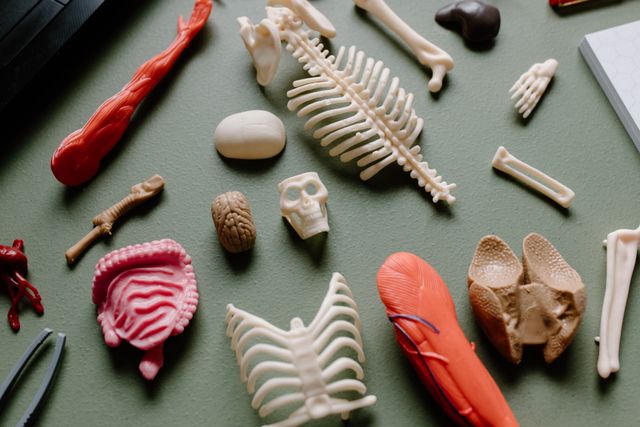
Medical research has traditionally depended on a combination of laboratory cell cultures, animal models, clinical observations, and human studies. Each approach has contributed enormously to scientific progress, yet each also has limitations. Conventional two-dimensional cell cultures can simplify the complex architecture of human tissues, while animal models may not always reproduce human biology accurately. Clinical research provides essential evidence from real patients, but it cannot be used to investigate every biological question experimentally. Organoids have emerged as an important technology positioned between these approaches, offering researchers a way to study miniature three-dimensional versions of human tissues in controlled laboratory environments.
Organoids are three-dimensional structures created from stem cells or other appropriate cell sources that can self-organize into tissue-like architectures and reproduce selected structural and functional characteristics of real organs. Researchers have developed organoids resembling parts of the brain, intestine, liver, kidney, lung, pancreas, stomach and other tissues. They are not complete miniature human organs, nor can they reproduce every physiological function of an adult organ. Instead, they provide simplified but biologically relevant models that can help researchers investigate how tissues develop, how diseases emerge, and how cells respond to potential treatments.
The importance of organoids comes from their ability to preserve aspects of human biology that are often difficult to reproduce using conventional laboratory models. Their three-dimensional structure allows cells to interact with one another and organize themselves in ways that more closely resemble natural tissues. As organoid technology continues to develop, it is becoming increasingly relevant to disease modelling, drug discovery, cancer research, developmental biology, infectious disease research and personalized medicine.
What Exactly Are Organoids?
An organoid can be understood as a laboratory-grown three-dimensional tissue model that reproduces selected characteristics of an organ. Scientists generally begin with stem cells or tissue-derived cells and expose them to carefully controlled biological signals. These signals influence how cells divide, differentiate and organize themselves. Under appropriate conditions, the cells can spontaneously arrange into structures that resemble aspects of the tissue from which they originated.
This self-organization is one of the most important characteristics of organoid technology. Rather than manually arranging every cell into a predetermined structure, researchers create an environment in which cells can follow developmental programs and form increasingly complex arrangements.
Different types of stem cells can be used to generate organoids. Pluripotent stem cells, including induced pluripotent stem cells, can potentially produce many different cell types after appropriate differentiation. Adult stem cells can also be used to generate organoids that retain characteristics of the tissue from which they were obtained. Patient-derived material can provide another important source, particularly when researchers want to study disease-specific biology or differences in treatment response.
The resulting structure is usually microscopic or very small compared with a natural organ. Its value therefore does not come from physically replacing an organ in a laboratory dish. Instead, its value lies in reproducing particular biological processes in a form that scientists can observe, manipulate and test.
Why Three-Dimensional Biology Matters
For decades, researchers have relied heavily on two-dimensional cell cultures. In these systems, cells grow on relatively flat surfaces and can be exposed to drugs, genetic modifications or environmental changes. These models are useful because they are comparatively simple, inexpensive and easy to study.
However, cells inside the human body do not normally live on flat plastic surfaces. They exist within three-dimensional environments where neighbouring cells, extracellular structures, chemical signals, mechanical forces and gradients of oxygen and nutrients influence their behaviour.
Organoids introduce a three-dimensional environment that can reproduce some of these relationships. Cells can interact with neighbouring cells in multiple directions, creating spatial organization that is difficult to reproduce in traditional monolayer cultures. This can affect differentiation, signalling, gene expression and cellular responses.
The result is not a perfect recreation of an organ, but it can provide a more biologically informative experimental environment than some conventional cell models. Reviews of organoid research have highlighted their ability to reproduce selected aspects of human tissue architecture and function while retaining important characteristics of the cells from which they were derived.
Organoids and Disease Modelling
One of the most important applications of organoids is disease modelling. Scientists can use organoids to reproduce aspects of disease in laboratory conditions and then examine what happens at the cellular and molecular levels.
For example, researchers can generate intestinal organoids and expose them to pathogens or manipulate specific genes associated with disease. Brain organoids can be used to investigate aspects of neurological development and disease. Liver organoids can provide models for studying liver biology and toxic responses, while kidney organoids can help researchers investigate processes associated with kidney development and disease.
Cancer research has become another major area of organoid development. Tumour-derived organoids can preserve some of the biological characteristics of a patient’s tumour, allowing researchers to investigate tumour behaviour outside the body. Such models can be particularly valuable when studying genetic differences between cancers and examining how tumour cells respond to potential treatments.
Organoids therefore create an experimental bridge between molecular information and tissue-level behaviour. Researchers can observe not only individual molecular changes but also how those changes influence cells as they organize within a three-dimensional environment.
A New Approach to Drug Discovery
Drug development is one of the areas where organoids could have significant influence. Before a medicine reaches human clinical trials, researchers need to understand whether it is likely to work and whether it could produce harmful effects. Traditional cell cultures and animal studies remain important, but organoids offer another experimental model that can complement them.
Human organoids can provide researchers with a tissue environment that more closely reflects aspects of human biology than some conventional models. They can be exposed to candidate drugs, allowing researchers to examine changes in cellular behaviour, tissue structure and molecular responses.
A major advantage becomes particularly apparent when organoids are derived from different individuals. Patient-derived organoids may preserve some patient-specific biological characteristics, creating an opportunity to compare responses to different treatments. This has contributed to interest in organoids as potential tools for personalized medicine and drug-response research. A 2026 review in Nature Reviews Drug Discovery describes human organoids as three-dimensional platforms for disease modelling, drug screening and safety evaluation while also emphasizing challenges surrounding standardization and broader adoption.
This does not mean that a drug response observed in an organoid automatically predicts what will happen in a patient. Instead, organoids can become one component of a larger evidence system that combines laboratory models, computational analysis, animal studies and clinical research.
Patient-Derived Organoids and Personalized Medicine
One of the most intriguing possibilities of organoid research is the development of patient-specific models. In certain circumstances, cells obtained from a patient can be expanded and used to generate organoids that retain characteristics of that individual’s tissue or disease.
This creates the possibility of building a laboratory model that represents aspects of a patient’s biology. Researchers can then expose the model to different therapeutic compounds and compare responses.
Cancer is particularly relevant to this approach because tumours can differ considerably between individuals, even when patients have the same broad cancer diagnosis. A patient-derived tumour organoid may provide researchers with an experimental system for investigating that specific tumour’s molecular and treatment characteristics.
The concept could eventually contribute to more individualized treatment strategies, but significant validation remains necessary. Organoids do not reproduce every aspect of a patient’s body, and the response of an isolated organoid cannot automatically represent the response of an entire human organism.
Organoids in Cancer Research
Cancer researchers are increasingly interested in organoids because cancer is fundamentally a three-dimensional and highly heterogeneous disease. Tumour cells interact with surrounding tissue, immune cells, blood vessels and signalling molecules. Traditional cell lines can capture some cancer characteristics, but they may lose important features over time.
Tumour organoids can preserve more of the structural and genetic characteristics of the original tumour in certain settings. Researchers can use them to study tumour growth, investigate genetic mutations, examine drug resistance and test potential treatments.
Another developing area is the integration of organoids with immune and stromal components. Conventional organoids often lack many of the supporting cells found in real tissues. Researchers are therefore exploring more complex systems that incorporate immune cells, connective tissue components and vascular structures.
These developments are particularly important for cancer immunotherapy research, where treatment effectiveness depends not only on tumour cells but also on interactions between tumours and the immune system. Newer organoid systems are being investigated as models for patient-specific tumour-immune interactions and therapeutic evaluation.
Brain Organoids and the Study of the Human Brain
Brain organoids have attracted substantial scientific interest because the human brain is extremely difficult to study experimentally. Researchers cannot freely manipulate developing human brain tissue in living patients, and animal brains do not perfectly reproduce human neurological development.
Brain organoids can provide simplified models of particular stages or features of brain development. Scientists can investigate how neural cells differentiate, organize and communicate and can examine the effects of genetic changes or environmental conditions.
They have also been explored in research into neurological disorders and brain cancers. However, brain organoids have important limitations. Many models resemble developmental stages rather than fully mature adult brain tissue, and they do not reproduce the complete architecture, blood supply, immune environment or long-range connections of the human brain. These limitations become particularly relevant when researchers attempt to model diseases that develop primarily during adulthood.
Consequently, brain organoids should be regarded as specialized experimental models rather than miniature brains capable of reproducing every aspect of human neurological function.
Organoids and Infectious Disease Research
Organoids can also help researchers understand how infectious organisms interact with human tissues. Viruses, bacteria and parasites often behave differently depending on the specific tissue and cell types they encounter.
A conventional cell line may contain only a limited range of cell types and receptors. In contrast, a tissue-derived organoid can reproduce a more complex cellular environment. Researchers can introduce pathogens into these systems and observe infection, cellular damage and host responses.
During the COVID-19 pandemic, organoids derived from respiratory and intestinal tissues were among the models used to investigate SARS-CoV-2 biology. More broadly, organoid systems can help scientists examine host-pathogen interactions in human tissues that may be difficult to study directly.
This ability is particularly valuable when researchers need to understand why particular cell types become infected or how tissue architecture influences disease progression.
Studying Toxicity and Safety
A promising application of organoids extends beyond determining whether a treatment works. Researchers also need to know whether a substance could damage healthy tissues.
Liver, kidney, heart and other organoids can provide experimental models for examining potential toxicity. Because these models contain human cells arranged in three-dimensional structures, they may reveal biological effects that are not always obvious in simpler systems.
The long-term objective is not necessarily to replace all animal testing with organoids. Instead, researchers are exploring how organoids can become part of a broader preclinical testing framework. Combining organoids with computational models, organ-on-a-chip systems and other experimental approaches could provide multiple layers of evidence before a treatment reaches clinical testing.
The Challenge of Making Organoids More Like Real Organs
Despite their potential, organoids have a fundamental limitation: they are not complete organs.
Real organs contain blood vessels, immune cells, connective tissues, nerves, extracellular structures, hormonal signals and interactions with other organs. Many organoids contain only a subset of these components. As a result, they can reproduce selected aspects of an organ without reproducing the full physiological system.
Vascularization is one of the most significant challenges. Large tissues require continuous delivery of oxygen and nutrients and removal of metabolic waste. Without an effective vascular network, organoids remain limited in size and may develop poorly nourished or necrotic internal regions.
Researchers are therefore exploring methods for incorporating blood-vessel-like networks, supporting cells, engineered scaffolds and microfluidic systems. These approaches could allow organoids to survive for longer periods and reproduce more complex physiological conditions.
Standardization and Reproducibility Remain Major Challenges
Another important issue is reproducibility. Organoids are biological systems, and biological systems naturally vary. Two organoids produced from similar starting material may not always develop in exactly the same way.
Differences in cell sources, culture conditions, growth factors, extracellular matrices and laboratory protocols can affect organoid size, shape, cellular composition and function. Such variation can make it difficult to compare results between laboratories.
Researchers are working to establish better standards for organoid generation, quality control, characterization and reporting. Synthetic matrices, automated culture systems and more precisely controlled laboratory environments may help reduce variability in future. Current reviews continue to identify standardization, heterogeneity and reproducibility as major barriers to wider clinical and industrial adoption.
Organoids, Artificial Intelligence and Automated Research
The future of organoid research is likely to involve increasing integration with artificial intelligence and automation. Organoid experiments can generate large amounts of imaging, genomic, transcriptomic and drug-response data.
Artificial intelligence can help researchers identify patterns within this information. Computer vision systems, for example, can analyse changes in organoid morphology over time. Machine-learning models may also assist researchers in identifying drug-response patterns or predicting which experimental conditions are likely to produce particular cellular outcomes.
Automation could also make organoid production more consistent. Robotic systems may eventually handle cell seeding, media changes, imaging and experimental dosing with greater precision. This could make high-throughput organoid research more practical.
The combination of organoids, automation and computational analysis could therefore transform organoid research from relatively small laboratory experiments into more scalable biological testing platforms.
From Organoids to Organoids-on-Chips and Assembloids
Researchers are also moving beyond isolated organoids. One emerging direction involves connecting organoids with microfluidic systems known as organ-on-a-chip platforms. These systems can provide controlled fluid flow, mechanical forces and communication between different tissue models.
Another approach involves creating assembloids, in which different organoid populations or developmental lineages are combined to study interactions that cannot be captured by a single organoid.
These technologies address an important limitation of conventional organoids: real human biology is interconnected. The brain communicates with the gut, the liver influences metabolism, the immune system interacts with almost every tissue, and medicines can affect multiple organs simultaneously.
Future laboratory models may therefore become increasingly integrated rather than representing isolated miniature tissues.
Ethical Questions Surrounding Organoid Research
As organoids become increasingly sophisticated, ethical questions will also require greater attention. Most organoids currently represent limited aspects of human tissues, but researchers are continuously increasing their complexity.
Brain organoids have received particular ethical attention because researchers are investigating how closely advanced neural organoids may resemble aspects of developing human neural tissue. Questions concerning consent, donor-derived biological material, genetic information, ownership of samples and responsible use of patient-derived tissues are also relevant.
Ethical frameworks will need to develop alongside technological capabilities. Responsible organoid research requires not only scientific innovation but also careful consideration of consent, privacy, governance and the potential future uses of biological materials.
The Future of Medical Research With Organoids
The future of organoid technology is unlikely to involve one universal laboratory model replacing every existing research method. Instead, organoids are more likely to become an important component of a larger biomedical research ecosystem.
Researchers may increasingly combine patient-derived organoids with genomic sequencing, artificial intelligence, organ-on-a-chip technology, advanced imaging and computational modelling. Such combinations could create increasingly detailed experimental representations of individual diseases and treatment responses.
The development of engineered organoids may also address some of the current limitations involving vascularization, maturation, mechanical stimulation and cellular diversity. Researchers are investigating bioengineering strategies that can introduce greater control over the physical and biological environment surrounding organoids.
Over time, these developments could make organoids more useful for drug discovery, disease research, toxicity testing and personalized medicine. However, their value will depend on rigorous validation. A sophisticated laboratory model is useful only when researchers understand what it accurately represents and where its predictions stop being reliable.
Conclusion
Organoids represent an important development in modern biomedical research because they provide researchers with three-dimensional human tissue models that can reproduce selected characteristics of real organs. They have opened new possibilities for studying development, disease, cancer, infectious diseases, drug responses and personalized medicine.
Their greatest contribution may be the creation of an experimental middle ground between simple cell cultures and complex living organisms. Researchers can manipulate organoids under controlled conditions while retaining aspects of human tissue organization that are often lost in conventional laboratory systems.
At the same time, organoids should not be viewed as perfect miniature human organs. They remain limited by incomplete maturation, lack of vascularization, missing cell types, variability, scalability and difficulties in reproducing interactions between organs.
The next stage of organoid research will likely focus on overcoming these limitations through bioengineering, automation, artificial intelligence, microfluidics and increasingly sophisticated multi-tissue systems. As these technologies converge, organoids could become an increasingly important part of how researchers understand human biology and evaluate potential treatments.
The significance of organoids therefore lies not simply in their small size, but in the scientific opportunity they create. By giving researchers controlled access to simplified versions of human tissue, organoids are helping medical science investigate questions that were previously difficult or impossible to study directly. Their continued development could contribute to a future in which medical research becomes more human-relevant, more personalized and more capable of connecting laboratory discoveries with the complexity of human disease.
Online Internship with Certificate
You may be interested

Computational Gastronomy: How AI Is Decoding the Molecular Architecture of Flavour
Anshika Jain - October 22, 2026Flavour is one of the most complex experiences produced by food. A dish may contain hundreds or thousands of chemical compounds that interact with one another, change…

Hyperspectral Imaging in Food Safety: Detecting Hidden Quality Changes
Anshika Jain - October 22, 2026Food safety inspection has traditionally relied on visual examination, laboratory testing, and established chemical and microbiological methods. Colour, shape, texture, and visible defects can provide useful information…

Toward a Systems Biology of Eating: Integrating Food Chemistry and Environmental Context
Anshika Jain - October 22, 2026Eating is one of the most fundamental human behaviours, yet its underlying mechanisms are remarkably complex. The decision to eat, the selection of a particular food, the…
Most from this category

From Ingredient Chemistry to Clinical Outcomes: Evidence-Based Architecture
Anshika Jain - October 22, 2026
Environmental Trade-Offs of Alternative Proteins: Evaluating Systems Together
Anshika Jain - October 21, 2026
From Ingredient Chemistry to Clinical Outcomes: Evidence-Based Architecture
Anshika Jain - October 22, 2026



Computational Food–Human Interface: Biological Regulation
October 22, 2026
Limits of Algorithmic Eating: Human Nutrition
October 22, 2026 .png)
Leave a Comment
You must be logged in to post a comment.