
Digital Organoid Research: Miniature Lab-Grown Organs

Understanding how the human body responds to food is more complicated than identifying the nutrients present in a meal. Two people consuming the same food may experience different biological responses because of variations in genetics, metabolism, gut microorganisms, digestive function and other physiological factors. Even a single food compound can interact with multiple organs, influence different cellular pathways and produce effects that depend on its concentration, chemical structure and the condition of the surrounding tissues. Traditional laboratory experiments and nutritional studies provide valuable information, but they cannot always reproduce the complexity of human biology.
An emerging research technology called organoids offers a promising way to investigate these interactions. Organoids are miniature, three-dimensional structures grown in laboratories from stem cells or other specialised cells. They can reproduce selected structural and functional characteristics of organs such as the intestine, liver, stomach and pancreas. Although they are not complete miniature human organs, they provide more realistic experimental environments than many conventional two-dimensional cell cultures.
Artificial intelligence could make organoid research more powerful by analysing how these laboratory-grown structures respond to different food compounds. Through computer vision, machine learning, molecular analysis and predictive modelling, AI could identify cellular changes, compare responses and discover patterns that may be difficult to recognise through manual observation.
This emerging approach can be described as Digital Organoid Research: an integrated framework in which laboratory-grown organoids generate biological data and AI transforms that information into predictive models. It could help researchers investigate how dietary compounds affect intestinal cells, liver metabolism, pancreatic activity and other biological processes. Although the technology cannot yet reproduce every aspect of human digestion and physiology, it may become an important tool in future food science, nutrition research and personalised dietary investigation.
Understanding Organoids and Their Role in Food Science
Organoids are three-dimensional cellular structures that reproduce selected features of human organs. They are commonly developed using adult stem cells or pluripotent stem cells, which can differentiate into specialised cell types under controlled laboratory conditions. With appropriate growth factors and environmental signals, these cells organise themselves into structures that resemble aspects of the original tissue.
Intestinal organoids are among the most developed examples. They can contain several intestinal epithelial cell types, including absorptive enterocytes, mucus-producing goblet cells and other specialised populations. These structures allow researchers to investigate how intestinal cells respond to nutrients, microbial products, inflammatory signals and potentially harmful substances.
Liver organoids provide another useful research model because the liver plays a central role in processing nutrients, transforming chemical compounds and regulating metabolism. Researchers can use liver-like organoid systems to examine how selected food-derived substances are metabolised and whether they influence cellular functions.
Other organoid models may reproduce selected characteristics of the stomach, pancreas and other tissues. When used together, these systems could help researchers investigate different stages of food processing and metabolism.
However, organoids are not equivalent to complete organs. They may lack blood vessels, nerves, full immune-cell populations and other components required for normal organ function. Their value lies in reproducing specific biological features under controlled experimental conditions, allowing researchers to investigate questions that may be difficult to study directly in humans.
How Food Compounds Interact With Human Cells
Food contains thousands of chemical compounds, including carbohydrates, proteins, fats, vitamins, minerals, polyphenols, pigments and other plant-derived substances. During digestion, these compounds undergo physical, enzymatic and microbial transformations. Some are absorbed directly, while others are converted into smaller molecules before becoming available to the body.
The biological response to a food compound depends on several factors. Its chemical structure determines how it interacts with enzymes, transporters and cellular receptors. Its concentration influences the intensity of exposure, while the surrounding environment can determine whether it is absorbed, transformed or eliminated.
For example, certain polyphenols found in fruits, vegetables, tea and other plant foods can interact with cellular signalling pathways. However, many polyphenols undergo extensive transformation during digestion and metabolism. The compounds that reach tissues may therefore differ substantially from those originally present in food.
Similarly, dietary fats can influence cellular membrane composition and metabolic signalling, while specific amino acids participate in protein synthesis and other biochemical pathways. Some food additives and naturally occurring compounds may also influence cellular stress responses, depending on their chemical characteristics and exposure levels.
Organoids could help researchers examine these interactions under controlled conditions. Instead of relying exclusively on chemical measurements, scientists could observe how living human-derived cells respond to selected compounds and whether those responses involve changes in gene expression, protein production, metabolism or tissue structure.
How Artificial Intelligence Could Transform Digital Organoid Research
Organoid experiments can generate large quantities of biological information. Researchers may collect microscopy images, gene-expression measurements, protein profiles, metabolic data and observations of cellular activity. Analysing these datasets manually can be time-consuming, particularly when experiments involve multiple compounds, concentrations and time points.
AI could connect these different measurements and identify patterns that help explain how food compounds influence cellular behaviour.
Computer Vision for Cellular Response Analysis
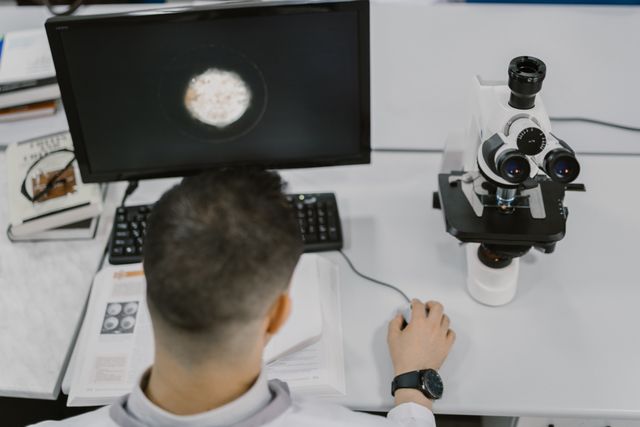
One of the most immediate applications of AI in organoid research is computer vision. Organoids are frequently examined through microscopy, producing images that show their size, shape, internal structure and cellular organisation.
Changes in organoid appearance may provide information about cellular growth, tissue organisation, damage or differentiation. However, visual interpretation can vary between observers, and subtle changes may be difficult to quantify consistently.
Deep learning systems could analyse large collections of microscopy images and identify structural patterns associated with different experimental conditions. For example, a model could compare intestinal organoids exposed to different concentrations of a plant-derived compound and measure changes in their morphology.
AI could also track how these structures change over time. Time-series imaging may reveal whether a compound produces an immediate cellular response, a delayed effect or a gradual change in tissue organisation.
This could make organoid experiments more systematic and help researchers identify which food compounds deserve additional investigation. Nevertheless, a change in organoid shape does not automatically indicate a beneficial or harmful biological effect. Image-based predictions must be supported by functional and molecular measurements.
Predicting Gene Expression Changes
Gene expression determines how cells use genetic information to produce RNA and proteins. When exposed to different food compounds, cells may change the expression of genes associated with metabolism, inflammation, stress responses, transport and tissue repair.
RNA sequencing can provide detailed information about these changes. However, interpreting thousands of gene-expression measurements simultaneously is challenging.
AI could identify patterns in gene-expression data and group compounds according to their apparent effects on cellular pathways. Machine learning models may also predict which biological processes are likely to be influenced by a particular compound.
For example, researchers could investigate whether different plant-derived compounds are associated with changes in genes involved in antioxidant defence, cellular stress responses or intestinal barrier maintenance.
Such analysis could reveal similarities between compounds that appear chemically different but influence overlapping cellular pathways. It could also identify compounds that produce distinct responses despite having similar nutritional classifications.
However, gene-expression changes do not always translate into corresponding changes in protein activity or whole-body physiology. Additional experiments are required to establish the functional significance of predicted pathways.
Metabolic Profiling and Chemical Response Mapping
Metabolomics involves measuring small molecules present within cells, tissues or biological samples. In organoid experiments, metabolomic analysis can help researchers understand how food compounds are transformed and how cellular metabolism changes after exposure.
AI could combine metabolomic measurements with information about the original food compound, exposure concentration and organoid characteristics. This may help identify which substances are absorbed, transformed or associated with changes in cellular metabolic activity.
For example, researchers could expose liver organoids to selected dietary compounds and examine whether the cells produce different metabolic products. Machine learning could identify recurring chemical patterns and predict which metabolic pathways may be involved.
This approach may be particularly valuable for studying compounds that undergo extensive metabolism before influencing other tissues. It could help distinguish the effects of the original dietary substance from those of its transformation products.
Connecting Multiple Organoids to Simulate Food Processing Across Organs
One of the most promising possibilities in Digital Organoid Research is the development of connected organoid systems. Food does not interact with only one organ. It passes through a series of digestive and metabolic processes involving the stomach, intestine, liver and other tissues.
Researchers are developing microphysiological systems, including organ-on-chip platforms, that can connect different tissue models through controlled fluid movement. These systems may allow substances released or transformed by one organoid to reach another organoid under experimental conditions.
For example, a gastrointestinal model could investigate how a food compound behaves during simulated digestion. An intestinal organoid could then be used to examine cellular interactions and absorption-related responses. A liver model could subsequently investigate how absorbed compounds are transformed by liver cells.
AI could analyse measurements from each stage and construct a connected model of the compound’s biological journey. Instead of examining the intestinal and liver responses independently, researchers could investigate how transformations in one system influence the next.
This could be useful when studying plant compounds, dietary fats, food additives and other substances that undergo substantial metabolic processing.
However, connected organoid systems do not yet reproduce the full complexity of human circulation, digestion, immune regulation and organ communication. Their results should be considered experimental evidence rather than direct predictions of an individual’s complete physiological response.
Applications of Digital Organoid Research in Nutrition Science
The combination of organoids and AI could create new opportunities for investigating food compounds. Its value may be particularly significant when researchers need to understand cellular responses that cannot be adequately explained through nutritional composition alone.
Evaluating Plant Polyphenols and Bioactive Compounds
Plant foods contain polyphenols and other bioactive compounds that are being investigated for their interactions with human cells. These substances occur in fruits, vegetables, legumes, tea, herbs, spices and other plant-based ingredients.
Their biological effects depend on their structure, concentration, absorption and metabolic transformation. Some compounds are modified by intestinal microorganisms before they become available to the body.
Intestinal and liver organoids could help researchers examine how selected polyphenols interact with human-derived cells. AI could compare cellular responses across different compounds and identify molecular pathways associated with their exposure.
For instance, researchers may investigate how different flavonoids influence gene expression or whether particular plant-derived compounds are associated with changes in cellular stress-response pathways.
Such research could support the development of functional food ingredients and help identify promising compounds for further investigation. However, cellular responses observed in organoids do not establish that consuming the corresponding food will produce the same effect in humans.
Studying Dietary Fat and Metabolic Responses
Dietary fats differ in their chemical structure and biological properties. Saturated, monounsaturated and polyunsaturated fatty acids can participate in different metabolic processes and influence cellular membrane composition.
Liver organoids could help researchers examine how liver cells process selected fatty acids and how different exposure conditions influence lipid accumulation or metabolic activity. Pancreatic organoid models may also contribute to research into cellular responses associated with glucose regulation and nutrient signalling.
AI could compare these responses across different fatty acid types and concentrations. It may identify patterns that help researchers investigate why particular lipid structures produce different cellular effects.
This could contribute to food formulation research and improve understanding of how dietary fat composition interacts with human metabolic pathways. However, organoid findings must be interpreted alongside whole-body studies because fat metabolism involves multiple organs, hormonal signals and physiological processes.
Investigating Food Additives and Processing Compounds
Food processing can generate or modify chemical compounds that influence food quality and biological interactions. Heating, fermentation, oxidation and storage may change the chemical composition of ingredients.
Researchers could use organoids to examine how selected processing-related compounds interact with intestinal or liver cells. AI could analyse changes in cellular morphology, gene expression and metabolic activity across different exposure conditions.
This may help prioritise compounds for further safety assessment and investigate the biological relevance of exposure levels. It could also support the development of food processing methods that preserve desirable nutritional characteristics while reducing unwanted chemical changes.
Importantly, organoid screening cannot independently establish the safety of a food ingredient. Safety assessments must consider realistic exposure levels, digestion, metabolism, long-term effects and other relevant evidence.
Can Digital Organoids Help Predict Individual Food Responses?
One of the most interesting possibilities is the development of personalised organoid models. Human-derived organoids can sometimes be created from cells obtained from individual donors. These models may preserve certain genetic characteristics of the person from whom the cells were collected.
This creates an opportunity to investigate whether different individuals’ cells respond differently to the same food compound. For example, organoids developed from different donors could be exposed to identical concentrations of a selected dietary substance. Researchers could then compare their cellular responses.
AI could analyse the results alongside genetic information, metabolic measurements and other available biological data. Over time, this may help identify patterns associated with individual differences in cellular sensitivity or metabolic activity.
Such research could contribute to the development of personalised nutrition models. Instead of relying only on population averages, scientists may eventually investigate how particular biological characteristics influence responses to selected food compounds.
However, personalised organoids cannot yet predict every aspect of an individual’s response to food. They may not fully reproduce the person’s gut microbiome, immune system, hormonal regulation, digestion, circulation or interactions between organs. A response observed in a laboratory-grown tissue model should therefore not be treated as a direct dietary recommendation.
The Role of Digital Twins in Organoid-Based Food Research
A digital twin is a computational representation of a physical system that can be updated using experimental or observational data. In organoid research, a digital twin could represent the structure, molecular characteristics and observed behaviour of a laboratory-grown tissue model.
AI could use organoid measurements to develop predictive models of how cells may respond to different food compounds. These models might simulate changes in cellular activity under varying exposure conditions and compare predicted responses with new laboratory results.
For example, a digital model of an intestinal organoid could be trained using microscopy, gene-expression and metabolic data collected during controlled experiments. Researchers could then use it to generate predictions about how the same tissue model might respond to another concentration of a compound.
As additional experimental data become available, the model could be refined. This creates a feedback process in which computational predictions guide laboratory experiments, while laboratory results improve computational accuracy.
In the longer term, connected digital twins representing intestinal, liver and pancreatic organoids may support more comprehensive simulations of food-related biological processes.
Nevertheless, a digital twin is only as reliable as the biological model and experimental data supporting it. It cannot automatically represent biological processes that were not included in the original system.
Major Challenges in AI-Powered Organoid Research
Despite its potential, Digital Organoid Research faces important scientific and technical limitations. One major challenge is that organoids can vary between experiments. Differences in stem-cell sources, growth conditions, laboratory procedures and cellular maturity may influence their structure and behaviour.
Another limitation is the incomplete representation of whole-organ biology. Many organoids lack blood vessels, nerves, fully developed immune systems and the complex cellular interactions found in living organs. This can affect how closely their responses resemble those of human tissues.
Food compounds also require careful preparation before laboratory exposure. The concentration applied directly to an organoid may not reflect the amount that reaches human tissues after digestion, absorption and metabolism. Researchers must therefore develop realistic exposure conditions and account for the chemical transformations that occur throughout the digestive process.
AI models face additional challenges related to data quality and interpretability. Models trained using limited experimental datasets may produce unreliable predictions when applied to different organoid systems or unfamiliar food compounds. Researchers must also understand why a model predicts a particular cellular response rather than relying on unexplained numerical outputs.
Finally, validation is essential. Findings from organoid experiments should be compared with other laboratory models, animal studies where appropriate and carefully designed human research. Only through this process can scientists determine which predictions have genuine biological relevance.
The Future of Digital Organoid Research
Future developments may combine advanced organoid systems, organ-on-chip technology, high-resolution imaging and multimodal AI models. These technologies could allow researchers to investigate food compounds across several interconnected biological systems while collecting detailed information about cellular and molecular responses.
Automated laboratory platforms may also make it possible to test many compounds under carefully controlled conditions. AI could help select promising experimental combinations, analyse results and identify patterns that deserve further investigation. This may reduce the time required to screen large numbers of food-derived substances.
Another important direction is the integration of organoid data with human nutritional studies. Researchers could compare laboratory observations with measurements from people consuming specific foods or dietary compounds. Such comparisons may reveal which organoid responses correspond with real-world biological outcomes and which require additional refinement.
The long-term objective is not to replace human nutritional research but to make it more targeted and informative. Organoids could help identify mechanisms, while AI could organise the resulting evidence into predictive models. Human studies would then be needed to determine whether these findings translate into meaningful physiological responses.
Conclusion
Digital Organoid Research represents a promising intersection of stem-cell biology, food science and artificial intelligence. Miniature laboratory-grown tissue structures can reproduce selected characteristics of human organs, providing researchers with controlled environments for studying how food compounds interact with human-derived cells.
AI could expand the value of these models by analysing microscopy images, gene-expression changes, metabolic profiles and cellular responses. When several organoid systems are connected, researchers may also investigate how food compounds are transformed across different stages of digestion and metabolism.
Potential applications include studying plant bioactive compounds, evaluating dietary fats, investigating food processing substances and exploring individual differences in cellular responses. These developments may eventually support more sophisticated food research and precision nutrition.
However, organoids cannot yet reproduce the full complexity of the human body, and AI predictions cannot replace experimental or clinical validation. Their greatest contribution may be to provide a more detailed understanding of biological mechanisms before researchers move to human studies. As organoid technology and computational modelling advance, they could become valuable tools for discovering how food compounds interact with human biology.
Online Internship with Certificate
You may be interested
Proprioceptive Health Intelligence: Brain Understands Body Position and Movement?
Anshika Jain - November 4, 2026Every movement performed by the human body depends on an intricate communication system that operates largely without conscious attention. Walking across a room, climbing stairs, maintaining balance,…

Neuroplasticity Mapping: Daily Experiences Reshape Learning and Cognitive Adaptation
Anshika Jain - November 4, 2026The human brain is continuously changing in response to everyday experiences. Learning a new language, practising a musical instrument, navigating an unfamiliar environment, solving complex problems, developing…
Microbial Metabolite Signatures: Bacterial Byproducts Have Biological Effects
Anshika Jain - November 4, 2026The human gut contains a diverse community of microorganisms that actively participate in digestion, nutrient transformation and communication with the rest of the body. Although bacteria are…
Most from this category
Epithelial Immunity Mapping: Intestinal Cells Coordinate With Immune System
Anshika Jain - November 4, 2026
Extracellular Matrix Intelligence: Body’s Structural Environment Affect Tissue Health
Anshika Jain - November 3, 2026
Bone Remodeling Analytics: Balance Between Bone Formation and Breakdown
Anshika Jain - November 3, 2026
Epithelial Immunity Mapping: Intestinal Cells Coordinate With Immune System
Anshika Jain - November 4, 2026Gut Virome Intelligence: Viruses Influence the Human Gut Ecosystem
Anshika Jain - November 4, 2026Extracellular Matrix Intelligence: Body’s Structural Environment Affect Tissue Health
Anshika Jain - November 3, 2026


.png)
Leave a Comment
You must be logged in to post a comment.