
Proprioceptive Health Intelligence: Brain Understands Body Position and Movement?

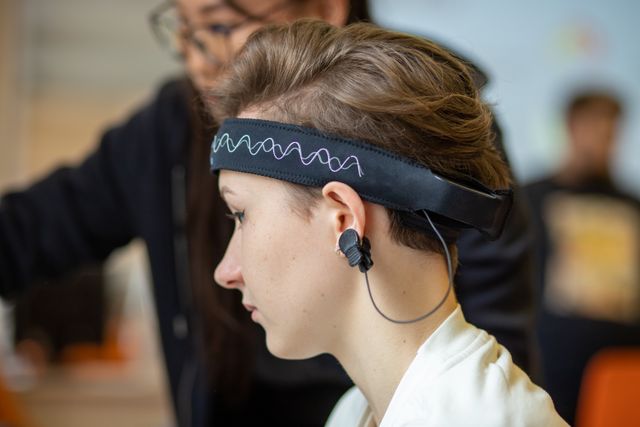
Every movement performed by the human body depends on an intricate communication system that operates largely without conscious attention. Walking across a room, climbing stairs, maintaining balance, reaching for an object or adjusting posture while sitting all require the brain to understand where different body parts are positioned and how they are moving. Even when a person closes their eyes, they can usually identify whether their arm is raised, their knee is bent or their body is leaning forward. This ability is known as proprioception, an essential sensory function that helps the nervous system coordinate movement, maintain posture and interact with the surrounding environment.
Proprioception is sometimes described as the body’s internal positioning system. It provides information about joint angles, muscle length, tension and movement, allowing the brain to continuously update its understanding of the body’s physical state. Unlike vision, which provides information about external surroundings, proprioception helps the brain understand what is happening within the musculoskeletal system. It also works alongside vision, the vestibular system and touch to create coordinated movement.
Despite its importance, proprioception is not always easy to measure. Its signals originate from multiple receptors distributed throughout muscles, tendons and joints, and their interpretation involves complex interactions between the spinal cord, brainstem, cerebellum and cerebral cortex. Artificial intelligence (AI) could help researchers study these interactions by combining movement recordings, wearable sensors, neurological measurements and computational models.
This emerging research direction can be described as Proprioceptive Health Intelligence. It explores how AI might analyse the relationship between body-position signals, movement patterns and nervous system responses. Such an approach could contribute to rehabilitation research, sports science, neurological assessment and personalised movement training.
Understanding Proprioception: How the Brain Knows Where the Body Is
Proprioception is the body’s ability to sense the position and movement of its parts without relying entirely on visual information. It allows the nervous system to estimate where a limb is located, how quickly it is moving and how much force is being generated during an activity.
This process begins with specialised sensory receptors known as proprioceptors. These receptors are found primarily in muscles, tendons and joint-associated structures. They detect mechanical changes and transmit information through sensory nerves to the central nervous system.
Muscle spindles are among the most important proprioceptive receptors. Located within skeletal muscles, they respond to changes in muscle length and the speed at which that length changes. Their signals help the nervous system monitor muscle stretch and coordinate appropriate responses during movement.
Golgi tendon organs are located near the junction between muscles and tendons. They respond to tension generated within the muscle-tendon unit and provide information about the forces associated with muscle contraction. This information contributes to the regulation of muscular activity and movement control.
Other sensory information comes from receptors in and around joints, skin and connective tissues. Although the contribution of joint receptors varies depending on the joint and movement, they can provide useful information about joint position and mechanical conditions. Skin receptors also contribute to movement awareness by detecting pressure, stretching and contact with external surfaces.
The brain combines these signals to construct an ongoing representation of the body’s position. This representation is not produced by one isolated brain region. It emerges through communication between multiple neural systems that process sensory information and coordinate movement.
How the Nervous System Processes Body-Position Information
Proprioceptive signals travel through peripheral sensory nerves towards the spinal cord and brain. From there, different neural pathways transmit information to areas responsible for movement coordination, posture and conscious body awareness.
The spinal cord plays an important role in processing sensory input and coordinating rapid responses. Some proprioceptive signals contribute to spinal reflexes, allowing muscles to respond automatically to changes in stretch. The stretch reflex, for example, helps maintain muscle length and supports postural stability.
The cerebellum is particularly important for comparing intended movement with actual movement. It receives information from proprioceptive pathways, the vestibular system and other sensory sources. By integrating these signals, it contributes to the timing, accuracy and coordination of physical actions.
The cerebral cortex also participates in conscious awareness of body position. Somatosensory regions process information about the location and movement of body parts, while motor-related areas contribute to planning and controlling actions. Communication between these regions allows people to adjust movements according to sensory feedback.
The vestibular system, located in the inner ear, provides information about head movement, acceleration and orientation relative to gravity. Although vestibular sensing is distinct from proprioception, the two systems work together to maintain balance and coordinate movement.
This integration is essential because individual sensory systems may provide incomplete or conflicting information. When a person walks in a dark environment, for example, visual feedback becomes less reliable. The nervous system must depend more heavily on proprioceptive and vestibular information to maintain stability.
What Is Proprioceptive Health Intelligence?
Proprioceptive Health Intelligence is a developing research concept that applies AI and computational analysis to understand how the nervous system senses body position and coordinates movement. Its purpose is to investigate patterns that connect sensory information, physical behaviour and movement performance.
Traditional proprioceptive assessments often involve structured physical tests. A person may be asked to reproduce a joint angle, identify the direction of a passive movement or maintain balance under different sensory conditions. Researchers and clinicians can use these tests to evaluate selected aspects of proprioceptive function.
However, individual tests provide only a limited view of a complex sensory system. A person may perform well in one joint-position task but experience difficulty coordinating movement during a more complicated activity. Similarly, an individual may maintain balance under normal conditions but struggle when visual information is removed.
AI could help address some of these limitations by analysing multiple measurements together. A system might combine joint-angle recordings, movement speed, muscle activity, balance measurements and task performance to identify patterns associated with proprioceptive control.
Rather than treating proprioception as a single score, this approach could investigate different dimensions of body awareness and movement coordination. It may also help researchers understand how sensory processing changes during rehabilitation, ageing, physical training or neurological conditions.
It is important to recognise that Proprioceptive Health Intelligence is a proposed umbrella concept rather than a universally established clinical technology. Current research already uses computational methods, wearable sensors and motion analysis to study aspects of proprioception, but a complete AI-based measurement of the brain’s internal body-position model remains beyond present capabilities.
How AI Could Measure and Analyse Proprioceptive Signals
AI systems can process complex movement and physiological datasets, making them useful research tools for investigating proprioceptive function. Their effectiveness depends on the type of measurements collected and whether those measurements accurately represent the biological processes being studied.
Wearable Sensors and Movement Tracking
Wearable technology could provide continuous information about body movement. Inertial measurement units (IMUs), which commonly combine accelerometers and gyroscopes, can estimate acceleration, orientation and rotational movement. When placed on different body segments, these devices can help researchers reconstruct aspects of movement and joint coordination.
For example, sensors attached to the thigh, lower leg and foot could record how a person walks. AI models could examine differences in stride timing, movement symmetry, joint coordination and changes in balance-related behaviour.
Smart clothing and sensor-equipped rehabilitation equipment could provide additional information about body movement during everyday activities. These technologies may help researchers observe how movement patterns change across repeated sessions rather than relying exclusively on a single laboratory assessment.
However, movement sensors measure physical motion, not proprioceptive signals directly. A person may produce a particular movement using visual guidance, learned strategies or compensatory muscle activity. Researchers must therefore combine sensor data with carefully designed proprioceptive tests to investigate the underlying sensory contribution.
Analysing Muscle Activity Through Electromyography
Electromyography (EMG) records electrical activity associated with muscle activation. Surface EMG uses electrodes placed on the skin to measure electrical signals generated by underlying muscles.
AI could analyse EMG recordings alongside joint movement and force measurements to examine how muscles are activated during different tasks. For example, researchers could investigate whether a person uses different muscle activation patterns when maintaining balance with their eyes open compared with their eyes closed.
Machine learning models may identify changes in muscle coordination, activation timing and patterns of muscular co-contraction. These measurements could contribute to research into movement control and the ways in which sensory feedback influences muscular responses.
However, EMG does not directly measure proprioceptive input or reveal exactly what the brain perceives. It records aspects of muscle activation, which must be interpreted alongside other physiological and behavioural information.
Joint-Position and Movement-Detection Analysis
Joint-position sense refers to the ability to perceive the position of a joint, while movement sense involves detecting the direction and movement of a body part. Both are important components of proprioception.
Researchers can assess joint-position sense by asking participants to reproduce a previously demonstrated joint angle. Movement-detection tests may involve identifying when a joint begins moving or recognising the direction of a passive movement.
AI could analyse response accuracy, movement speed, timing differences and variations across repeated trials. A model might identify whether a participant consistently overshoots a target position or has difficulty detecting small changes in joint movement.
These patterns could provide useful information for rehabilitation research and movement assessment. However, they should not automatically be interpreted as evidence of a specific neurological problem. Age, attention, fatigue, pain, previous injuries and familiarity with the task can influence performance.
The Role of Multimodal AI in Understanding Body Awareness
Proprioception is closely connected to other sensory and motor systems. Measuring it accurately therefore requires more than analysing one source of information. Multimodal AI could provide a framework for combining different measurements to investigate how the nervous system builds and updates its representation of the body.
A multimodal system might integrate wearable sensor data, motion-capture recordings, EMG signals, force measurements, balance tests and neurological assessments. Researchers could also use EEG or brain imaging in selected studies to investigate aspects of neural activity associated with sensory processing and movement.
For example, a participant may be asked to perform a reaching task while visual feedback is gradually reduced. Motion sensors could record the accuracy of the movement, EMG could measure muscle activation and EEG could provide information about associated electrical activity in the brain.
AI could analyse these measurements together to investigate how movement performance changes when different sensory inputs become less available. Researchers may identify patterns that suggest greater reliance on proprioceptive information under reduced visual guidance.
Another important application involves sensory reweighting. The nervous system does not always depend equally on vision, proprioception and vestibular input. Instead, it adjusts the relative contribution of these sources according to their reliability and the demands of the activity.
For instance, when walking on an uneven surface, the nervous system may need to adjust how it uses information from the feet, joints and vestibular system. AI models could help analyse changes in movement and balance across different sensory conditions, providing insights into how these systems work together.
Can AI Identify Proprioceptive Differences Between Individuals?
People differ in their ability to sense body position, coordinate movement and adapt to changing physical conditions. These differences may be influenced by age, physical training, previous injuries, neurological development and individual sensory processing characteristics.
AI could help researchers study these variations by analysing repeated assessments rather than relying on a single performance measurement. A model could examine how an individual’s joint-position accuracy, movement timing and balance responses change across different tasks.
In sports science, this approach could help investigate how athletes adapt their movement patterns during technical training. A gymnast, for example, must coordinate body position and movement while performing complex actions that may involve limited visual feedback. Researchers could examine how proprioceptive performance relates to movement consistency and training experience.
In occupational settings, researchers may investigate how repeated physical tasks influence movement coordination and body awareness. This could be relevant to activities that require precise hand movements, controlled force or sustained postural stability.
AI may eventually support more individualised movement assessments by identifying changes relative to a person’s previous measurements. However, it should not classify individuals as having superior or inferior proprioception based on isolated scores. Performance depends on the task, testing conditions and the sensory systems involved.
Applications in Rehabilitation, Sports Science and Neurological Research
Neurological Rehabilitation
Proprioceptive difficulties can occur in several neurological conditions and following certain injuries. Some individuals recovering from stroke, for example, may experience changes in sensory perception, motor coordination or the ability to recognise the position of affected limbs.
AI-assisted movement analysis could help rehabilitation researchers track changes in joint-position performance, movement accuracy and coordination across therapy sessions. By examining repeated measurements, researchers may identify improvements or persistent difficulties that require further assessment.
For individuals with movement disorders, computational analysis may also help investigate relationships between sensory feedback and motor control. The findings could contribute to the development of rehabilitation approaches that combine sensory training, movement exercises and feedback-based interventions.
Sports Performance and Injury Rehabilitation
Proprioception contributes to balance, coordination and the control of body movements during physical activity. Athletes frequently perform actions that require rapid adjustments to changing surfaces, directions and movement demands.
AI-powered motion analysis could help sports scientists investigate movement patterns during balance exercises, landing tasks and changes of direction. When combined with proprioceptive assessments, these measurements may offer a better understanding of how sensory and motor systems contribute to athletic performance.
Following an injury, repeated assessments could help researchers monitor changes in joint-position accuracy and movement control. However, no single AI-generated measurement can reliably predict whether an athlete will experience another injury. Injury risk is influenced by multiple interacting factors, including physical conditioning, biomechanics, previous injuries and training load.
Ageing and Balance Research
Ageing can be accompanied by changes in sensory processing, muscle strength, reaction time and balance control. These changes may influence how individuals respond to uneven surfaces or situations involving reduced visual information.
AI could help researchers analyse movement and balance patterns in older adults over extended periods. Wearable sensors may provide information about walking speed, stride variability and movement consistency, while structured assessments can examine selected proprioceptive abilities.
Such research could contribute to a better understanding of how sensory and motor changes interact during ageing. It may also support the evaluation of balance-training programmes, although AI-generated assessments would need clinical validation before being used for individual medical decisions.
Challenges in Developing Reliable Proprioceptive AI Systems
Despite its potential, measuring proprioception through AI presents several scientific challenges. The first is the indirect nature of available measurements. Wearable sensors record movement, EMG records muscle electrical activity and brain imaging measures selected aspects of neural activity. None of these technologies independently provides a complete measurement of the brain’s internal representation of body position.
Another challenge is separating proprioceptive information from other sensory influences. During a movement task, participants may use vision, touch and vestibular feedback alongside proprioception. A high-performance score does not necessarily indicate that proprioceptive processing is functioning optimally.
Data quality is also a major concern. Sensor placement, calibration, movement speed and testing conditions can affect recorded measurements. Differences between devices and laboratories may make it difficult to compare results across studies.
AI models may also learn patterns that reflect the characteristics of a particular dataset rather than general biological principles. A model trained mainly on young, physically active participants may not perform reliably when applied to older adults or people recovering from neurological injuries.
Interpretability is another important issue. Researchers need to understand which measurements influence an AI prediction and whether the identified patterns have a plausible relationship with proprioceptive function. Without this transparency, a model may produce classifications that are difficult to evaluate scientifically.
Privacy must also be considered. Continuous movement tracking can reveal information about a person’s routines, physical capabilities and daily behaviour. Systems collecting such information should use informed consent, secure data storage and appropriate restrictions on data access.
The Future of Proprioceptive Health Intelligence
Future developments may bring together wearable technology, advanced movement analysis and computational neuroscience to create more detailed models of sensory-motor function. Smaller sensors and improved motion-tracking systems could make it easier to collect movement data outside specialised laboratories.
One promising direction is the development of personalised proprioceptive profiles. Rather than relying on population averages, researchers could use repeated measurements to understand how an individual’s body-position awareness and movement coordination change during training or rehabilitation.
Another possibility is the integration of AI with virtual reality and augmented reality. These environments can manipulate visual feedback while recording movement responses. Researchers could use them to investigate how individuals respond when visual information conflicts with physical movement or becomes temporarily unavailable.
For example, a virtual environment could display a hand in a position that differs slightly from its actual physical position. Researchers could then examine how participants respond to this mismatch and how their movement accuracy changes. Such experiments may provide insights into the integration of visual and proprioceptive information.
AI could also contribute to adaptive rehabilitation systems. A training platform might adjust task difficulty according to observed movement accuracy, balance performance and progress across sessions. However, any clinical application would require appropriate professional supervision and evidence that the system improves meaningful rehabilitation outcomes.
In the longer term, computational models may help researchers understand how the brain maintains an internal representation of the body and updates it during movement. These developments could improve scientific understanding of sensory integration, motor learning and physical adaptation.
Conclusion
Proprioceptive Health Intelligence offers an emerging approach to studying how the brain understands body position, senses movement and coordinates physical actions. By combining AI with wearable sensors, motion tracking, electromyography, balance assessments and neurological measurements, researchers may be able to investigate the complex relationship between sensory feedback and movement control.
The potential applications extend across neurological rehabilitation, sports science, ageing research and personalised movement training. AI could help identify patterns that are difficult to observe through individual physical tests and support more detailed analysis of changes across repeated assessments.
However, movement recordings and muscle activity measurements cannot independently reveal exactly what the brain perceives. Proprioception is an integrated biological process involving multiple sensory receptors and neural systems. Reliable AI-based assessment will therefore require carefully designed experiments, multimodal measurements and validation against established clinical and scientific methods.
The future of this field lies not in treating AI as a replacement for neurological expertise, but in using computational intelligence to understand movement and body awareness more deeply. As sensor technology and neuroscience advance, Proprioceptive Health Intelligence could help researchers develop a more detailed picture of how humans sense, control and adapt their bodies.
Online Internship with Certificate
You may be interested
Neuroplasticity Mapping: Daily Experiences Reshape Learning and Cognitive Adaptation
Anshika Jain - November 4, 2026The human brain is continuously changing in response to everyday experiences. Learning a new language, practising a musical instrument, navigating an unfamiliar environment, solving complex problems, developing…
Digital Organoid Research: Miniature Lab-Grown Organs
Anshika Jain - November 4, 2026Understanding how the human body responds to food is more complicated than identifying the nutrients present in a meal. Two people consuming the same food may experience…
Microbial Metabolite Signatures: Bacterial Byproducts Have Biological Effects
Anshika Jain - November 4, 2026The human gut contains a diverse community of microorganisms that actively participate in digestion, nutrient transformation and communication with the rest of the body. Although bacteria are…
Most from this category
Epithelial Immunity Mapping: Intestinal Cells Coordinate With Immune System
Anshika Jain - November 4, 2026

Extracellular Matrix Intelligence: Body’s Structural Environment Affect Tissue Health
Anshika Jain - November 3, 2026
Bone Remodeling Analytics: Balance Between Bone Formation and Breakdown
Anshika Jain - November 3, 2026
Epithelial Immunity Mapping: Intestinal Cells Coordinate With Immune System
Anshika Jain - November 4, 2026Gut Virome Intelligence: Viruses Influence the Human Gut Ecosystem
Anshika Jain - November 4, 2026Extracellular Matrix Intelligence: Body’s Structural Environment Affect Tissue Health
Anshika Jain - November 3, 2026
Digital Organoid Research: Miniature Lab-Grown Organs
November 4, 2026

.png)
Leave a Comment
You must be logged in to post a comment.